L’Hospitalet de Llobregat’s full council has given initial approval to the statutes of the future Associació BioClúster d’Innovació i Salut and to the city council’s participation as a founding member, according to the municipality. For residents, workers and students in Bellvitge and nearby Granvia, the decision matters because it supports a planned expansion and modernisation of health, university and research facilities in the area.
In the same session, councillors also approved a modification to planning at the Bellvitge Campus. The city said the change will allow sanitary, university and research equipment to be expanded and updated, reinforcing L’Hospitalet’s role as a biomedical and innovation centre.
Municipal approval ties city hall to the future health cluster
The agreement approved by the Ple municipal, the full council session, gives initial backing to the rules that will govern the new association and formally starts the process for the Ajuntament de L’Hospitalet to join it as a founding partner.
The BioClúster project has already been promoted by the Catalan government as part of the wider Biopol-Granvia strategy in L’Hospitalet. In an earlier official announcement, the Government of Catalonia said the initiative is intended to strengthen health research and innovation around Bellvitge.
"El Ple municipal ha aprovat inicialment els estatuts de l’Associació BioClúster d’Innovació i Salut i la participació de l’Ajuntament com a soci fundador," the city said in its official account of the session.
The local authority has presented the cluster as part of a broader alliance linking hospitals, research centres, universities and public institutions in the south of the Barcelona metropolitan area. Readers can review how BARNA handles official claims and source checks in our Editorial Policy.
Bellvitge Campus planning change clears next step
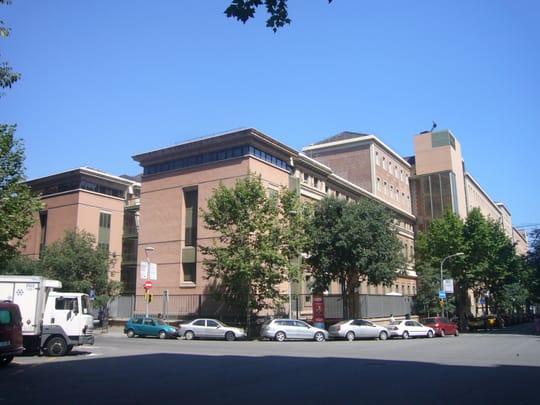
The council session also approved a planning modification affecting the Bellvitge Campus, a major concentration of healthcare, academic and biomedical research institutions in L’Hospitalet.
According to the city council, the urban planning change is designed to make possible the expansion and modernisation of facilities used for healthcare, teaching and research. That has practical consequences for staff, patients, students and nearby residents because future works and institutional growth in Bellvitge will depend on this planning framework.
The planning move sits within the longer development of Biopol-Granvia. The Catalan government approved the Biopol-Granvia urban development plan in 2024, setting out the framework for growth in this part of L’Hospitalet.
- Initial approval of the BioClúster association statutes
- Approval for the city council to participate as a founding member
- Approval of a planning modification at Bellvitge Campus
Residents who want to follow the urban planning process can check the city’s electronic noticeboard and public planning information through the municipal channels listed by the Ajuntament. BARNA’s approach to official documentation is set out in our Source Transparency page.
Council chamber changes confirmed in the same session
During the same meeting, Martha Cecilia Cedeño took office as a new councillor for LHECP-C. The municipality also said socialist councillors Cristina Santón and Olga Gómez submitted their resignations.
Those membership changes were recorded alongside the BioClúster and Bellvitge planning decisions in the official municipal summary of the session.
Primary sources: l-h.cat, Government of Catalonia (Departament de la Presidència), Ajuntament de L'Hospitalet de Llobregat, Ajuntament de L'Hospitalet de Llobregat (Electronic Secretariat), Government of Catalonia (Govern de la Generalitat), Ajuntament de L'Hospitalet de Llobregat, Ajuntament de L'Hospitalet de Llobregat, Ajuntament de L'Hospitalet de Llobregat, Govern de Catalunya. Reported by L'Hdigital (Official Portal of L'Hospitalet de Llobregat), Ajuntament de L'Hospitalet de Llobregat, IDIBELL (Institut d'Investigació Biomèdica de Bellvitge), Hospital de Bellvitge.