BARCELONA, 7th August 2026. Barcelona tenants signing one-year leases this spring keep a five-year right to stay that landlords cannot strike out, according to the Ley de Arrendamientos Urbanos (LAU, the 1994 Urban Leases Act), with seven years available when the landlord is a company. The protection is automatic, but a wave of "temporada" (seasonal) listings and waiver clauses is steering newcomers into contracts that quietly strip it away.
The five-year rule is set out in Article 9 of the LAU: if the landlord is a natural person (a private individual, not a company) and the lease is for a vivienda habitual (the tenant's main home, as opposed to a holiday or seasonal let), the tenant may extend the contract yearly up to five years total regardless of the stated term. Article 9.1 raises that ceiling to seven years when the landlord is a persona jurídica (a legal entity such as an SL, sociedad limitada, or SA, sociedad anónima: Spain's equivalents of a private and public limited company).
The Sindicat de Llogateres de Catalunya, the tenants' union that handles thousands of Barcelona cases a year, sets out the same reading in its tenants' guide: the printed term on a one-year lease does not cap the tenant's stay.
What this means for tenants signing now
Best for: long-term residents on a standard LAU lease for their main home.
Avoid if: you are genuinely here for under 11 months, in which case a temporada contract is the correct vehicle, not a workaround.
The landlord can refuse renewal only on the narrow grounds in LAU Article 9.3: needing the flat as their own primary residence, or for a first-degree relative (a parent or a child), or for a spouse after a final judgment of separation, divorce or annulment. The notice is two months in writing, not four, and the need must already have been written into the contract when you signed it. If the stated reason turns out to be false, the tenant can sue for reinstatement or compensation under the same article.
The evidence: law, courts and the 2023 reform
The most recent overhaul is the Ley 12/2023 por el derecho a la vivienda (the 2023 Housing Act, published in the BOE, the Boletín Oficial del Estado or Official State Gazette). Its Disposición final primera amends LAU Article 20 so that estate-agent fees fall on the landlord, not the tenant. Any clause shifting that cost to the tenant signed after 26 May 2023 is void.
Catalonia's zona tensionada (a "stressed" rental zone where rent caps apply) framework, triggered by the same law, was activated for Barcelona on 14 March 2024 by the Generalitat's resolution in the DOGC (Diari Oficial de la Generalitat de Catalunya, Catalonia's official gazette). New contracts in declared zones, Barcelona included, cannot exceed the reference price published on the Generalitat's reference-price index.
Repair obligations sit in LAU Article 21: the owner pays for any repair needed to keep the home habitable. Routine wear-and-tear from daily use is on the tenant; structural and major works are on the landlord. Spain's Supreme Court restated this in STS 681/2019 (Sala Civil).
Context: what landlords typically tell new tenants
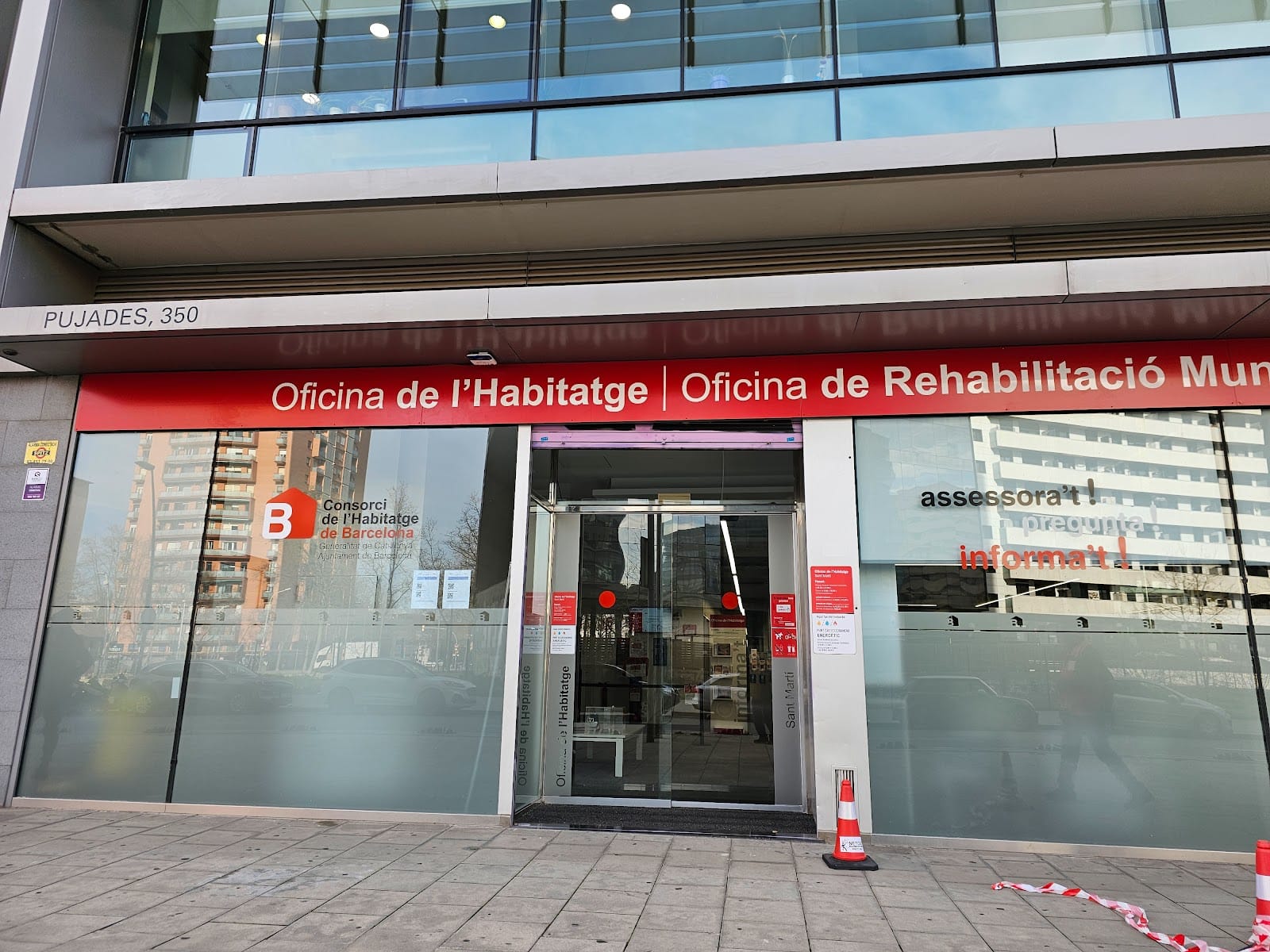
A handful of phrases come up again and again at the Oficina d'Habitatge (Barcelona City Council's tenant advice office, free in-person help in every district):
| What the landlord says | What the LAU actually says | Source |
|---|---|---|
| "It is a one-year contract; after that we renegotiate." | Annual extensions to five years are automatic unless the tenant actively waives them. | LAU Art. 9.1 |
| "Stay past a year and the rent goes to market rate." | Annual update only by the agreed index (typically the IPC, Spain's Consumer Price Index, or the INE rental reference index), capped by LAU rules. | LAU Art. 18 |
| "I need the flat back next summer." | Only with four months' written notice and a legitimate Article 9.3 reason, evidenced. | LAU Art. 9.3 |
| "You pay the agency fee." | Landlord pays since 26 May 2023. | Ley 12/2023 |
Sign the one-year paper if it is offered. The five-year right is yours anyway.
Temporada: the contract that strips your rights
Roughly half of the Idealista Barcelona inventory is "temporada": seasonal contracts of 32 days to 11 months. These are the listings priced around 30 per cent above the rest, often furnished, often glossy. They sit under LAU Article 3, the "uso distinto de vivienda" (use other than as a main home) regime.
A temporada contract is legitimate for a real seasonal use: a teacher on a 9-month posting, a researcher on sabbatical, a builder living near a project. The problem is that landlords use it as a routine workaround for tenants who are obviously moving permanently. That workaround got a lot weaker on 1 January 2026, when Catalonia's Llei 11/2025 brought seasonal and room lets inside the stressed-zone price limits and made the landlord document the specific reason for the short term. Without that proof the let is presumed to be an ordinary home let, with the five-year right attached. What the landlord is really buying is a tenant who does not know that. You get a year of fragility unless you push back.
Sign a temporada only if it is actually short-term. If you are moving to Barcelona indefinitely and the only contract on offer is temporada, you are being sold a worse product at a higher price.
What you lose specifically:
- Renewal. When the 11 months are up, you are out, regardless of how long you have stayed.
- Rent-cap protection. The zona tensionada rules under the DOGC resolution do not apply to temporada lets.
- Empadronamiento (registering your address at the town hall, the gateway to a NIE update, public healthcare, school places and resident parking). Barcelona's city council guidance registers people on a six-month-plus contract; on a 32-day temporada you usually need the owner's separate written consent, which they frequently refuse.
Leaving a five-year contract early
After six months in a long-term LAU contract, you can leave with thirty days of written notice under LAU Article 11. Compensation only applies if the contract explicitly wrote it in, capped at one month of rent per year remaining. If there is no such clause, no compensation is owed.
A burofax (a registered letter from Correos that carries legal proof of both content and date) is the gold standard for the notice, sent through Correos. Email is accepted in most cases but courts prefer the burofax when there is a dispute. Cost is around €30.
Run any "voluntary mutual termination" the landlord drafts past a tenants' rights organisation like the Sindicat de Llogateres before signing. Landlords sometimes use that route to extract concessions they could not legally demand under the LAU's exit rules.
What landlords cannot push onto you
The skirmishes that fill Barcelona expat WhatsApp groups follow a pattern. The landlord sends a clause; the tenant signs; later they discover the clause has no force. The recurring ones:
- "You pay the agency fee." Void under Ley 12/2023, amending LAU Art. 20.
- "Major repairs are the tenant's responsibility." Owner's duty under LAU Art. 21.
- "No overnight guests." Not enforceable in a residential let.
- "You waive the right to renew." Any waiver of LAU protections is overridden by the statute itself under LAU Article 6.
If you have signed something dodgy, the contract is not void, only the offending clause. The rest holds. So you can stay, contest the clause if it bites, and not panic.
When you actually need a lawyer
Most disputes are won with a polite, well-evidenced burofax and a deadline. Where a lawyer earns their fee is when there is a desahucio (eviction proceeding in the civil courts) on the table, a contested company landlord, a dispute over six months of withheld rent, or a court hearing already scheduled.
Look up registered lawyers on the ICAB directory (Il·lustre Col·legi de l'Advocacia de Barcelona, the Barcelona Bar Association). The same body runs the turno de oficio (state-funded legal aid for those who qualify on income). The Sindicat de Llogateres and Càritas Barcelona also help tenants prepare arguments for free.
What most tenants miss
The thing most tenants miss is not the law. It is the calendar.
The five-year extension is automatic only if you do not actively give it up. Do not sign a "renunciation of LAU rights" rider. Do not agree to a "voluntary mutual termination" the landlord drafts the day before they want you out. Read what is put in front of you, item by item, in Catalan or Spanish; the protections are there but the wording on a landlord's form does not always make them obvious. If a clause looks unusual, photograph it and run it past a tenants' rights organisation before signing. A weekend of delay is a small price for five years of certainty.
Founder or freelancer in Barcelona?
Flat-hunting and reading lease clauses in Barcelona goes a lot easier with people who have signed the same contracts. The Barcelona English Speakers community is the biggest WhatsApp group for English-speaking residents here, with 4,000+ members across 20+ free, moderated topic groups covering flat-hunting, neighbourhoods, paperwork and daily life. Come and ask your tenancy questions, or just settle in. Join us.