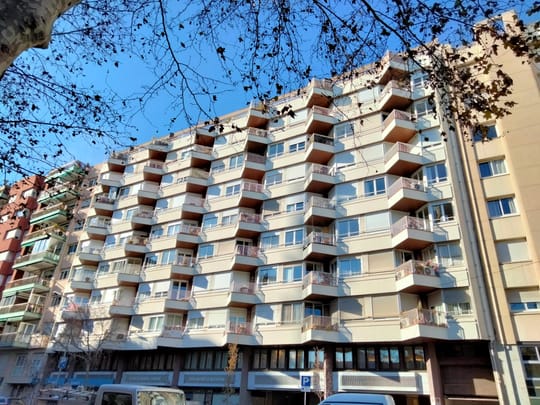
Sharp Drop in Evictions Over 10 Years
Judicial evictions in Barcelona have declined by 56% over the past decade, from 3,098 in 2015 to 1,373 in 2025, the most recent data from the General Council of the Judiciary (CGPJ) shows. The drop reflects long-term policy shifts and emergency protections introduced during the 2012 financial crisis and later expanded during the pandemic.
Rent Arrears Behind 8 in 10 Evictions
Despite the overall decline, 80% of evictions in the city are now due to non-payment of rent or contract expiration under the Urban Leases Law (LAU). Barcelona households spend an average of 41% of their income on rent, according to a recent Idealista study, highlighting ongoing affordability pressures.
Protections Extended but Limited
Royal Decree-Law 11/2020, introduced during the pandemic, allows courts to suspend evictions for vulnerable tenants without alternative housing. The measure has been repeatedly extended and remains in force until 31 December 2026. However, an amendment earlier this year excludes cases where small landlords, those owning fewer than two properties, declare themselves vulnerable.
Local Action Amid National Jurisdiction
Evictions are judicial procedures governed by national law, meaning the central government sets the legal framework. Autonomous communities and city councils can only implement supportive housing policies. Barcelona City Council, under Mayor Jaume Collboni, has launched initiatives to protect residents’ right to stay, including rent caps, restrictions on tourist apartments, and expanding public housing. The Council also operates the Intervention and Mediation Service in Situations of Housing Loss and Occupations (SIPHO), which attempted to mediate in recent cases.
Recent Cases Spark Public and Political Response
This week, Sílvia, a woman with a recognised disability of 36%, was evicted from her home on Calle Sardenya, 357, where she had lived since 2013. About 40 people, including former mayor Ada Colau, gathered in protest. The city’s mediation service had intervened after the landlord, Bossant 2001, refused to include her in the lease following her partner’s departure.
The SIPHO service mediated in Sílvia's case, but the company rejected inclusion in the contract despite municipal efforts.
Another case, that of Maricarmen, has also drawn media attention and public demonstrations, organised by the Sindicat de Llogateres.
Political Moves at National Level
On 25 September 2026, it was announced that Junts and the PSOE government are negotiating to block evictions of vulnerable tenants in properties owned by investment funds. If agreed, the measure will be included in a decree to be presented at the Council of Ministers on Tuesday, 29 September 2026.
Reported by metropoliabierta.elespanol.com, Metrópoli Abierta - Urban Life.