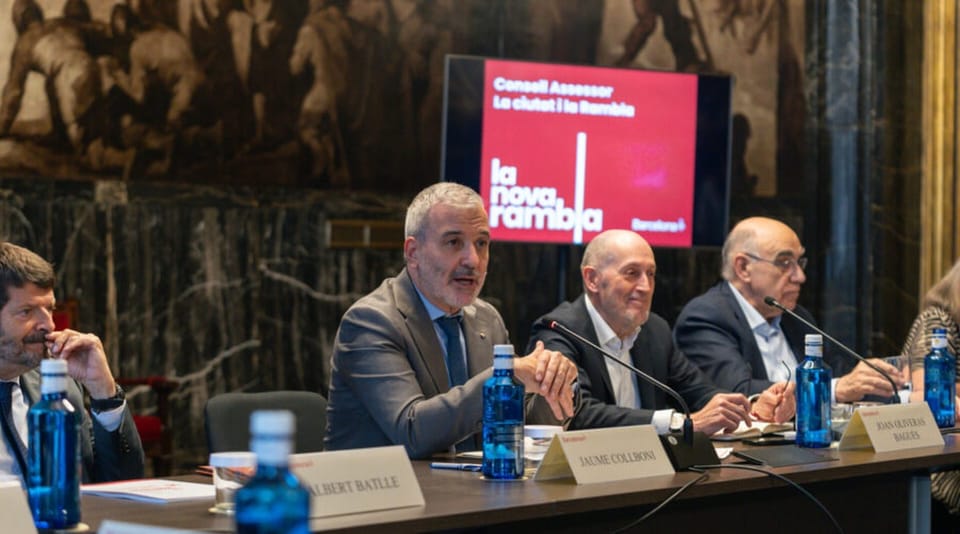
Barcelona's Advisory Council for La Rambla has unveiled a plan to transform the iconic promenade. It proposes cultural revitalisation and the return of residents as its top priorities. Mayor Jaume Collboni presided over the final report's presentation. The report outlines actions to reshape the central thoroughfare's social and physical landscape.
The "The City and La Rambla" Advisory Council comprises civic representatives connected to the area. It aims to help recover the promenade for city residents. Its final document states that La Rambla already holds a significant cultural standing. However, it argues that culture must become the driving force behind its ongoing urban reform. This includes shaping the urban environment, economic activity, and social dynamics.
The Council believes that positioning La Rambla as a leading cultural hub for Barcelona can boost its liveability. This strategy aims to strengthen its residential use and local commercial activity. The report suggests various actions to achieve this cultural focus.
Boosting Cultural Presence
The plan proposes establishing a cultural coordination office. This office would centralise and provide coherence to activities by bringing together cultural associations around La Rambla. Additionally, the Council recommends a governance framework involving local actors. It also suggests tools and measures to help local cultural entities establish a presence, such as offering bonuses or encouraging major institutions to set up branches in empty premises.
The report also outlines a specific programme to promote small-scale events. These events would activate La Rambla's public space. Furthermore, it explores co-production opportunities with renowned institutions like the Gran Teatre del Liceu, La Virreina Centre de la Imatge, Santa Mònica Arts Centre, the Ateneu Barcelonès, and district libraries. The Council also proposes launching a "Year of La Rambla" featuring special programming and high-visibility actions.
Addressing Housing and Public Space
A dedicated housing plan for La Rambla forms another key part of the conclusions. This plan aims to help residential use of flats. Specific measures include converting former hotels and empty buildings into social housing. This mirrors approaches taken in other saturated European tourist capitals. The document also suggests creating neighbourhood meeting spaces along the promenade. These could include temporary markets or popular festivals.
The Council also recommends designing specific programming with reserved spaces and times for neighbourhood activities and community cultural uses on La Rambla itself. To manage the high footfall in the Ciutat Vella district, home to approximately 100,000 residents, the report advises firm regulation of terraces and events. This would prevent saturation. It also calls for public space management actions during periods of high attendance, such as implementing high-attendance protocols for weekends and tourist seasons. These include access control and traffic calming measures.
Revitalising Local Commerce
The Advisory Council's proposals also cover new approaches in La Rambla's commercial management. The report suggests agreed formulas for commercial reconversion, particularly for premises with contracts or licences nearing expiry. It advocates for remodelling premises according to common image and experience criteria. Recommended actions also include purchasing empty premises or creating a public-private promotional entity. This entity would support leases, new establishments, and operational aspects of businesses.
The conclusions also point to improving commercial quality through urban landscape tools. These include a common signage programme, a catalogue of design and window dressing options, and deploying an autonomous municipal urban landscape team for La Rambla. The plan outlines actions to prioritise a local commerce model. This involves measures to empower small operators, establish test benches with temporary assignments, and offer subsidised rent. It also addresses the organisation of delivery and collection logistics.
The Future of La Boqueria Market
The Mercat de Sant Josep de la Boqueria, a central feature of La Rambla, receives a specific chapter in the report. The Council wants the market to remain useful for residents. It also aims to maintain its appeal to visitors. Proposals for La Boqueria include creating an award for stalls celebrating 25 and 50 years of operation. It also suggests a specific quality inspection service for the market and involving prestigious chefs as promoters. Additionally, the report recommends limiting the proliferation of terraces in the market's side aisles.
The Advisory Council for La Rambla operates as a consultative body attached to the Mayor's office. Its mandate involves creating a space for reflection, guidance, proposals, evaluation, and monitoring. This supports the Ajuntament de Barcelona in its transformation efforts. The Council, formed by 19 civil society members and chaired by Joan Oliveras Bagués, aims to ensure La Rambla retains its unique and popular character. It seeks to reintegrate the promenade into the city's social fabric and rebalance its cultural, commercial, and leisure activities, avoiding monopolisation.
Moving forward, the Ajuntament de Barcelona will consider these recommendations as it continues the urban reform of La Rambla. The proposals aim to ensure the promenade evolves into a vibrant cultural and residential space, serving both locals and visitors alike.
Sign up for our new entrepreneurs community Bizcelona, now accepting our second wave of applicants.
Originally published by Barcelona City Council Press Room. Read original article.