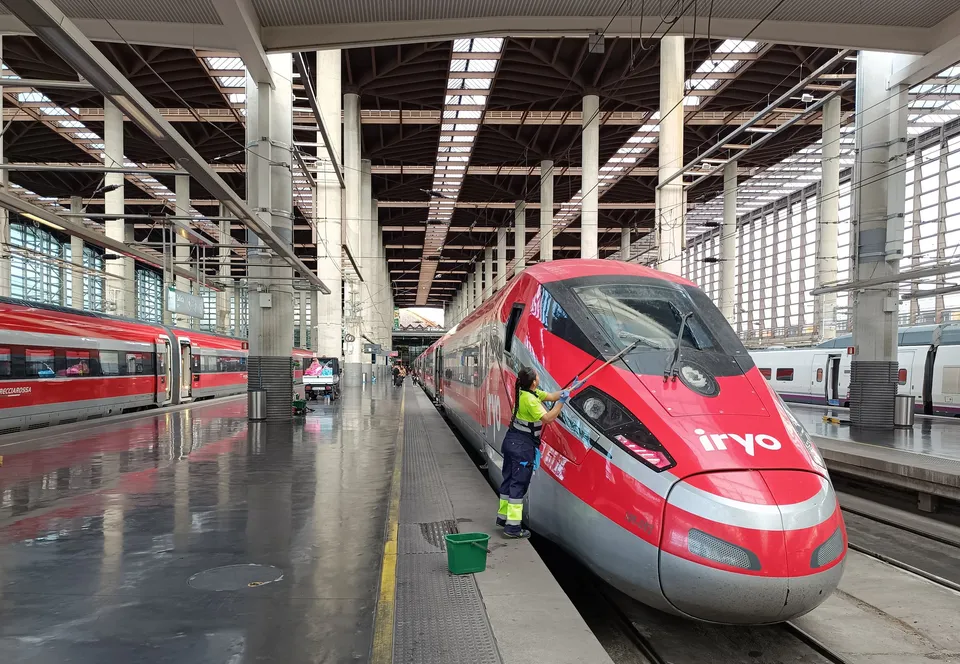
Iryo chief executive Fabrizio Favara told a Senate inquiry on 5th October that trains on the Madrid-Seville high-speed line could take “quite some time” to reconnect and resume after an LZB signalling disconnection. The testimony has gained renewed relevance after a collision near Urda, Toledo, on Wednesday 28th October, which El Confidencial reported had killed at least 69 people.
Passengers travelling between Madrid and Seville should check Adif’s official Urda incident notice before starting their journey. Adif is the state-owned rail infrastructure manager, and its notice is the official channel supplied for updates on the LZB incident affecting the high-speed line.
El Confidencial reported that an LZB failure on Wednesday morning immobilised six trains, including the two involved in the collision near Urda. According to its account, a Renfe AVE high-speed train resumed at normal speed after receiving instructions from Adif’s control centre and struck an Iryo service that was still stopped further along the same track.
Senate evidence described repeated restart problem
Favara gave his evidence to a Senate commission examining the condition of Spain’s railway network after accidents in Adamuz and Gelida, Barcelona, in January. He was asked about infrastructure and track incidents reported by Iryo drivers and technical teams on the Madrid-Andalusia corridor during the previous year.
According to the Senate’s Official Journal, as cited by El Confidencial, most of Iryo drivers’ reports in 2025 concerned the Madrid-Barcelona route. On the Madrid-Seville section, however, Favara identified LZB signalling as the most frequent issue outside exceptional incidents such as fires.
“The LZB signalling system is safe, but quite old, and every time the train’s signal disconnects from the ground signal, the train stops. It cannot move and it takes quite some time to reconnect and restart the service.”Fabrizio Favara, Iryo chief executive, in Senate testimony on 5th October
LZB is a train-protection and signalling system that links a train with trackside equipment. Favara said a disconnection between the train and the ground signal causes the train to stop, preventing it from continuing until the connection has been restored.
Driver reported that the Iryo train could not restart
Favara told senators that the driver is required to notify Adif’s Traffic Regulation Centre when any circumstance affects a train’s movement. El Confidencial reported that the Iryo driver involved in the Urda collision made that notification, telling the control centre that she could not restart the LZB system and that the train remained stopped on the track.
The reported sequence places the LZB failure at the centre of the incident: six trains were immobilised, and the Iryo service had not resumed when it was hit. The circumstances of the collision and the control-centre instructions described by El Confidencial are matters for the investigation.
Travellers with Madrid-Seville bookings can use Adif’s Urda incident notice for infrastructure updates and their rail operator’s journey-information channel for service-specific arrangements.
Sources: El Confidencial.