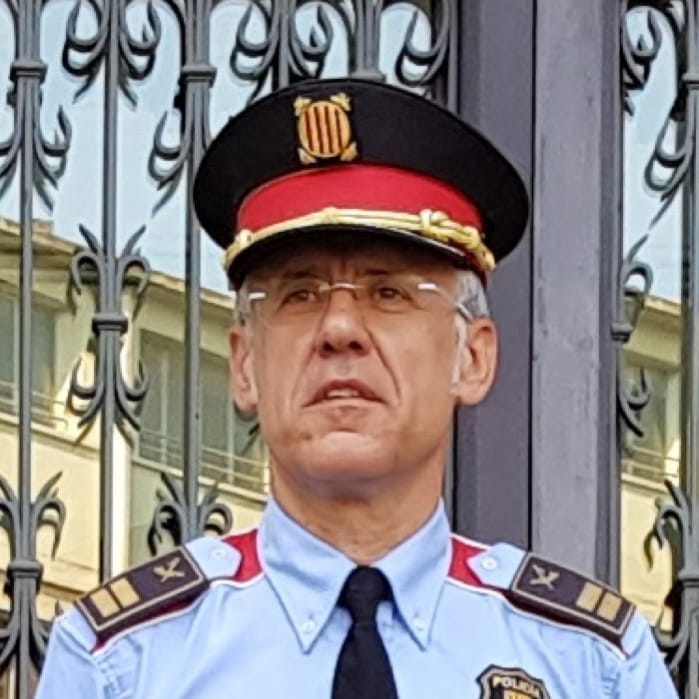
Miquel Esquius will retire as chief commissioner of the Mossos d'Esquadra, Catalonia's regional police force, in September, triggering the eighth change in its top operational post since October 2017. Interior and Public Security Councillor Núria Parlon said a stable leadership is needed to support officers and improve protection for residents.
For residents, commuters and businesses, the next chief will inherit priorities including reducing crime, strengthening prevention and improving the public's sense of safety. Parlon said the transition after the summer should take place with “naturalness and calm”.
“We all agree that we need to better protect people and reduce crime. And, in this sense, we need stability so that those on the streets feel that their organisation is stable and supports them.”Núria Parlon, Interior and Public Security Councillor
Parlon did not say whether she would favour appointing the first woman to lead the force as chief commissioner. She praised Esquius's work during his current period in command and said his successor must continue the strategy developed over the past two years.
Seven leadership changes since 2017
The succession follows a period of repeated changes at the top of the Mossos. Major Josep Lluís Trapero was removed from the post in October 2017 during the application of Article 155 of the Spanish Constitution, which placed Catalonia's self-government under direct central government control.
Ferran López succeeded Trapero and was replaced by Esquius in June 2018. Esquius left the post a year later, in June 2019, when Eduard Sallent took over.
Trapero returned as chief commissioner in November 2020 after his acquittal in the trial concerning the Mossos leadership's actions during the 1 October independence referendum. In December 2021, the Interior Department led by Joan Ignasi Elena replaced him with Josep Maria Estela, who was himself replaced by Sallent in October 2022.
On 26 August 2024, Parlon announced Sallent's dismissal and Esquius's appointment as chief commissioner. She also announced that Trapero would become Director General of the Police, a political and administrative post. Parlon said then that “a phase has been exhausted and a new time is beginning with new leaderships”.
Crime reduction and prevention remain the stated priorities
Parlon said the incoming chief commissioner should maintain the work carried out under Esquius. The department's stated priorities are:
- reducing crime and improving the perception of safety;
- increasing preventive policing;
- coordinating with other security forces; and
- strengthening intervention on civic-order issues, where Parlon said staffing shortages had limited the force's capacity.
The Interior Department has not announced Esquius's successor. The appointment is expected after the summer, when his retirement takes effect.
Reported by vilaweb.cat, Oriol Solé Altimira, lavanguardia.com, Ferran Espada, Àlex Gubern, Álvaro Soto, Yolanda Canales, Sandra Vicente, Germán González, VilaWeb Feed.