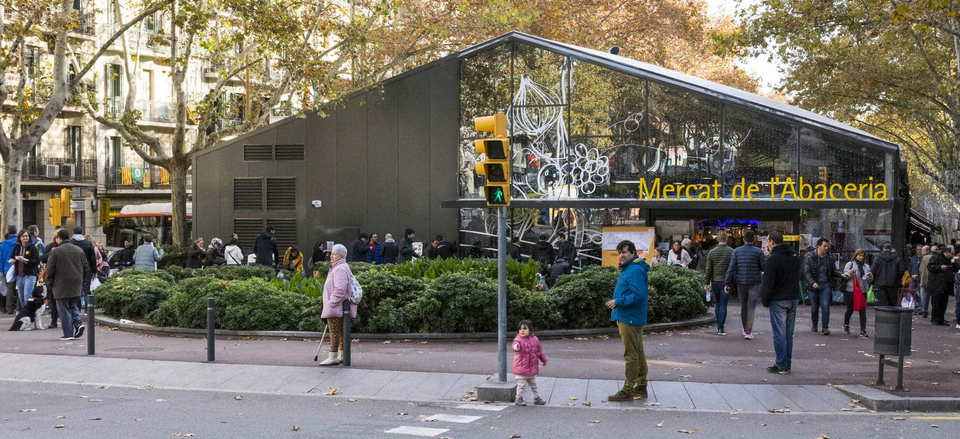
An unfinished Civil War air-raid shelter with space for about 240 people has been uncovered during summer 2026 paving works on Carrer de Torrijos, beside Mercat de l'Abaceria de Gràcia. The entrance was found outside number 2, and the discovery was reported on 25 July.
For pedestrians and market users, the shelter will not become a visitor site: Barcelona City Council's Archaeology Service plans to seal and protect it beneath the new pavement once documentation is complete, while keeping it available for inspections or research by authorised staff.
A shelter identified in 1939–1940 records
Archaeologists link the structure to shelter R.0230, which appears in municipal documents from 1939 and 1940. Initial records indicate it had three entrances between the former Plaça de Roque Barcia, now Plaça del Raspall, and Puigmartí, Torrijos and Voltaire streets, now Carrer de Siracusa.
The shelter is separate from another structure previously detected beneath the market through an endoscopic inspection, according to reporting on the intervention.
- About 68 metres of galleries have been explored.
- Historic plans place the original route at about 199 metres.
- The galleries were excavated roughly 10 metres below street level.
- Some sections have no lining, indicating that construction was not completed.
Ventilation, lighting niches and wall markings recorded
The archaeological work has documented a ventilation shaft, metal hooks fixed into the walls and niches cut for oil or carbide lamps, the shelter's only known lighting. Archaeologists also recovered a coin beside the wall that sealed the original entrance.
Construction marks, technical notes and a name have been found as graffiti on the walls. Specialists are still examining the origin of the name.
According to the Barcelona Archaeology Service, the unfinished condition of the structure and collapses in parts of its clay ceiling and walls mean the immediate priority is the safety of the public highway. The shelter will remain sealed under the replacement pavement after the archaeological record has been completed.
Primary sources: ajuntament.barcelona.cat. Reported by okdiario.com, Sílvia Marimon, catalannews.com, News Desk, Alberto Gómez, barcelona-metropolitan.com, Andoni Berná, vscw.ca, El Confidencial.