
Minimum Services Announced for 11 November Strike
The Catalan Department of Business has published an order setting minimum service levels across key sectors during the general strike scheduled for Wednesday 11 November 2026. The measures, issued on Thursday 5 November, will ensure 25% of usual services in primary care centres (CAPs) and public transport during peak hours. The strike has been called by a coalition of unions including CC.OO Catalunya, UGT Catalunya, CGT, Intersindical Alternativa de Catalunya-IAC, Intersindical CSC, COS, CATAC-CTS, CNT, Sindicato Único de trabajadores Solidaridad Obrera, COBAS, OSAD, and ASC.
Transport and Health Services Covered
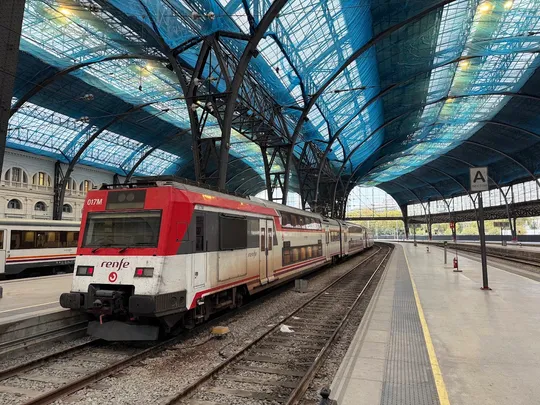
For passenger transport services, including Rodalies and Regionales, Transportes de Barcelona, Ferrocarril Metropolità de Barcelona, Ferrocarrils de la Generalitat, Tram Barcelona, and urban and interurban bus networks, 25% of the normal service will operate during peak hours. The Barcelona airport bus service will maintain a minimum of 50% capacity. Services for people with disabilities and school transport with no alternative will continue at full capacity. The rest of the off-peak public transport service will operate at reduced levels, though exact figures were not specified in the order. In healthcare, emergency and specialist units, including intensive care, neonatology, childbirth, radiotherapy, and chemotherapy, will function normally. Primary care centres (CAPs) will operate at 25% capacity, while the Banc de Sang i de Teixits (Blood and Tissue Bank) will run at 50%.
Other Essential Services Maintained
Emergency telephone services will operate at 85% capacity, covering police, fire, civil protection, maritime rescue, and gender violence response. Critical infrastructure repairs, such as for electricity, gas, water supply, wastewater treatment, and public lighting, must not be delayed beyond the strike period. Security services will maintain 70% staffing at high-risk sites like petrochemical plants and banks, 75% for transport hubs, 80% for personal protection roles, and 60% at alarm centres. Public radio and television will broadcast 50% of news programming. In social care, 85% of staff will be present in residential centres for disabled and elderly people, 50% in day centres, and 85% in telecare services. In education, staffing will be set at one teacher per six early childhood units, 50% of staff in special education centres, and 33% in nurseries.
The services provided by companies covering emergency and urgent telephone lines are necessary and essential to attend to vital needs, and therefore, the handling of public order emergencies, firefighters, police, gender violence, civil protection, maritime rescue, health service emergencies, and similar matters must be considered and constitutionally protected.
The order applies to public and private sector workers across Catalonia and is legally binding under the government’s authority to safeguard essential public functions during industrial action.
Sources: Europa Press, atm.cat.