Commemoration Held in Plaça Sant Jaume
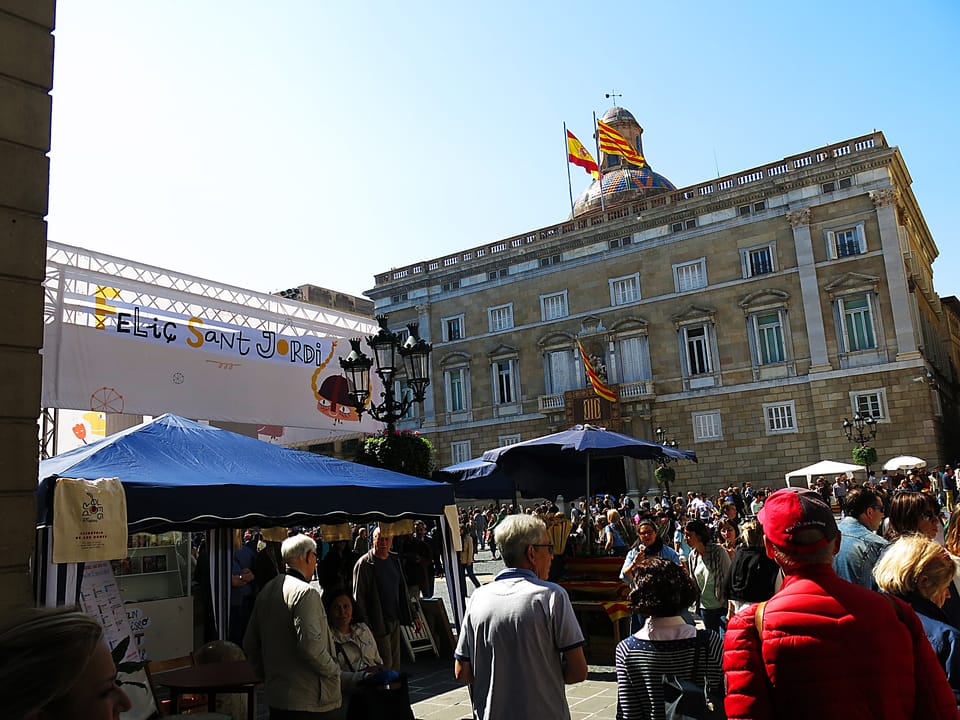
Nine years after the August 17, 2017 terrorist attacks in Barcelona and Cambrils, public officials, victims, families and citizens gathered at Plaça Sant Jaume to honour the 16 people killed. The ceremony, hosted by poet Fatima Saheb, reaffirmed institutional and civic commitment to memory, respect and peaceful coexistence. Mayor of Barcelona Jaume Collboni, Parliament President Josep Rull and Generalitat Interior Councillor Núria Parlon attended the event, alongside Government Delegate Carlos Prieto and senior security officials including Mossos d'Esquadra Chief Commissioner Miquel Esquius and head of the Civil Guard in Catalonia Pedro Antonio Pizarro.
Memory is not just remembering what happened, but deciding how to take care of each other, accompany each other, and continue walking together.
The tribute included a reading of Miquel Martí i Pol’s poem "Parlem de tu" by actress Marta Bayarri, followed by a performance of Txarango’s song "Compta amb mi" by musicians Jofre Bardagí and Ana Fernández. A minute of silence was observed, ending in sustained applause for the victims and their loved ones.
No Ceremony on Las Ramblas Due to Ongoing Works
For the first time, the commemoration did not take place on Las Ramblas, where a van ploughed through pedestrians in 2017, killing 14. Instead, the city moved the official event to Plaça Sant Jaume due to ongoing urban renovation works in the tourist area. Despite the change of venue, organisers stressed continuity in remembrance and solidarity. Signs reading “We are not afraid”, “No to Islamophobia” and “The best answer is peace” have become enduring symbols since the attacks, reflecting public resolve.
L’Hospitalet Launches Democratic Memory Space
In parallel, the Museum of L’Hospitalet has opened a new democratic memory initiative at the 16th-century Can Riera farmhouse on Xipreret Street. The site now serves as an interpretation, documentation and consultation centre focused on L’Hospitalet’s role in resisting Francoism and advancing democracy between the Second Republic and the 1980s. Educational offerings include workshops and the Democratic Transition Trail in L’Hospitalet (RTDLH), an urban route covering key moments from 1960 to 1980. Developed through local historiography, it highlights the convergence of neighbourhood, worker, religious, cultural and political movements during Spain’s shift to democracy. The trail includes 25 sites across the city, such as Torras i Bages Secondary School, La Florida Social Centre and Bellvitge Hospital, each illustrating grassroots activism and civic resistance. Resources are available via an educational guide published by Agustín Castellano Bueno.
Primary sources: acastellano. Reported by diaricatalunya.cat, democrata.es, Stephen Burgen, DW, Associated Press, ABC News & Headlines – Australian Broadcasting Corporation, bbc.com.