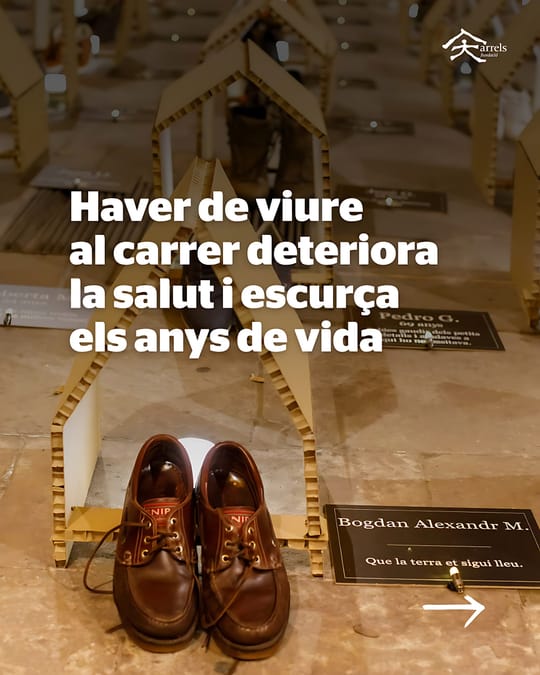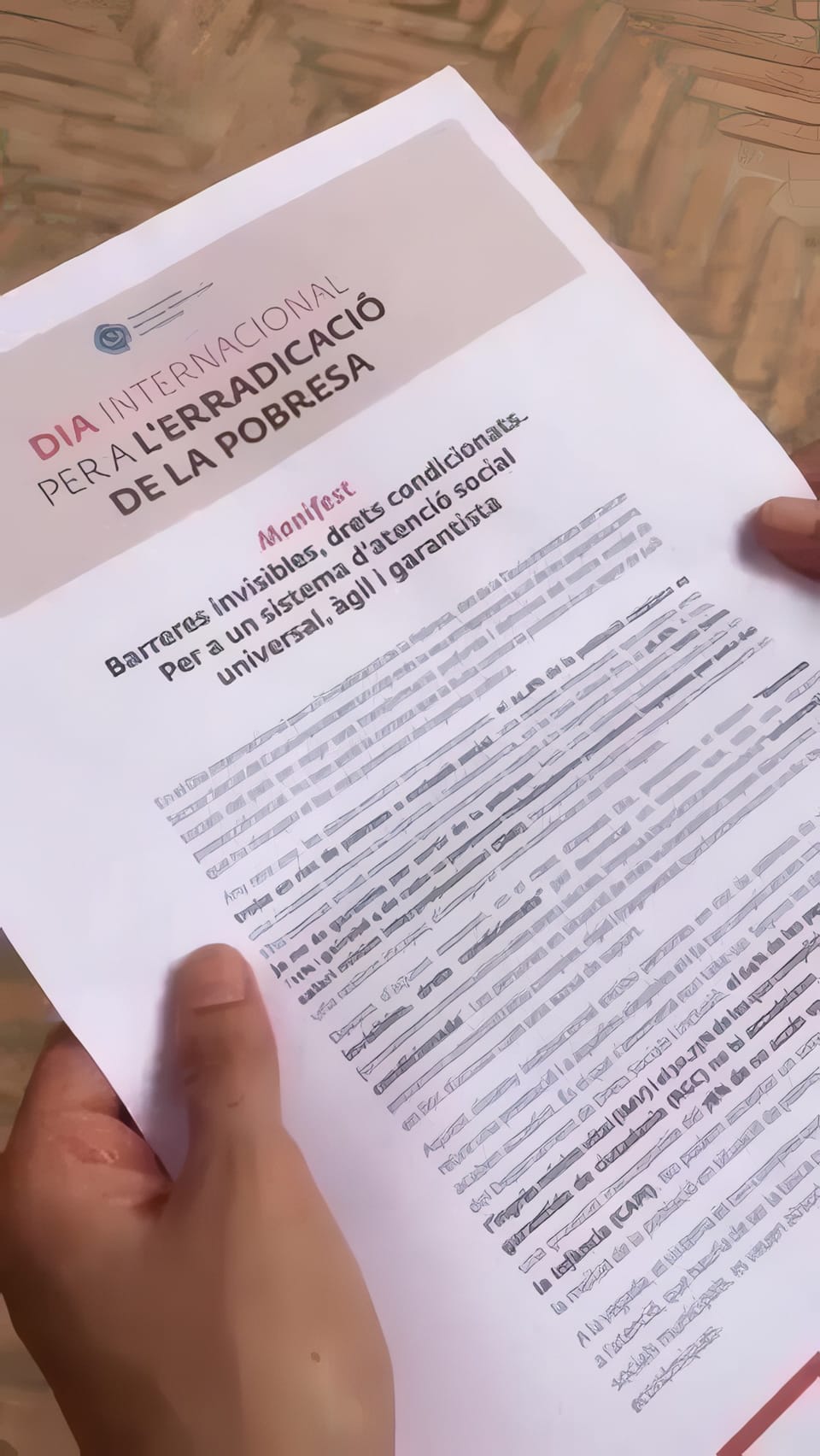
Video: @Taula3sector / X
Complex Rules Block Access to Aid
The Table of Social Third Sector Entities of Catalonia has warned that "excessive bureaucracy" is preventing people in vulnerable situations from accessing social assistance and economic benefits, despite being entitled to them. In a dossier titled 'Invisible Barriers, Conditional Rights: Who is Left Out of Social Assistance and Economic Benefits in Catalonia?', presented on Friday 16 October in Barcelona, the coalition highlights that the complexity of the system itself acts as a barrier. The report states that the process of proving vulnerability, through documentation, certificates, and strict deadlines, often excludes those who need support most, particularly homeless people, women, and households in severe poverty.
High Non-Take-Up and Persistent Poverty
According to the dossier’s estimates, around half of people living in severe poverty in Catalonia would not qualify for key benefits due to current eligibility criteria. The non-take-up rate, the proportion of eligible people who do not receive benefits, stands at 64% for the Minimum Vital Income (IMV) and 78% for the Child Support Supplement (Capi), based on 2025 data. In 2023, 66% of households with children receiving the Guaranteed Citizenship Income (RGC) remained in severe poverty, compared to just 4.6% of childless households receiving it. Additionally, 48.2% of women in severe poverty would meet RGC criteria if the benefit were fully implemented. Only 23% of homeless people receive benefits such as the IMV or RGC, the report notes, due to both access barriers and benefit amounts that are deemed insufficient.
Call for Systemic Reform
The third sector coalition is calling for major reforms to reduce administrative burdens and increase inclusion. It urges authorities to replace document-heavy verification with self-declarations, eliminate negative administrative silence (where applications are denied by default if not processed), and stop recovering payments caused by administrative errors. Other proposals include:
- Making the RGC and IMV compatible with temporary, part-time, or short-term work income
- Updating the Catalonia Sufficiency Income Index to reflect the real cost of living, housing, and childcare
- Creating a one-stop shop for benefit applications
- Guaranteeing registration for all, regardless of documentation status
- Improving coordination between agencies and protecting social workers with stable funding
The entities argue that the current system's "logic of control and scrutiny" stigmatises applicants and wears them down, undermining the purpose of social protection.
We need a system that trusts people in need, not one that exhausts them with procedures.
Primary sources: ec.europa.eu. Reported by europapress.es, Europa Press Barcelona.