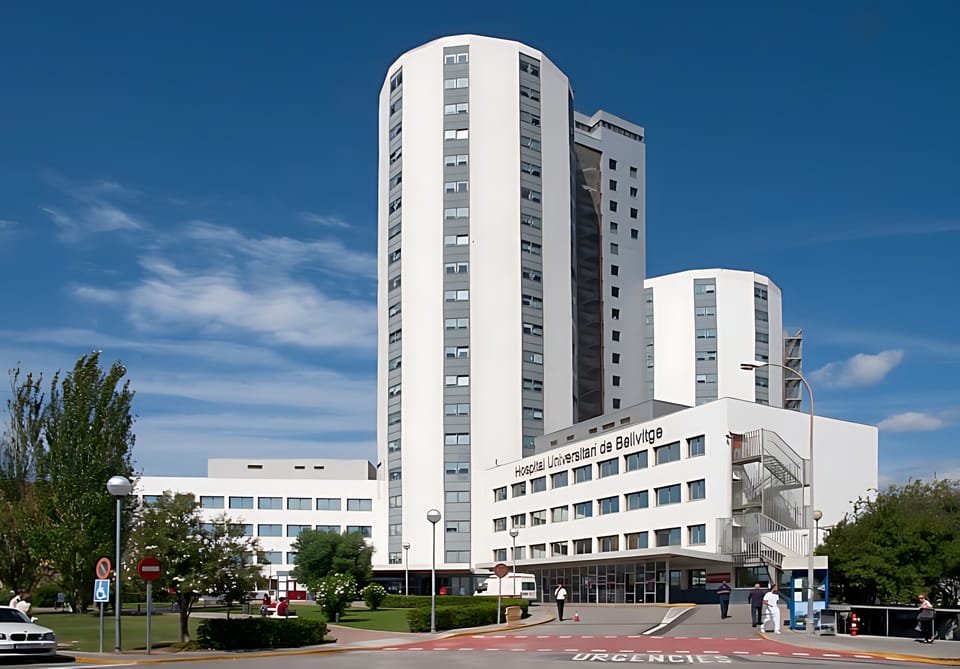
Local Hospital Coordinates Groundbreaking Myasthenia Trial
Bellvitge Hospital in L'Hospitalet de Llobregat has led Spanish participation in a phase 3 clinical trial evaluating a new self-injection treatment for adults with generalized myasthenia gravis (gMG), a chronic autoimmune condition affecting nerve-muscle communication. The trial, known as PREVAIL (NCT05556096), involved 260 patients across 113 centres in 20 countries and was published in JAMA Neurology. It assessed the efficacy and safety of weekly subcutaneous gefurulimab, an investigational dual-binding nanobody that inhibits complement component 5 (C5), a key pathway in AChR-antibody-positive gMG. Patients received either gefurulimab or placebo via once-weekly, weight-based self-injection at home over 26 weeks. All participants had anti-acetylcholine receptor antibody–positive (AChR+) gMG, Myasthenia Gravis Foundation of America class II to IV disease, and a baseline Myasthenia Gravis Activities of Daily Living (MG-ADL) score of at least 5.
Significant Improvements in Function and Strength
According to findings, patients receiving gefurulimab showed significant improvements in both daily function and muscle strength compared to those on placebo, meeting all primary and secondary endpoints. Improvements in patient-reported daily function were detectable as early as week 1 on the MG-ADL scale and were sustained through week 26. At that point, the least-squares mean MG-ADL score decreased by 4.2 points in the treatment group versus 2.6 points in the placebo group, a statistically significant difference (−1.6; 95% CI, −2.4 to −0.8; P<.001). Investigator-assessed muscle strength, measured by the Quantitative Myasthenia Gravis (QMG) score, also improved more in the gefurulimab group. QMG scores decreased by 4.5 points versus 2.4 points, respectively (−2.1; 95% CI, −3.1 to −1.1; P<.001). Nearly half (46.3%) of treated patients achieved a 5-point or greater improvement in QMG, compared to 25.2% in the placebo group.
Practical Benefits for Patients
The once-weekly subcutaneous self-administration offers a potential new option for patients, differing from existing C5 inhibitors in its dosing schedule. The treatment can be given at home by the patient or caregiver, improving accessibility and convenience. Injection site reactions were more frequent with gefurulimab, but overall adverse event rates were similar between groups. No meningococcal infections were reported, a known risk with C5 inhibition.
The 26-week randomized period does not establish long-term efficacy or safety, and the authors noted limited data on longer-term outcomes.
Bellvitge Hospital continues to participate in the open-label extension phase of the trial, which will gather further evidence on long-term safety and sustained benefits.
What This Means for Patients in Catalonia
Myasthenia gravis affects over 16,000 people in Spain, with higher prevalence among women under 40 and men over 60. In Catalonia, studies indicate rising prevalence with age, particularly in those over 65. While there is no cure, current treatments allow many patients to live normal or near-normal lives. This trial marks a significant step forward in managing the condition, particularly for those with AChR+ gMG. If approved, gefurulimab could offer a home-based, self-administered option with early and measurable symptom relief. Patients interested in clinical trials can discuss eligibility with their neurologist or visit the official trial registry at clinicaltrials.gov/NCT05556096 for more information.
Reported by europapress.es, practicalneurology.com, elsevier.es, neurologyadvisor.com, sciencedirect.com, Europa Press Barcelona.