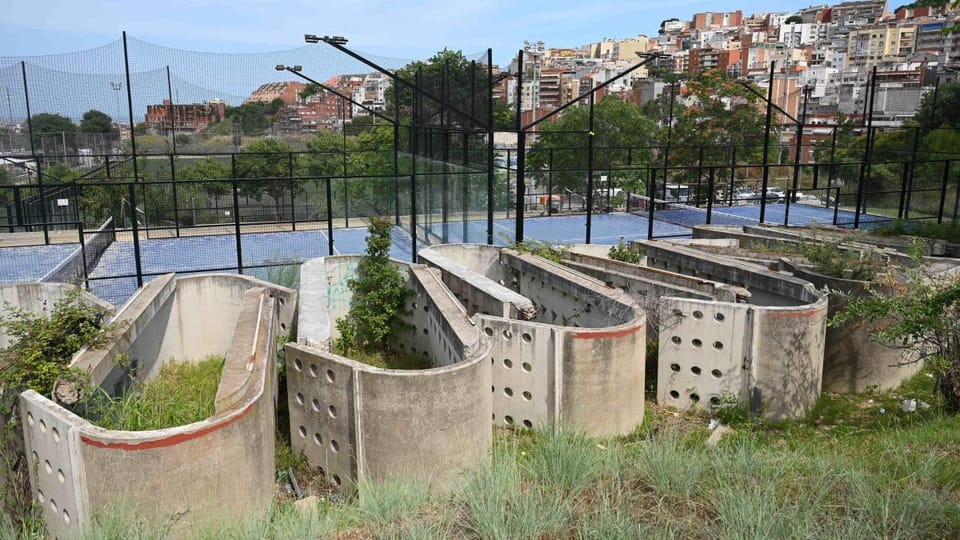
Barcelona en Comú will demand action from Mayor Jaume Collboni's government this Tuesday to restore the neglected Olympic archery field in Vall d'Hebron. Pieces of the 1988 design by renowned architects Enric Miralles and Carme Pinós have decayed on a municipal plot for almost two decades.
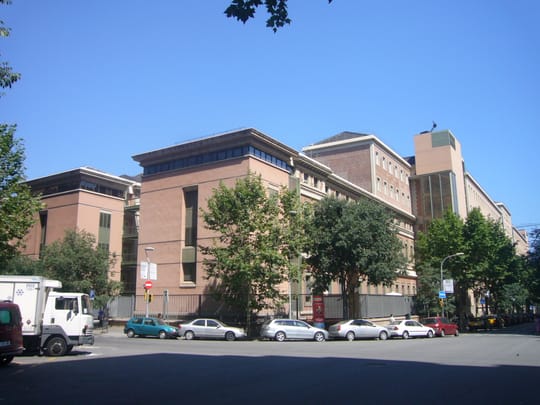
Barcelona en Comú will present a proposition to the Urban Planning Commission. They aim to recover heritage linked to the 1992 Olympic Games and improve the CEM Vall d'Hebron sports complex. This complex, which serves approximately 1,700 users, faces numerous issues. These problems include closed stands due to structural risk, temporary changing rooms without hot water, and rodent presence. The Síndic de Greuges, Catalonia's ombudsman, has criticised the “violation of the right to practise sport in optimal conditions”.
The original Olympic archery field, which included a pavilion housing changing rooms and a bar, won the prestigious Ciutat de Barcelona Architecture Prize. Officials dismantled it in 2008 to build a new tunnel for the L5 Metro line's manoeuvre tail. This urgent construction followed the January 2005 Carmel neighbourhood collapse. The Generalitat's public company, GISA, promised architect Carme Pinós that they would reconstruct the building. Enric Miralles, her co-designer, had passed away in 2000. Almost two decades later, the pieces remain exposed to the elements below the Ronda de Dalt, deteriorating further.
Calls for Restoration and Dignity
Pau Gonzàlez, representing Barcelona en Comú, will defend the proposition. He expressed concern for the 1,700 users of the sports centre. These users continue to lack hot water and use container-style changing rooms. The stands remain closed, posing a structural risk. Gonzàlez highlighted the upcoming anniversary of the Olympic legacy. He stated, “Barcelona cannot be the world capital of architecture while it lets the legacy of Enric Miralles rot on a public plot.” The estimated cost for reconstruction approaches €4 million.
A History of Neglect and Broken Promises
The CEM Vall d'Hebron sports complex has accumulated various problems since its current managers, the Marcet Foundation, took over in 2019. These issues have led to sanctions against the foundation. The original Olympic facility transformed into a football and rugby field after the 1992 Games. Its subsequent dismantling in 2008 left the award-winning pavilion's concrete remains to decay. This situation contrasts sharply with the ongoing restoration efforts at other significant city landmarks. The commitment from GISA to reconstruct the building has gone unfulfilled for nearly 20 years.
Political Debate Expected
Urban Planning Deputy Mayor Laia Bonet will likely remind Barcelona en Comú of their eight years in city government. During that period, they also did not advance a solution to this problem. However, despite potential political jabs, there is hope for alignment to revitalise the facility. The debate will take place in the Urban Planning Commission. This discussion aims to secure funding and a timeline for the project. The city faces pressure to address the neglect of this significant architectural and sporting heritage.
The upcoming commission meeting will determine if the city government and political groups can agree on a plan. Securing the estimated €4 million for reconstruction is the next critical step. This decision will impact the future of a significant Olympic site and the daily lives of local sports centre users in Vall d'Hebron.
Sign up for our new entrepreneurs community Bizcelona, now accepting our second wave of applicants.
Originally published by La Vanguardia Barcelona. Read original article.