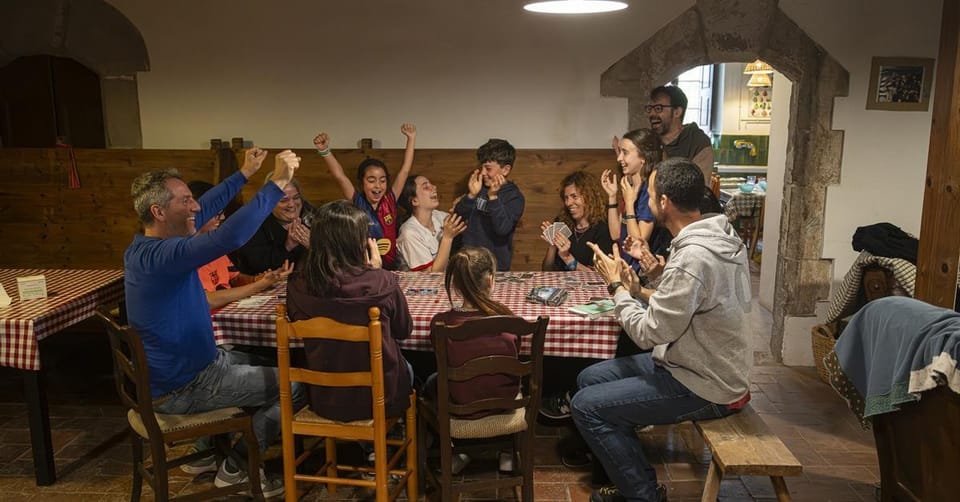
Barcelona families are increasingly opting for shared weekend homes outside the city. They create communal spaces for leisure and connection rather than owning individual second residences. This growing trend offers a more affordable and community-focused approach to escaping urban life. Some projects have thrived for over two decades.
Bruna, now twenty, recalls her first weekend in such a shared house when she was just fifteen days old. Her parents and ten other families jointly rented the property. This project has continued for over twenty years. "I remember the excitement on Friday evenings, knowing we were going," Bruna explained. She added, "We had a great time, went on excursions, and had a cabin." Lida joined a similar initiative after the pandemic. She found it difficult to start a new project or find space in existing ones. She eventually took over a spot from friends who were leaving their shared home. "I want this, I said immediately," Lida stated, highlighting her immediate attraction to the concept.
These families typically visit their shared homes about once a month, particularly during the school term. Lida noted that maintaining the project's sustainability requires families with young children. Teenagers often have busy schedules. Bruna appreciates her parents' commitment. She said, "I am grateful my parents did not give up and kept fighting for it, because even as a teenager, although we might have had other plans, we still had a good time." Sociologist Natàlia Cantó, a professor at the Open University of Catalonia (UOC), identifies several advantages beyond economic affordability. She highlights the value of children having playmates, adults sharing conversations and evenings, and even distributing family care activities. Cantó suggests this arrangement provides "a very significant learning experience." It transmits "a message and a style of leisure and inhabiting the world."
Building Community Beyond Barcelona
Jordi participates in a shared home project with a similar philosophy. He and his friends were scouting companions in their youth. Sixteen years ago, they decided to find a space for weekend gatherings. They found a rectory in Montclar del Berguedà, which the Bishopric rented to them. Jordi and his partner joined after their first daughter was born. For over ten years, they have aimed to visit once a month. The group maintains strong ties with the village. This area experienced depopulation decades ago. Locals know them as "those from the rectory." Jordi explains that sharing time with friends who also have children of similar ages gives the initiative meaning. Up to six children, aged between eight and sixteen, can gather there. They try to use all long weekends. They reserve two specific dates for everyone to attend: Sant Joan and the village's main festival.
Benefits and Challenges of Shared Living
Family psychologist Gemma Tejedor, from the Nexum centre in Barcelona, considers this experience "very enriching." She notes that expanding children's social networks fosters their sense of community. It also fosters their autonomy. Tejedor also warns participants. They must "take care of it, generate understanding among members, and apply an adult perspective with communication and complicity." Each project operates according to its founders' wishes, without written rules. Jordi's group, for instance, drew on their scouting background. This helped them establish understanding from the start. They are fortunate to have a large house where each family has its own room. While they occasionally meet to make decisions, they follow basic guidelines. These include contributing a small extra amount to a common pot for bills each night they stay. This system ensures those who use the house more contribute more to expenses. For meals, they plan a menu upon arrival, shop together, and cook for everyone present. "We have grown with each other," Jordi remarked.
A New Model for Family Leisure
Lida and Bruna's shared house is not large enough for each family to have a private room. This poses no issue, as all ten families rarely coincide. Like Jordi's group, they have fixed dates for gatherings. These include Sant Joan, La Castanyada, and a calçotada in February. They also find it challenging for all ten families to be present simultaneously. Their rules extend only to basic requirements. These include leaving the house clean and locked. They do, however, pre-plan menus for the arrival night and the first lunch. Everyone knows to bring ingredients for those initial shared meals. They decide on the rest of the cooking in advance. Once a year, at least one member from each family tries to attend for general maintenance. Lida's family would not have sought a second residence on their own. Their motivation for joining was to offer their daughters the chance to share space with other children "in a caring and healthy way, with close friends."
Lasting Impact on Children
Jordi shares this perspective. He views the space not as a second residence but as a meeting point. "It fills us with joy to see that for our sons and daughters, Montclar is a safe space where they have friends who are like cousins," he detailed. He added, "it is like a kind of family." Bruna's reflections confirm the project's lasting impact. She believes the experience taught her to share as a child. It provided her with interesting and diverse conversations as she grew older. "I grew up there, learned many things, and experienced them, and above all, it is a safe place where no one judges me no matter what happens." This model creates a shared weekend space. It helps children develop various skills. Gemma Tejedor identifies five key areas. It fosters deep, stable bonds, improving social skills and a sense of belonging. Yet, intense bonds can also lead to intense conflicts. They can also lead to defined roles. These shared projects act as real natural communities. They extend the nuclear family. This community reinforces values. These include solidarity and cooperation. Yet, a very homogeneous group might limit children's exposure to diversity.
The Future of Shared Family Spaces
Free play in a secure, stable environment enhances children's autonomy. It allows them to explore and make decisions. Yet, it might overwhelm children who have fewer social needs. Outdoor, less structured play positively affects emotional and physical development. It offers flexibility from busy routines. This idealisation can mask adult tensions. These tensions arise from minimal organisation. Sharing time with other families exposes children to diverse family models. It teaches flexibility and social understanding. Differences in family rules can also create confusion for children. They can also create tension among adults. Despite these challenges, the enduring appeal and benefits suggest that shared weekend homes will continue to be a popular choice for Barcelona families. They seek community, affordability, and a rich environment for their children's development.
Sign up for our new entrepreneurs community Bizcelona, now accepting our second wave of applicants.
Originally published by Ara Cat. Read original article.