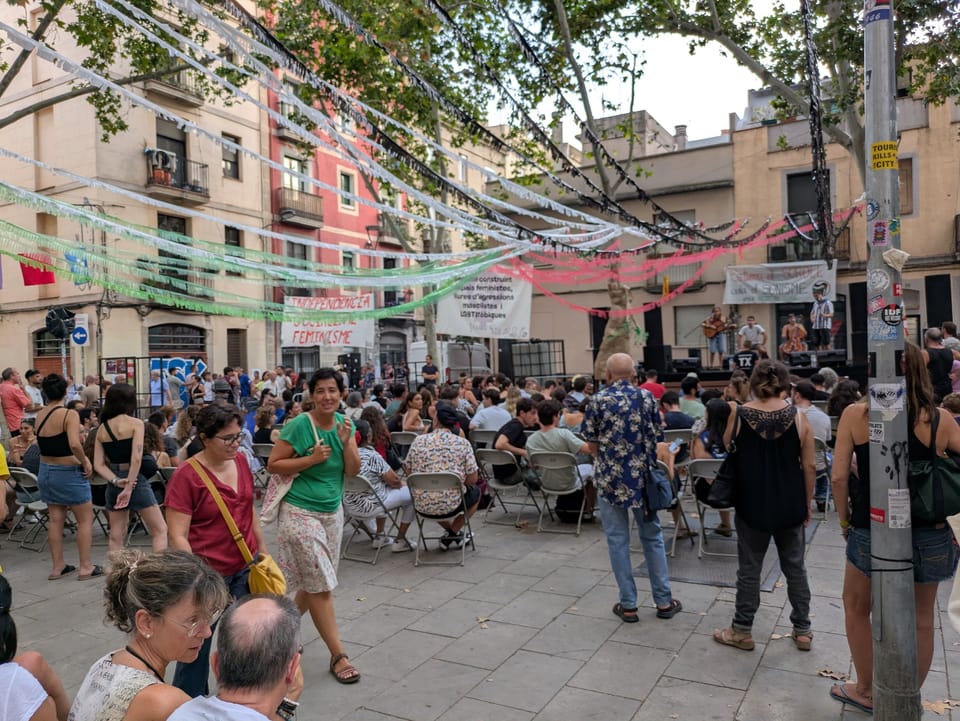
Barcelona city authorities are enforcing stricter alcohol controls during the 2026 Gràcia festivities, sparking tension between local street commissions and bar owners over the role of drinking in the neighbourhood's annual celebration. The measures, aimed at reducing noise and street waste, include a year-round 11 pm closing time for convenience stores and supermarkets in Gràcia, and a second consecutive year of prohibitions on bars installing extra taps or auxiliary bars during the festival.
The city council has also mandated earlier terrace closing times in five Gràcia squares, Sol, Virreina, Revolució, Diamant and Vila, classified as high-noise areas. From April to October, terraces must close at 11 pm Sunday to Thursday and at midnight on Fridays, Saturdays and eves of public holidays. Inspections will ensure bars operate within their licensed capacity and do not add unauthorised serving points, a rule that has drawn strong opposition from restaurateurs.
Divisions among street commissions
Each of the 23 decorated streets and squares in Gràcia sets its own approach to alcohol. Some, like Travessia de Sant Antoni and Verdi, continue selling all types of drinks, citing the revenue as essential for funding decorations and live music. "We make money to pay musicians and buy necessary materials," said Cristina Murillo from Travessia de Sant Antoni.
If we don't sell it, another street will
Susana Font from Verdi defended the decision, noting competition between streets. Others take a middle path: Puigmartí and Joan Blanques de Baix sell only beer and *tinto de verano*, avoiding stronger mixed drinks to manage the crowd. At the opposite end, Tordera and Fraternitat de Baix have chosen not to sell any alcohol. "It's an ideological and conscientious decision; it's about asking ourselves what kind of festival we want," said Marta Salinas from Tordera.
Bars push back on restrictions
Restaurateurs argue the ban on auxiliary taps and extra serving capacity undermines their ability to manage peak demand. Simón Borràs, owner of Raïm 1886 on Siracusa street, said the restriction ignored the realities of festival trade. "Bars are also part of the neighborhood; in fact, we offer a service all year round," he said.
The city council maintains the move is about enforcing existing regulations to ensure a more civic festival. According to official notices, inspections during the 2025 festivities confirmed that unauthorised bars and taps were common, prompting continued monitoring. Street commissions, like Plaça de la Vila, support the enforcement. "The City Council only enforced the regulations," said Martí Urgell from the square's commission.
It cannot be that we finish selling and the bars continue
Océane Apffel Font from Verdi echoed the concern, highlighting tensions between street-run bars and commercial establishments. As the debate continues, alcohol remains a flashpoint in defining the character of one of Barcelona’s most iconic neighbourhood festivals.
Primary sources: Barcelona City Council. Reported by elperiodico.com, Meritxell M. Pauné,Patricia Castán, El Periódico Barcelona.