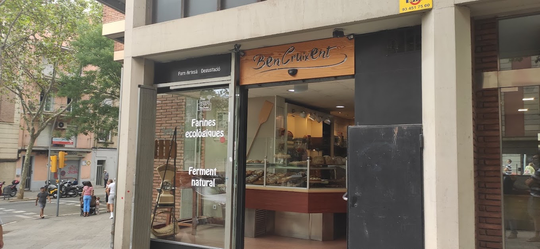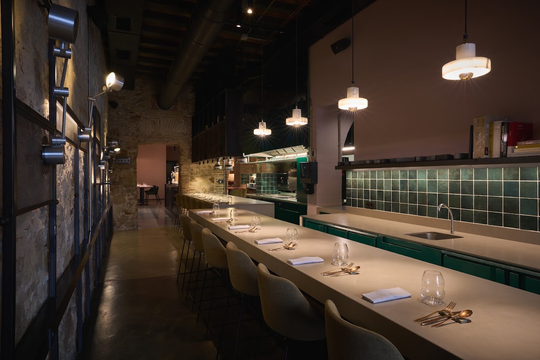
Foreign nationals now own 44% of bars and restaurants in Barcelona, marking a significant shift in the city’s hospitality landscape. Spanish-owned establishments have declined by seven percentage points over the past year to 56.2%, according to the 2025 Municipal Survey on the Restaurant Sector.
For the first time, nearly half (49.2%) of all hospitality employees in the city are from non-EU countries, while only 42.6% are Spanish nationals. This reflects a growing reliance on international labour, particularly in roles within dining and service areas. In 2017, non-EU workers made up just one-third of the sector’s workforce.
Chinese, Italian and Pakistani Owners Lead Foreign Investment
Among foreign owners, Chinese nationals are the largest group, representing 18.6% of all bar and restaurant proprietors, followed by Italians (4.6%), Pakistanis (2%), Argentinians (1.5%) and Indians (1.4%). Overall, 35.2% of foreign owners come from outside the EU, compared to 8.5% from EU countries.
Property transfers managed by hospitality real estate firm Inmo Olaya in 2025 reflect this trend: just over one-third were to Spanish citizens, while 12.41% were to Chinese buyers, 11.62% to Pakistanis and 9.66% to Italians. Many of these new owners do not necessarily run cuisine from their home countries, often continuing with existing local concepts.
High Turnover, Younger Businesses
The average age of hospitality businesses in Barcelona has dropped to 11.4 years, with 77.1% opening between 2010 and 2024. Nearly 39% have launched in the past four years. Only 9.8% of current establishments opened before 2000, a decline of 3.5 percentage points from the previous survey, indicating a loss of long-standing venues.
Bars show the highest foreign ownership rate at 45.7%, compared to 42.4% for restaurants. Bar-restaurants are the most common type of venue, nearly double the number of standalone restaurants.
Workforce Profile and Operating Conditions
The average staff size per establishment is 5.9, though businesses with fewer than 10 employees have an average of 3.8 workers. Most staff are full-time (75%), and 60% are male. The largest age group is 25 to 34 years (30.3%), followed by 35 to 44 years.
Almost half of employees have secondary education, while nearly 30% have only compulsory basic schooling. Most workers are salaried (57.8%), with 23.2% being owners and 19% managers or supervisors.
“The lack of agility in administrative procedures is holding back a key economic sector for the city,” says Roger Pallarols, director of the Barcelona Restaurant Guild.
Despite challenges, 54.3% of owners report being fairly or very satisfied with their business performance. However, only 30.3% say turnover has increased, while 40% report a decline.
Challenges Cited by Operators
- Problems in the local area (21.8%)
- Internal business issues (9.7%)
- Rising costs (9.3%)
- Increased competition (8%)
- Lack of customers, economic and political climate, and taxes (tied)
Administrative regulations and slow processing of permits are cited by 4.8% of respondents as a major constraint. The Barcelona Restaurant Guild highlights ongoing complaints about municipal inspections, fines and terrace management, calling for greater support for the sector.
Operating Hours and Seasonality
68.1% of venues now open every day, a rise of 19.1 percentage points from the previous year. Only 21.6% close on Sundays, down from nearly one-third in 2024. Fridays and Saturdays are the busiest days, while Tuesdays are the quietest.
June and July are the most profitable months, with July peaking at 33.9% of annual revenue. January, February and August are the weakest.
Reported by Meritxell M. Pauné, Ricard Gràcia, elperiodico.com, El Periódico (CA).