Video: <a href="https://x.com/sanchezcastejon/status/2117213835551477977?a=aw-4zqNDp6ai3wzvzGI&s=20">@sanchezcastejon / X</a>
Aid Package to Be Approved Tuesday
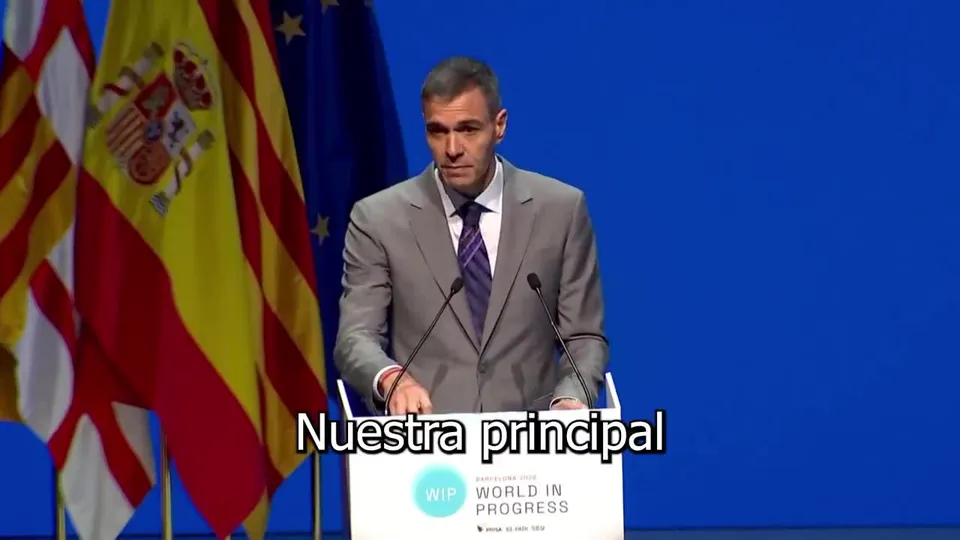
Prime Minister Pedro Sánchez has announced that the Council of Ministers will approve a package of financial and social support for victims of the Urda train crash on Tuesday 3rd November 2026. The decision follows the deadly collision between a Renfe and an Iryo high-speed train near Urda in the province of Toledo on Wednesday 28th October, which resulted in 69 confirmed fatalities and at least 58 people injured, according to the Center for Integrated Data and regional authorities. The aid package will include direct financial assistance doubling the amount provided by mandatory passenger insurance, an advance on compensation payments, a specific temporary incapacity procedure for injured survivors, and the establishment of personalised support offices in regional government delegations where victims reside, Sánchez confirmed during a speech at the World In Progress (WIP) forum in Barcelona on Monday 2nd November.
International Victims and Ongoing Identification
Among the 69 dead are four United States citizens, as well as one each from Canada, Japan, Argentina, Mexico, Tunisia and the Czech Republic, according to the Center for Integrated Data. French and Portuguese nationals were also among the deceased, while two Australian citizens and one Japanese national remain unaccounted for, AFP and local media reported. As of Sunday 1st November, 66 of the 69 victims had been formally identified by the Institute of Legal Medicine and Forensic Sciences of Toledo and Ciudad Real. Castilla-La Mancha President Emiliano García-Page reported on Thursday 29th October that 60 of the 110 injured had been discharged, with 50 still hospitalised, nine in intensive care. The four most critically injured are showing positive progress.
We will accompany those affected in their grief, in every procedure, and in the search for answers,
said Sánchez, assuring that justice authorities are working to determine the precise causes of the crash. Initial government statements have pointed to human error as the primary factor.
Political and Social Response
Sánchez used the WIP forum to defend public investment in transport and social services, contrasting his government’s approach with austerity policies. He pledged to restore public confidence in high-speed rail 'at whatever cost', calling the crash 'an accident that should never have happened'. He highlighted the response of emergency services, the UME, hospitals and a Civil Guard officer who stayed with a trapped young woman, holding her hand until she was rescued, describing such actions as 'the best of Spain'. The tragedy has entered the national political discourse ahead of the 29th November general elections, with early polling indicating a decline in public confidence in the PSOE and a rise in support for right-wing parties. Sánchez criticised the PP's alignment with Vox, warning that far-right influence grows where traditional conservatives normalise it.
European and Economic Context
In broader remarks, Sánchez addressed global threats to Europe, including the war in Ukraine, US-China competition, and Middle East instability. He called for European unity and reaffirmed Spain’s economic resilience, citing growth, job creation and deficit reduction without cuts to public services. However, he acknowledged housing as a 'pending matter'. He praised housing policies implemented by the Generalitat and Barcelona City Council, supporting market intervention to ensure affordability.
Sources: Crónica Global, CBS News, antena3.com, diariodealicante.net.