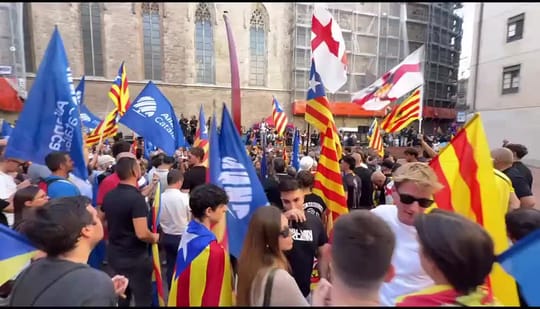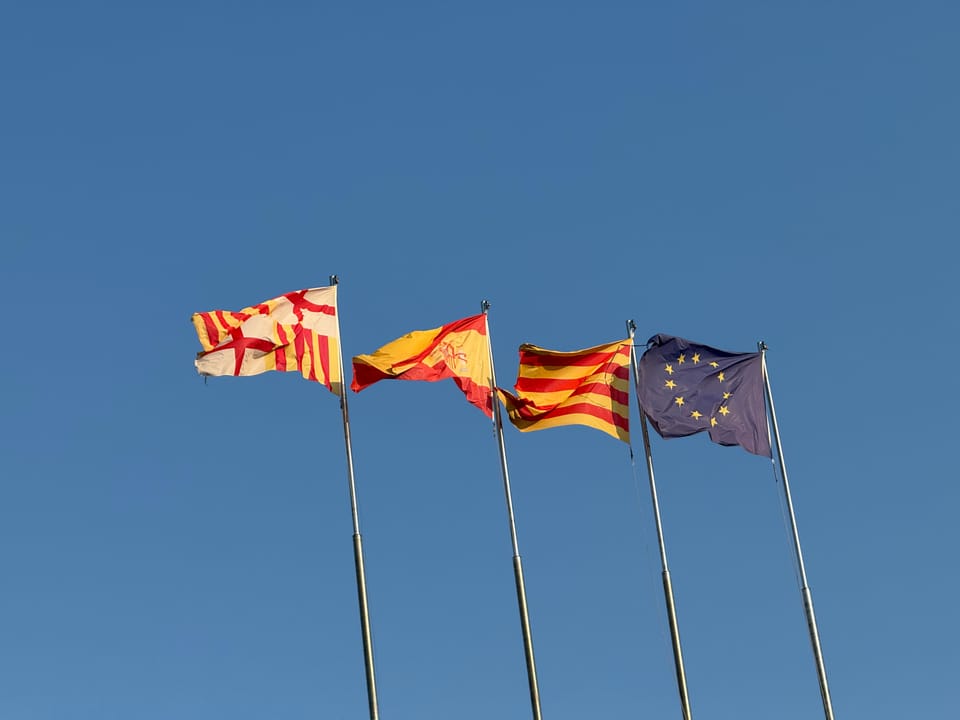
Spain is set to reignite its campaign for Catalan, Basque and Galician to be recognised as official European Union languages during the General Affairs Council meeting in Brussels on 22 September 2026.
The move, confirmed by Spanish officials and EU diplomatic sources, marks the eighth time the Sánchez government has raised the issue since 2023. This time, Madrid is explicitly linking progress on linguistic recognition to its support for the EU’s enlargement process, particularly the accession of Montenegro, which is expected to apply for membership by 2028.
Fernando Sampedro, Spain’s secretary of state for EU affairs, signalled the linkage during a ministerial meeting in Dublin, stating that the expectations of around 20 million Spanish-speaking EU citizens should be met before new languages are added through enlargement. When asked whether this meant Spain could veto Montenegro’s entry, Sampedro did not deny the connection, saying: “I’m sure that we will solve it much before.”
Political Leverage in Brussels
The debate will be included under the “any other business” agenda item, meaning no formal vote or decision will be taken. However, the format allows Spain to present its position publicly and maintain diplomatic pressure.
According to European diplomats, the strategy is widely seen as political leverage to secure continued support from the Catalan separatist party Junts, which is critical to Sánchez’s minority government. The demand was originally agreed in August 2023 as part of a parliamentary pact to secure Sánchez’s investiture and the election of Francina Armengol as Congress President.
"This does not help the Spanish government because it is seen as blackmail: holding enlargement hostage to such a domestic and internal issue for Spain."
One European diplomat from a country opposed to the proposal told EL ESPAÑOL that Spain’s stance was being received with a mixture of surprise and frustration. Several member states, including Germany, France, Finland, Italy and Sweden, have consistently opposed the move, citing legal, financial and political concerns.
No Treaty Change, No Recognition
Legal services at the Council of the European Union have previously concluded that recognising regional languages like Catalan would require a formal reform of the EU Treaties, a step that demands unanimous approval from all member states. To date, Spain has secured only the explicit backing of Belgium, Slovakia, Cyprus and Slovenia.
Despite Madrid offering to cover initial translation and interpretation costs, many capitals remain sceptical. Germany, which has led opposition to the proposal, agreed in October 2025 to open a dialogue with Spain, but no concrete progress has been made in the past year.
"Everyone knows that Sánchez needs to revisit the Catalan issue to maintain support for his coalition government," said a second EU diplomat. "It will not be well received that he links enlargement to the recognition of Catalan. And I haven’t seen any change in position."
Enlargement Stalled, Threat Seen as Hollow
Some diplomats argue that Spain’s threat carries little weight, given that EU enlargement is already stalled. The decision on Montenegro’s accession will not be made before the end of 2027, after Spain’s next general election, when the current government may no longer be in power.
"In practice, everyone knows that enlargement is blocked, so a possible blackmail by Spain would be an empty threat," said a third diplomat from a major EU country. "Many countries have so many conditions linked to enlargement that adding one more would make no difference."
The Sánchez government insists it supports enlargement and frames the language issue as a matter of fairness. Catalan is spoken by approximately 10 million people, far more than Montenegrin, which has around 225,000 speakers.
However, with no shift in the stance of key member states and no indication that Junts will reward Sánchez’s efforts, the September 22 debate is likely to be symbolic rather than decisive.
Primary sources: data.consilium.europa.eu, eb.gencat.cat. Reported by elespanol.com, democrata.es, euractiv.com, eutoday.net, europesays.com, catalannews.com, en.ara.cat, lavanguardia.com, PRESSDIGITAL.