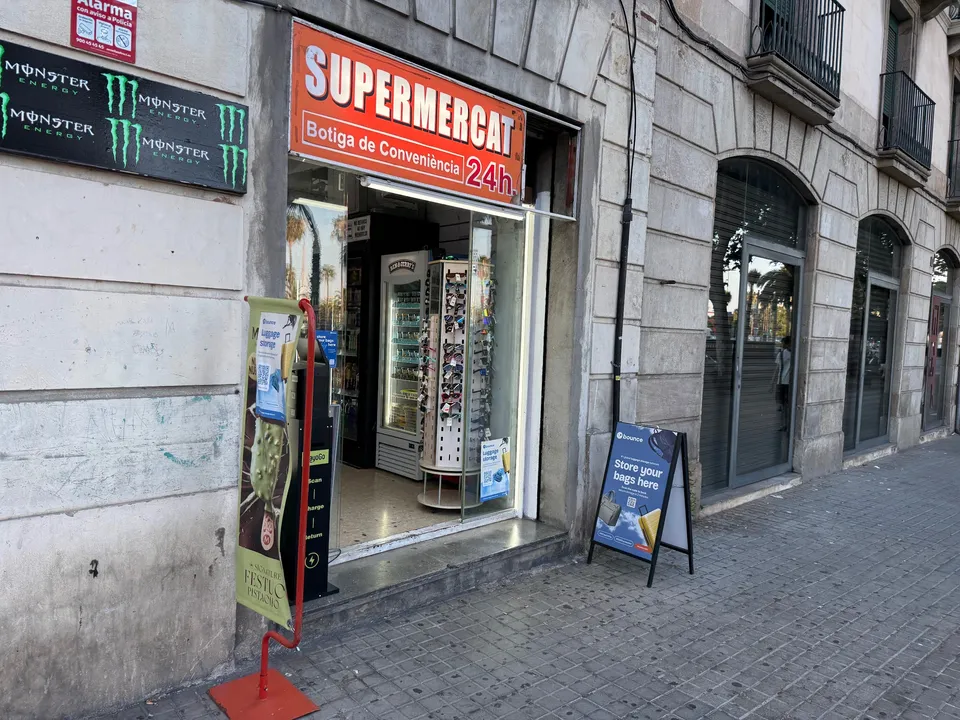
Several major cities in the Barcelona metropolitan area are following the capital’s lead by introducing temporary moratoriums on new 24-hour supermarkets, phone shops, nail salons, and other high-turnover retail formats to protect traditional neighbourhood businesses.
Barcelona implemented a one-year suspension in May 2026 on new 24-hour food establishments, citing concerns over commercial saturation and disruptive practices identified in large-scale inspections. However, enforcement has been inconsistent: two unlicensed 24-hour supermarkets have opened recently, including one in the former Ona bookstore in Gràcia, and will be closed. Two others opened legally under pre-existing permits, and municipal sources say more such cases may arise.
Wider Metro Area Follows Suit
Santa Coloma de Gramenet and Sant Adrià de Besòs have both introduced one-year licensing suspensions to prevent over-concentration of certain businesses in commercial zones. Sant Adrià extended its moratorium until spring 2027 and has modified its commercial use plan to impose minimum distances between similar businesses. Under the updated rules, no new bar can open within 25 metres of an existing one; manicure salons, greengrocers, and electronics shops face a 50-metre restriction; and new 24-hour supermarkets are banned within 200 metres of an existing outlet.
This is more than sufficient density to supply the population with this type of commerce, and to avoid possible collateral effects such as the sale of certain products during nighttime hours.
, José A. Gras, Deputy Mayor for Sustainable Territory, Sant Adrià de Besòs
New Measures in Terrassa, Badalona, and Beyond
Badalona suspended new licences in the Gorg neighbourhood a year ago, reporting positive results, and is now developing a city-wide commercial master plan. Terrassa approved a one-year suspension in October 2026 affecting eight business types, including 24-hour supermarkets, takeaway outlets, internet cafes, and storage units, in the historic centre and main commercial streets. Elsewhere in the city, restrictions apply only to extended-hour food stores.
Sabadell and Sant Cugat are also studying similar measures. Sant Cugat’s Deputy Mayor for Commerce, Bernat Picornell, confirmed the council is considering a one-year suspension on convenience stores, phone shops, and nail salons to strengthen local commerce. Sabadell has been analysing restrictions for months but has not set a timeline for action.
Regulating Hours, Not Just Licences
Some Llobregat delta municipalities are avoiding licensing bans but have imposed operating hour limits. In Sant Boi, supermarkets must close between 11:00 PM and 7:00 AM across the urban area. Cornellà requires all non-essential businesses to close by 10:00 PM. L'Hospitalet de Llobregat adopted a similar rule in September 2026, restricting small retail outlets (under 300m²) from operating between 10:00 PM and 7:00 AM (June–September) or 10:00 PM and 6:00 AM (October–May), aiming to reduce late-night alcohol sales and public disturbances.
Expert Warns of Unintended Consequences
Francesc Rufas, professor at EAE Business School and commercial strategy expert, questions the long-term effectiveness of such moratoriums. He warns that blocking certain businesses does not guarantee others will take their place, especially given high rents, rising costs, and lack of generational succession in small shops.
Excessive regulation can end up being detrimental, as it can lead to no one setting up shop.
Rufas advocates combining moderate regulation with active support for small businesses, such as digitalisation, training, and forming purchasing cooperatives, to improve competitiveness against large chains.
Sources: El Periódico, Diputació de Barcelona.