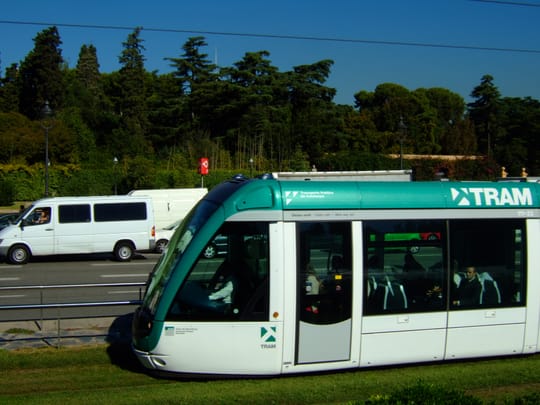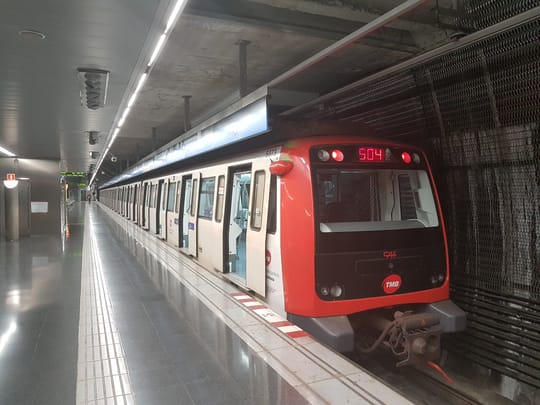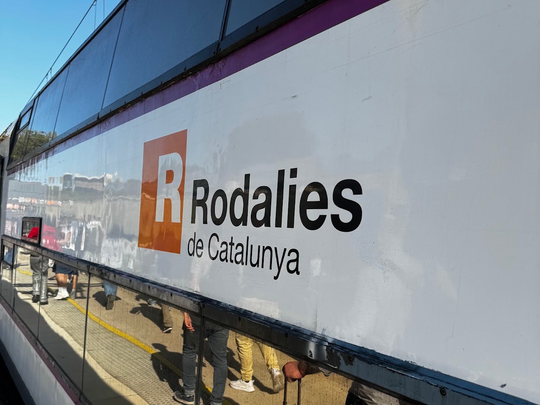
Rodalies, Catalonia’s commuter rail network run by Renfe on infrastructure managed largely by Adif, is facing sustained disruption from copper cable theft, vandalism and suicides across the network. For daily passengers, the effect is immediate: missed journeys into Barcelona, repeated delays on commuter and regional lines, and months of knock-on disruption after major incidents.
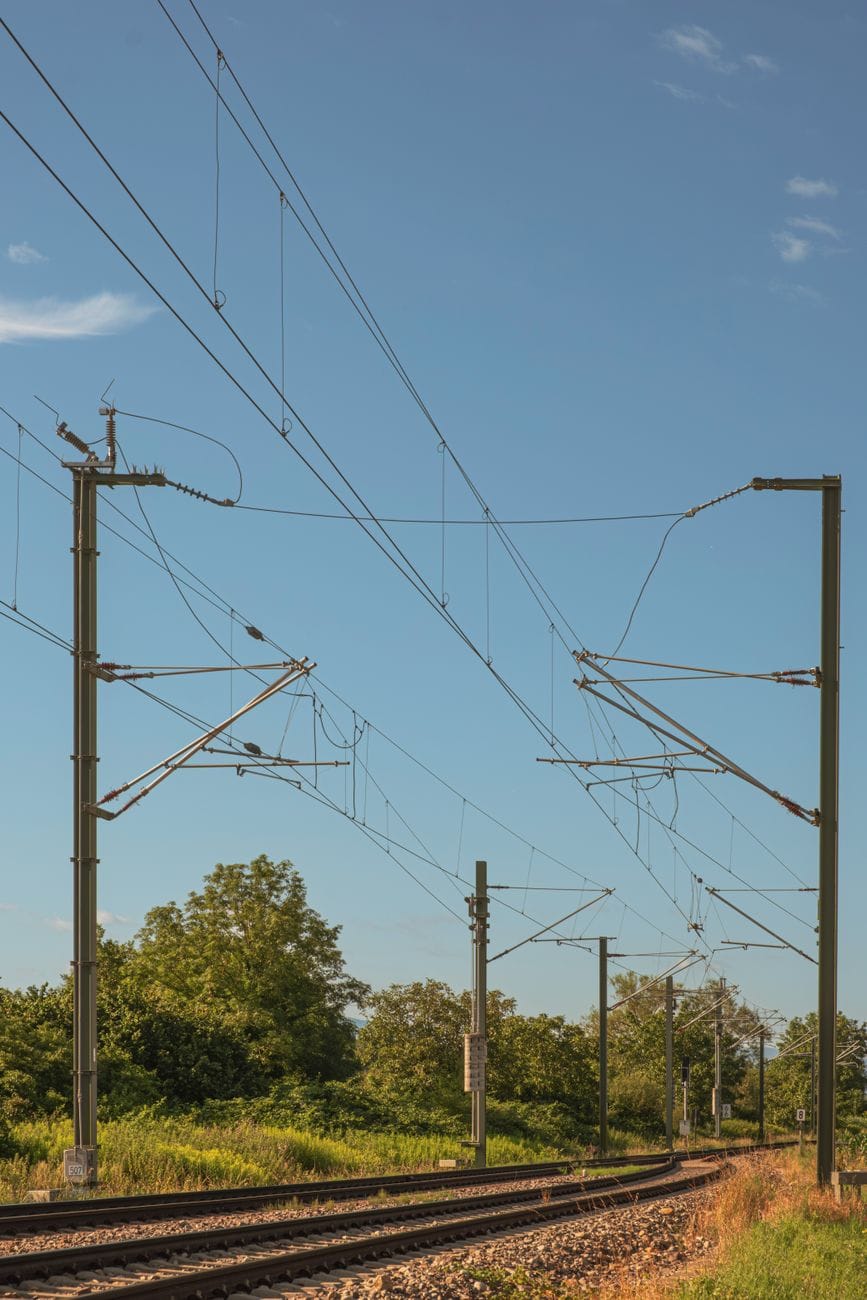
The most damaging recent case was the theft of copper cable at Montcada Bifurcació, a key rail junction north of Barcelona, on Sunday 12 May. According to the Ministry of Transport and Sustainable Mobility, the damage would cost about €15 million to repair and the network would need around two months to return to normal. Minister Óscar Puente said the incident affected more than 75,000 people that day.
In a report on the incident, RTVE’s account of Puente’s briefing said the ministry planned to take the case to court. The ministry’s own statement on the creation of the new operator, Rodalies de Catalunya, sets out the wider plan to bring management closer to Catalonia through a joint company agreed by the Spanish government and the Generalitat, the Catalan government.
Catalonia accounts for more than half of Spain’s rail security incidents
According to figures cited by Puente, 11,151 incidents affecting rail safety and outside the control of Renfe and Adif were recorded in Spain between 2019 and 31 March 2024. Of those, 5,805 happened in Catalonia, or 52.1% of the national total.
Barcelona alone accounted for 3,621 of the incidents, 32.5% of the Spain-wide total and 62% of those recorded in Catalonia. El País, citing Ministry of Transport data, reported that Catalonia had become the main hotspot for copper theft on Spain’s conventional rail network, covering commuter and regional services.
Adif data reported by El País show a sharp rise in thefts in recent years:
- 72 copper thefts in 2022
- 151 in 2023
- 46 in the first four months of 2024
The same report said repair work after the Montcada Bifurcació theft would affect more than 3.2 million journeys before services fully stabilised. For commuters on lines into Barcelona, that translates into prolonged timetable changes and less reliable peak-hour travel.
"It is madness, harm is being done to the public," Puente said, according to RTVE, when rejecting the idea that damage to the network would be a rational response to whoever manages the service.
Police stepped up the Metall plan after 290 incidents
El Periódico reported that the Mossos d'Esquadra, Catalonia’s regional police, activated level 2 of the specific operational plan known as POE Metall in February in the Barcelona metropolitan area and Tarragona province. The aim was to tackle copper theft on the rail network through extra patrols, administrative inspections of recycling points and drone surveillance.
According to data from that police plan cited by El Periódico, Rodalies recorded 240 incidents involving copper theft and sabotage in the first 10 months of 2023. Over the same period, Ferrocarrils de la Generalitat de Catalunya, the Catalan government-owned rail operator known as FGC, recorded 16 incidents, only five of which affected services.
From January 2023 to February 2024, the Mossos recorded 290 incidents on Rodalies, including 163 cable thefts and 127 acts of vandalism or sabotage such as throwing stones or placing obstacles on the tracks. Police data cited in the same report said 121 of those incidents affected train movements.
Investigative sources quoted by El Periódico said 96% of thefts were on the Adif network and 4% on FGC, although Adif also has around four times more track kilometres. The paper also reported that FGC had reinforced security in recent years, including the installation of side fencing at about 50 points on the Llobregat-Anoia and Barcelona-Vallès lines at a cost of €728,000.
Montcada theft exposed a critical weak point north of Barcelona
El País described Montcada Bifurcació as a strategic rail node with a high number of tracks, switches and signals, as well as an Adif maintenance centre and a Renfe workshop. Police sources quoted by the newspaper said 60 metres of copper cable were stolen there, equivalent to 120 metres because the cable was doubled.
The report said the theft involved 3,000-volt copper cable and triggered a chain reaction that caused tunnel fires in Barcelona due to overloads. Puente said the affected point was not easy to reach, describing it as an underpass beneath a motorway, surrounded by reeds and accessible only by climbing an embankment.
Disruption has not been limited to the Barcelona area. El Nacional reported another cable theft affecting the Lleida-Barcelona railway line, with train traffic interrupted between Riu Milans and Les Borges Blanques. That meant fresh problems for passengers using services between western Catalonia and the capital while the wider Rodalies network was already under strain.
Regional control plan moves forward as service problems persist
The Spanish government and the Generalitat have agreed to create Rodalies de Catalunya, a new joint company intended to bring management of key commuter rail services closer to the territory and its users. The official ministry announcement says the company will be set up with majority public ownership and is part of the wider transfer of Rodalies management.
That structural change does not remove the immediate problem for passengers. The figures from the Ministry of Transport, Adif, the Mossos and multiple published reports all point to the same issue: repeated external incidents on the network, concentrated in Catalonia and especially around Barcelona, continue to disrupt daily travel for commuters, students and workers who depend on Rodalies.
Passengers affected by ongoing incidents should check Renfe and Rodalies service updates before travelling, especially on routes through Montcada Bifurcació and on lines with recent cable theft reports, including the Lleida-Barcelona corridor.
Primary sources: transportes.gob.es, Semprún Wilde África Marta. Reported by Germán González, RTVE.es / AGENCIAS, Marta Rodríguez, Judit Pellicer, Iva Anguera de Sojo, rac1.cat, Miguel Bustos, catalannews.com, barna.news, Mireia Esteve, larazon.es, Thomas Wintle, Arantxa Palacios, La Vanguardia, ACN, russpain.com.