The boiler died on Tuesday. You messaged on Wednesday. By Friday the landlord had read the messages but not replied. You are showering in cold water and cooking in a coat, and you want to know what your actual options are.
The legal answer is mostly clear. The landlord pays for repairs that go beyond minor wear-and-tear, and "the contract says the tenant pays for everything" does not override that. The practical answer is about how to apply pressure without losing your case in the process.
What does the LAU actually say about repairs?
The LAU (Ley de Arrendamientos Urbanos, Spain's national urban tenancy law) sets the baseline for every residential lease. Article 21 of the LAU on the BOE (Boletín Oficial del Estado, the official state gazette) puts the duty to maintain the property habitable squarely on the landlord. That means anything required for normal use, heating, plumbing, structural integrity, the basics of habitability, is theirs to fix and theirs to pay for, except where the tenant caused the damage.
What you pay for as the tenant is small day-to-day items: a blown light bulb, the little washer in the kitchen tap, a loose curtain rail, the kind of thing that arises from ordinary use. The legal phrase is "pequeñas reparaciones por desgaste por el uso ordinario", and Spanish courts read this narrowly.
It does not cover an old boiler that finally gives up, damp that has been seeping through a wall for years, a fridge or oven that fails of old age (white goods that came with the flat are the landlord's; appliances you brought in yourself are yours), a roof leak, faulty wiring, or a broken intercom or front-door buzzer for the building.
Contract clauses pushing big repairs onto the tenant are routinely overturned in Spanish courts. They do not make the contract void; only that clause. So you can keep living in the flat and still refuse the obligation if it bites.
Who pays for what: the quick table
| Issue | Who pays | Why |
|---|---|---|
| Blown light bulb, tap washer, loose curtain rail | Tenant | "Desgaste por uso ordinario" under LAU Art. 21.4 |
| Boiler that gives up from age | Landlord | Habitability, heating and hot water are non-negotiable |
| Roof leak, faulty wiring, structural damp | Landlord | Structural integrity, LAU Art. 21.1 |
| White goods that came with the flat | Landlord | Forms part of the let property |
| Fridge or microwave you brought in yourself | Tenant | Not part of the rental inventory |
| Neighbour's bathroom leaking into your wall | Comunidad de vecinos | Building-wide issue, handled by the administrador de fincas (the building's property manager) |
| Mould from poor ventilation you control | Grey area | Tenant behaviour matters, but serious health-affecting mould is still habitability |
What escalation sequence actually works?

A polite WhatsApp first. Then an email with photos. Then, if the landlord goes silent, a burofax (a certified, legally-recognised letter sent via Correos with proof of content and delivery). The escalation matters because Spanish courts care about the paper trail.
A workable sequence for a serious repair.
Day one. WhatsApp the landlord with a clear description and one or two photos. "The boiler stopped producing hot water this morning. Photos attached. Could you arrange a technician?"
Day three or four if no reply. Email the same content to the landlord and any agency in the loop. Mark it "urgent: habitability issue".
Day seven if still nothing. Send a burofax via Correos Burofax Online to the landlord's contractual address, setting a written deadline (ten days is reasonable) and stating that you reserve the right to instruct your own technician and deduct the invoice from the rent if the deadline passes. Cite LAU Article 21. Burofax with certified content currently starts at €12.72 for a single page and rises with length, per the Correos burofax tariff page.
After the deadline. Either instruct a technician yourself with a proper invoice (factura), or file a "juicio de obligación de hacer" (a court order compelling the landlord to perform the repair) at the local court. The Sindicat de Llogateres tenant advice line helps tenants prepare these filings for free, and the Ajuntament's Oficines de l'Habitatge run free in-person rental advisors at neighbourhood level.
A couple of practical ground rules. Document everything with timestamped photos and emails. Keep written copies. If you have to call the landlord, follow the call up with an email summarising "as discussed on the phone today, you said X"; verbal commitments are worth nothing in a Spanish court.
Best for: serious habitability failures. Boiler dead in winter, active leak, no working toilet, exposed wiring. Run the full sequence and start the clock on day one.
Avoid the full sequence if: the issue is genuinely small (a wobbly tap handle, a fading paint patch) or you caused it. Burofaxing your landlord over a €4 washer makes you look unreasonable and gives them a counter-narrative if things escalate.
Why shouldn't you just withhold rent?
The most common bad advice in Barcelona expat groups: stop paying rent until they fix it. Do not.
The mechanics in Spanish law work against the tenant who withholds. If you stop paying, the landlord can file a desahucio (an eviction action) for non-payment within months under the fast-track procedure in Article 440 of the Ley de Enjuiciamiento Civil. Eviction proceedings in Spain move slowly but they do move, and once they are filed they are a major hassle to undo.
The fact that you withheld rent does not automatically discharge if the court later rules the repair was the landlord's responsibility. You may end up owing arrears and being out of the flat. Your case for the repair also gets weaker because you have created a parallel grievance the landlord can fight.
If you genuinely cannot live in the flat (no hot water in deep winter, an active leak making rooms unusable), the legally clean route is consignación judicial: depositing the rent at the court instead of paying the landlord, while the dispute resolves. That requires a procedure and a lawyer's input but it protects you. Check with a tenants' lawyer at the ICAB (Il·lustre Col·legi de l'Advocacia de Barcelona, the Barcelona bar association) free legal aid service or the Sindicat de Llogateres before doing this.
The compromise most tenants strike: pay the rent on time, send the burofax, instruct your own technician with proper invoices, and deduct that amount transparently in writing. Courts treat that more sympathetically than silent withholding.
Three routes when the repair is not happening
| Route | Best for | The catch |
|---|---|---|
| Withhold rent entirely | Almost no one | Triggers a desahucio (eviction) in months; you lose leverage and possibly the flat |
| Pay, repair yourself, deduct from rent with factura | Mid-severity issues where you can find a tradesperson fast | Needs a proper invoice and a written burofax beforehand so the deduction is defensible |
| Consignación judicial (deposit rent at court) | Severe habitability failure with a hostile landlord | Needs a lawyer and a formal filing; not a DIY route |
Damp: the eternal Barcelona problem
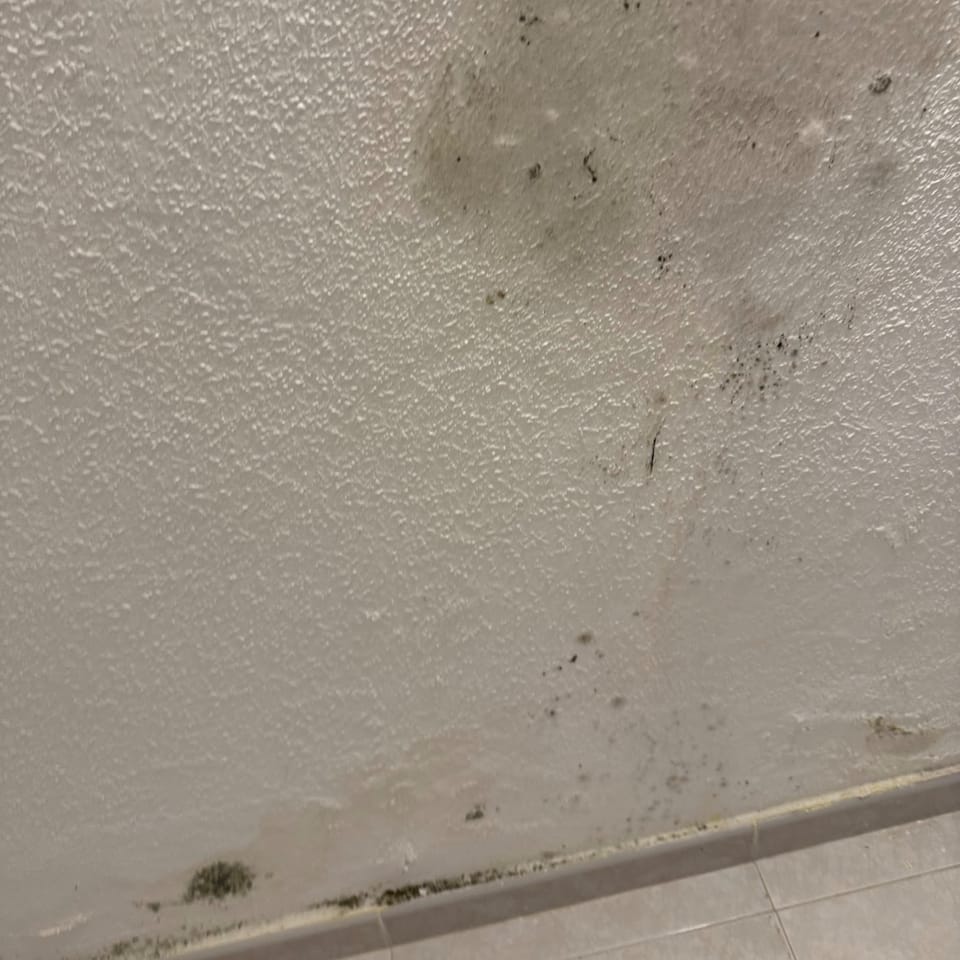
Damp deserves its own section because it is the single most common chronic complaint in older Barcelona flats. Plaster bubbles, black mould creeps along skirting boards, ceilings stain. Some of it is from leaks above (a neighbour's bathroom, a community issue). Some is condensation (worsened by single-glazed windows and poor ventilation in older buildings). Some is structural rising damp from the foundations.
The diagnosis matters because it determines who pays. If a neighbour's bathroom is leaking into your wall, that is a community issue and the administrador de fincas (the building's property manager, hired by the comunidad de vecinos) needs to coordinate. If the building has rising damp from the foundations, the landlord pays for treatment. If your damp is condensation because the flat has bad airflow and you do not open the windows, that is harder to argue is the landlord's bill, though serious cases of mould affecting health are still considered habitability issues.
The Ajuntament considers persistent damp and mould a habitability defect that can trigger an inspection. The cèdula d'habitabilitat (habitability certificate) rules on habitatge.barcelona set out the minimum conditions a flat must meet to be legally let, and a flat with serious damp can fail an inspection.
Damp tool-kit: what to buy
| Tool | Price | What it does |
|---|---|---|
| Hygrometer | €10–€20 | Measures humidity; consistent readings of 70% or more for weeks point to a real problem, not a behavioural one |
| Dehumidifier (basic) | €30–€80 | Knocks back winter condensation in a single room |
| Surveyor / handyman diagnosis | €60–€100 | Written report you can attach to the burofax as evidence |
A local handyman or surveyor will look at it for €60 to €100 and give you a written diagnosis. Use that diagnosis as evidence. Basic dehumidifiers and hygrometers are stocked at El Corte Inglés and most hardware shops in the city.
Best for landlord-pays argument: structural rising damp, a leak from above, plaster blowing off the wall, visible black mould in bedrooms or bathrooms. Get a written surveyor's report first.
Avoid the formal route if: the hygrometer reads under 60% and the mould is a small patch in a poorly-ventilated bathroom. Open the windows, run an extractor fan, and revisit in a fortnight before sending a burofax.
What must you let the landlord in for?
The landlord has a right to access the flat for genuine repairs and inspections, but with notice. They cannot show up unannounced. The standard etiquette is 24 to 48 hours' notice for non-urgent repairs, though genuine emergencies (active flood, gas leak) override this.
You do not have to give the landlord a key for general use. They do not have a right to wander through the flat when you are at work without you having agreed in advance. If your contract has a clause giving them unrestricted access, that clause is likely unenforceable; the LAU and the right to inviolability of the home under Article 18 of the Spanish Constitution override it.
What do most tenants miss?
The deadline pressure works both ways. Landlords ignore tenants until a date is in writing. Once a burofax with a ten-day deadline lands, things tend to move. The system is paper-driven; use the paper.
The other thing worth knowing: a landlord who has been ignoring repair requests is often more cooperative when contract-renewal time comes around. The five-year LAU right (the tenant's statutory entitlement to extend a residential lease up to five years, or seven if the landlord is a company, under LAU Article 9) gives you leverage. A landlord who wants to raise the rent at year three knows that a tenant with a documented list of unresolved repair issues can resist the increase or use it as grounds for a rent reduction.
Catalonia adds another lever. The Generalitat's Índex de Referència de Preus de Lloguer caps what landlords can charge in declared "zones de mercat residencial tensionat" (stressed housing market zones), which include the whole of Barcelona city. If your rent is already at the cap and the flat is in poor repair, the case for a reduction strengthens.
Document everything from day one, even when you are not yet planning to fight; future-you will need the paper trail.
Founder or freelancer in Barcelona?
Sorting out a silent landlord or a damp wall is easier when you can ask people who have been through the same fight. The Barcelona English Speakers community brings together more than 4,000 residents across 20-plus free, moderated WhatsApp groups, including ones on flat-hunting and daily life in the city. Come and swap what worked, share a good handyman, and get a second opinion before you send that burofax.