Traders struggle with lost trade and noise
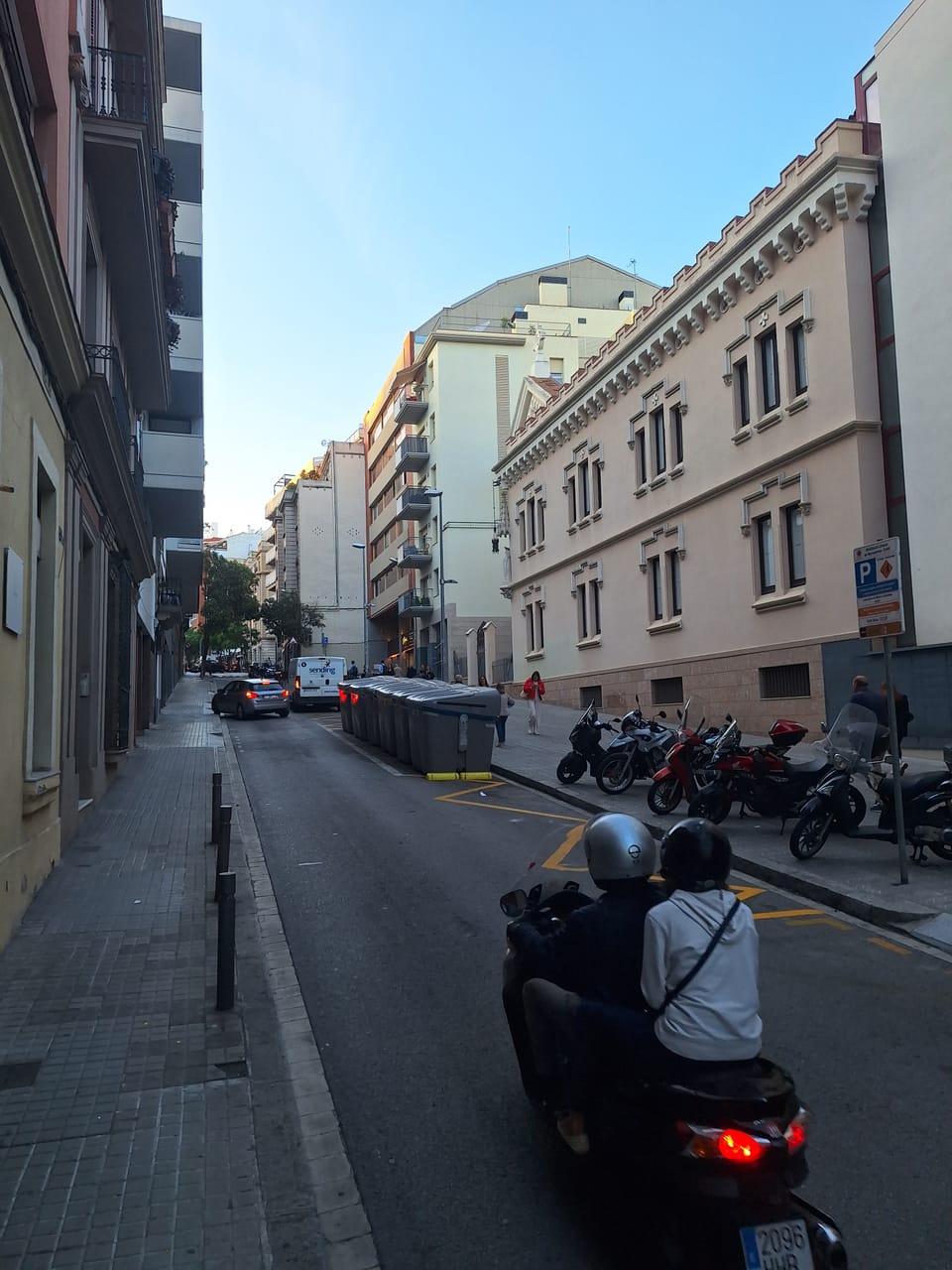
Merchants in Putxet are reporting significant financial losses three months after a sinkhole opened during construction of the L9 metro line. The collapse on 7 July forced the evacuation of eight buildings, 93 homes and 16 commercial premises, along Carrer de Sant Gervasi de Cassoles, Rubinstein, and Teodora Lamadrid. A new cafeteria scheduled to open in August went ahead despite the disruption but says it expected far more customers. "We expected many more people in the business," owners told Metrópoli. They now face constant noise from ongoing stabilisation work, dust when ventilating, and uncertainty over when normal conditions will return. At a tobacconist opposite Pizzeria Verona, staff confirm that "far fewer people are coming" because the street no longer functions as a through route. Even the pavement outside their shop has been blocked at times without notice. Residents and workers from Ferrocarrils de la Generalitat (Catalan Railways) are avoiding the area entirely to bypass construction zones.
Compensation claims and legal action prepare
Lawyer Carmen Pérez-Pozo-Toledano, representing affected parties, confirms that businesses have lost both casual and regular customers. Some clients are staying away due to safety fears. "Those I had are afraid to come because 'oh dear, what if something happens to me'," she said. The pizzeria at Teodora Lamadrid, 3, located at the site of the initial collapse, remains closed. Its owner is using an Institut Català de Finances (ICF) loan to pay 13 employees’ salaries but is not drawing a wage himself. Other self-employed families are in similar situations, unable to earn while their premises remain inaccessible. Pérez-Pozo argues that these loans should eventually be reclassified as part of formal compensation: "To provide peace of mind, we will have to reach an agreement and say: this loan is not a loan, it is part of the compensation we are paying you." A collective lawsuit against the Generalitat de Catalunya is being prepared for material, economic, and moral damages. It will be based on the legal principle of "culpa in vigilando", meaning the administration failed in its duty to supervise contractors properly.
When you hire someone to do a job, you must ensure they do it correctly. That didn’t happen.
, Carmen Pérez-Pozo-Toledano, lawyer for affected residents and businesses
No clear end in sight for residents or works
According to the Generalitat’s latest update, 18 families across three buildings and seven commercial units will not be able to return until early 2027. This includes residents at Teodora Lamadrid, 3, Rubinstein, 2, and Rubinstein, 4. A further 15 families and ground-floor premises at Teodora Lamadrid, 5, are expected to return by mid-October, though some remain sceptical. The tunnel boring machine remains stationary beneath the evacuated buildings and must move 20 metres before residents can safely return. Once relocated, engineers must complete a study into the cause of the sinkhole and revise safety protocols before excavation resumes. The Generalitat has indicated that work on the final kilometre of the L9 to Lesseps will therefore be delayed by several months, with no new completion date set. Meetings between affected parties and authorities have been postponed, including one scheduled for 23 September. The next meeting is planned for 5 October. In the meantime, daily life continues under disruption, with noise, access issues, and prolonged displacement affecting both households and local commerce.
Reported by metropoliabierta.cat, totbarcelona.cat, es.ara.cat, CatalunyaPress.cat.