Surcharge to Boost Nighttime Service
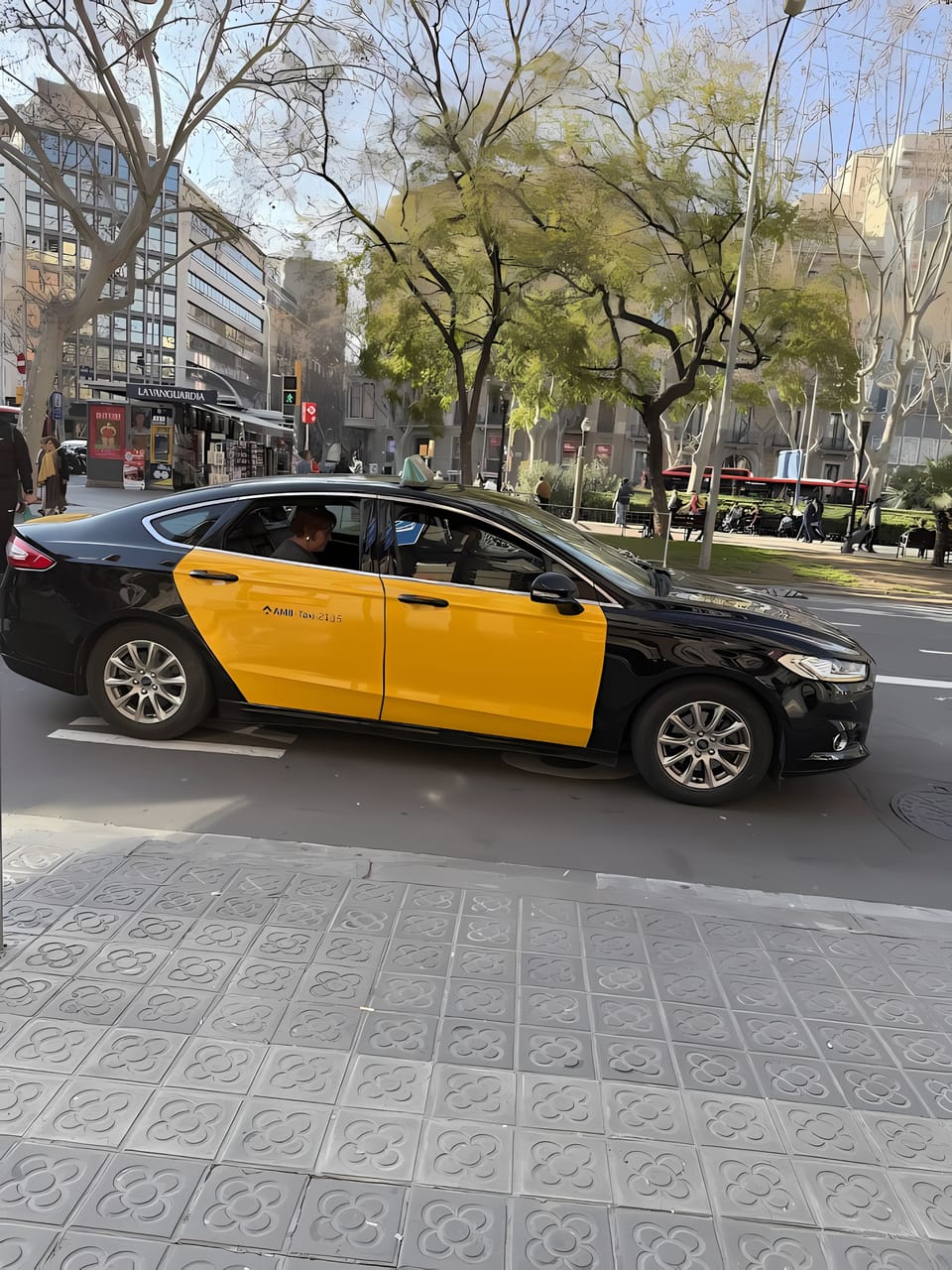
Starting next year, taxi drivers in Barcelona and its metropolitan area will apply a two-euro supplement to all journeys beginning between 10 PM and 6 AM on Friday nights, Saturday nights, and the eves of public holidays. The measure, confirmed by Élite Taxi, the city’s main taxi drivers’ association, aims to incentivise drivers to work during traditionally underserved hours. The supplement forms part of a broader fare adjustment agreed between sector representatives and the Institut Municipal del Taxi (IMET), the body responsible for regulating taxi services in the city. The agreement emerged from discussions within the Taula Tècnica, a technical working group tasked with defining service conditions.
Fare Increases Across the Board
Alongside the new night surcharge, standard taxi fares will rise next year. Tariff one, covering weekdays from 8 AM to 8 PM, will increase by 4.6%. Tariff two, for weekday nights (8 PM to 8 AM), also rises by 4.6%. Tariff three, used for fixed-price journeys, will go up by 4.5%, while tariff four, covering trips to Barcelona Airport and the cruise terminal, will increase by 4.4%, with the maximum fare capped at €48. These adjustments are subject to formal ratification by IMET’s board of directors and final approval by the Generalitat’s Comissió de Preus, a standard procedure for changes to regulated transport fares.
Drivers Cite Unfair Competition
Alberto Álvarez, known as Tito and founder of Élite Taxi, voiced concerns about ongoing challenges from VTCs (vehicles for hire with driver), such as those operated via Uber, Cabify, and Bolt. Speaking remotely from a Caribbean island in Venezuela, Álvarez stated: "Our profitability continues to be threatened by unfair competition and by a platform model that operates with free pricing. An increase is of little use if we continue to lose services while the number of VTCs competing with us increases." Álvarez also criticised other taxi driver associations, including STAC and ATC, accusing them of aligning with a regulatory approach similar to Madrid’s, which he claims favours the legalisation of existing VTC operators over converting them into licensed taxi drivers.
We cannot negotiate a few cents' increase while leaving unanswered the possibility that thousands of VTCs obtain urban authorization and compete with us with free pricing controlled by the platforms.
His comments come as a proposed taxi and VTC law progresses through the Catalan Parliament. The bill, which aims to tighten restrictions on VTCs in the metropolitan area, passed its initial debate stage recently, with Vox’s motion to block it rejected by 108 votes to 11, and 15 abstentions from the PPC.
Regulatory Context
Under the current Metropolitan Taxi Regulation, taxis are only permitted to operate during authorised shifts and must observe compulsory rest days. The fare structure has long included time-based variations and supplements for specific locations or occasions, such as airports or public holidays, as outlined in a 2018 study by the Catalan Competition Authority (ACCÓ). The upcoming changes reflect an effort to balance service availability with cost impacts on users, particularly those relying on taxis for essential travel, such as hospital visits, during night hours.
What This Means for You
Residents and visitors should expect to pay an additional €2 when hailing a taxi in Barcelona during late-night hours on Fridays, Saturdays, and public holiday eves starting next year. The standard fare increases will apply across all trips. Final implementation depends on formal approval by IMET and the Generalitat’s pricing commission. Travellers can check updated fare information via the Àrea Metropolitana de Barcelona (AMB) and IMET portals once published.
Primary sources: acco.gencat.cat, CENDOJ. Reported by lavanguardia.com, Parlament de Catalunya, La Vanguardia Barcelona.