Organised Crime 'Not Looking Good', Says Police Chief
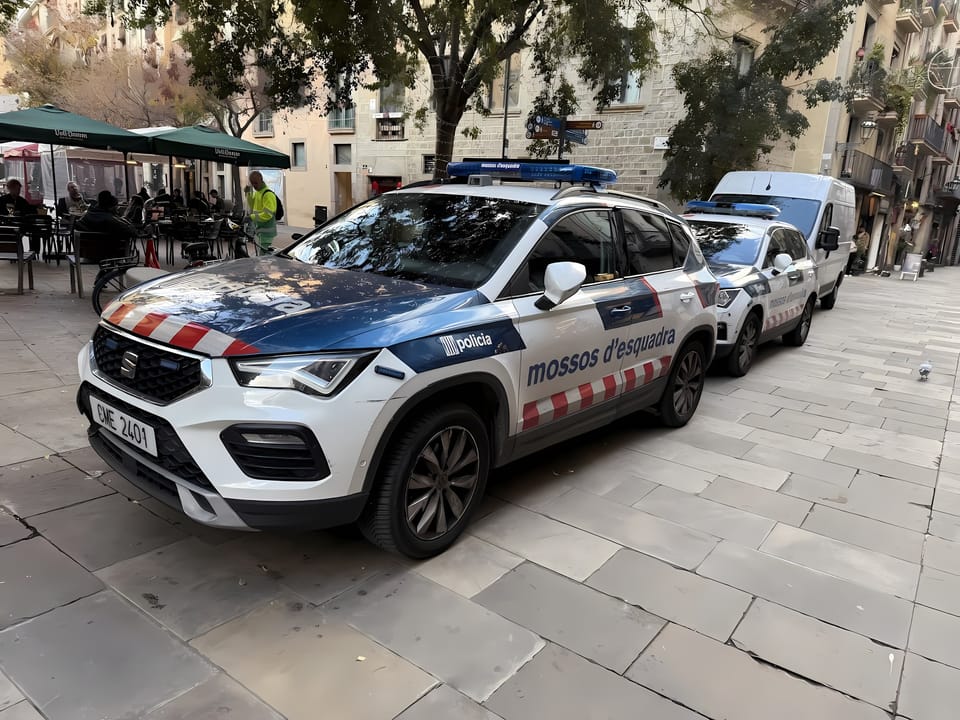
Ramon Chacón, head of the Criminal Investigation General Commissariat of the Mossos d'Esquadra, has warned that organised crime is increasingly entrenched in some Catalan neighbourhoods and poses a rising risk of police corruption, particularly tied to marijuana cultivation. Speaking at the 'Organised Crime and Public Corruption' conference on 30 September 2026, Chacón stated, "things are not looking good", linking the trend to four firearms homicides in Barcelona this year and a spike in express kidnappings. The Mossos dismantled 98 criminal networks in 2025, according to data presented to parliament by Interior Minister Núria Parlon, with 54 dedicated to drug trafficking. Of those, 20 were classified as criminal organisations and 78 as smaller groups. In two of the 20 organisations, police officers were found to have facilitated information to criminal groups.
Seeing these figures should make our hair stand on end
Chacón highlighted Spain's position as the European country with the highest drug seizures, citing data from the European Union Drugs Agency (EUDA), which reported that in 2023, EU member states seized a record 419 tonnes of cocaine. Spain also recorded its largest single seizure in 2024: 13 tonnes hidden in a banana shipment from Ecuador. Chacón stressed that Catalonia plays a significant role in these figures, particularly in domestic marijuana cultivation, which has expanded police exposure to corruption.
Neighbourhood Control and Intimidation
Chacón described how some criminal clans exert control over local communities, citing a case in which a family allegedly tied to drug trafficking demanded €30,000 annually from a resident after a stolen marijuana plantation, threatening to seize their apartment. He said this pattern had repeated with around a dozen victims in one neighbourhood, with perpetrators controlling multiple properties and businesses to create a parallel economy. "Then there is control of the neighbourhood," Chacón said, noting that victims rarely report due to fear of reprisal. He compared the dynamic to peripheral areas in France where police struggle to maintain presence, warning that diminished police visibility could allow criminal groups to impose their own rules.
Corruption Risks Grow with Marijuana Cultivation
Unlike cocaine and hashish, which enter through ports and coastal areas patrolled by national forces like the Guardia Civil, marijuana cultivation is widespread across Catalonia, increasing contact between local traffickers and Mossos officers. Chacón warned that criminal organisations now target officers to obtain operational information, vehicles details, or investigation leads. "Now these windows are opening where certain police officers, due to connections, for whatever reason, because they are given money, start working with these marijuana trafficking organisations," he said. The case of a Mossos officer, DGV, assigned to the Central Unit for Kidnappings and Extortion (UCSE), illustrates the risk. Arrested in November 2024 by the Mossos' Internal Affairs Division (DAI) on suspicion of selling information to a Sabadell-based drug gang, his trial will proceed before a jury court, as ruled by the Court of Instruction number 4 in Cerdanyola del Vallés. Chacón affirmed that the Mossos investigate officers suspected of involvement in drug trafficking annually and receive ongoing reports of potential misconduct. He cited the force's Internal Affairs Division and anti-corruption unit, alongside specialised prosecutor offices, as key deterrents.
New Anti-Corruption Coordination Unit
Belén Martínez, prosecutor at the Coordinating Prosecutor for Crimes Against Public Administration, explained that the unit, established in 2024, oversees specialised sections across Catalonia to ensure consistent handling of corruption cases. While the Anti-Corruption Prosecutor's Office handles high-significance cases, the coordination unit ensures territorial offices apply uniform standards in bribery, prevarication, and influence-peddling cases. Martínez stressed that asset confiscation is a key deterrent, urging that financial investigations begin at the earliest stage. She noted that the new territorial structure for the unit is still being rolled out, with three provinces yet to complete implementation as of late 2025.
Primary sources: euda.europa.eu. Reported by Vosseler Abogados, catalannews.com, Racó Català.