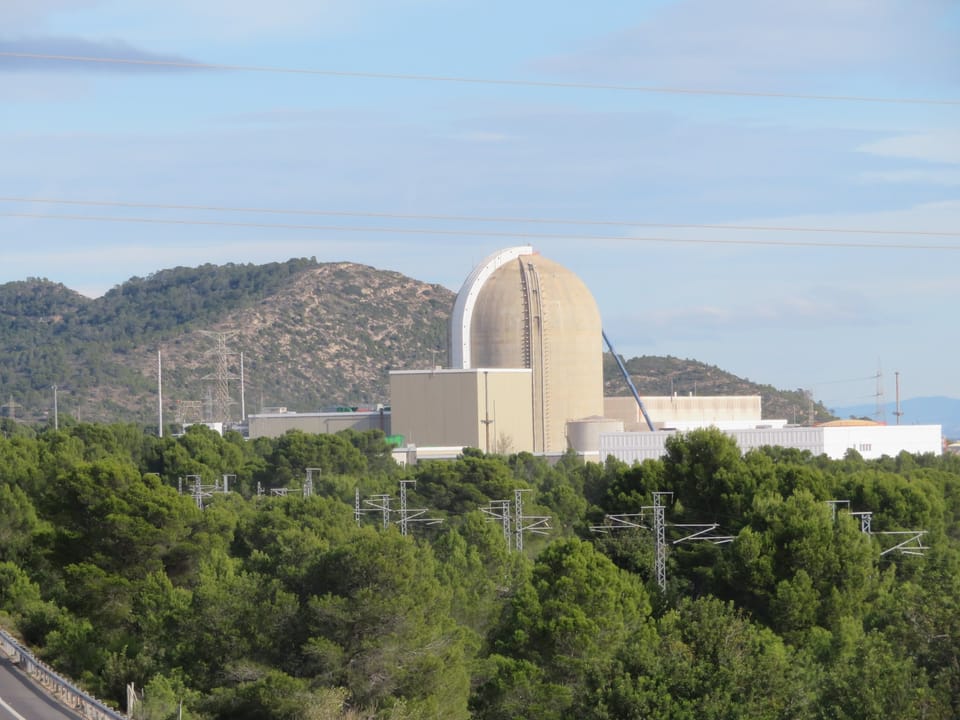
Nuclear power plants generate half of Catalonia’s electricity, yet President Salvador Illa remains committed to closing the region’s three facilities, Ascó I, Ascó II, and Vandellòs II, by 2035, in line with Spain’s Ministry for Ecological Transition. The move follows controversy over the recent extension of the Almaraz plant, sparking debate about whether Catalan reactors should follow suit.
Despite mounting pressure from energy experts, industry leaders, and political parties including the PP and Junts, Illa continues to back the existing closure roadmap. Sources within the Department of Territory and the Presidency confirm his position has not shifted. Marta Morera, Director General of Energy under Territorial Affairs Minister Silvia Paneque, supports the phase-out, reinforcing the administration’s official stance.
The extension of Almaraz is an exceptional case and will not be extended to other plants.
The Ministry for Ecological Transition has stated that Almaraz’s extension does not set a precedent. However, mayors of Ascó and Vandellòs, Miquel Àngel Ribes and Assumpció Castellví respectively, have called for equal treatment, urging the government to consider extending the Catalan plants’ operational lives.
Industry and Political Pressure Mount
Endesa, majority owner of the Catalan nuclear sites, and Iberdrola have delayed formal requests for life extensions. Industry sources suggest they are waiting for a potential shift in national government, particularly a PP-led administration in Moncloa, which could offer more favourable conditions. Unlike Almaraz, Ascó and Vandellòs require new investments, making profitability a key concern.
Foment del Treball, Catalonia’s employers’ association led by Josep Sánchez Llibre, warns that shutting down zero-carbon nuclear capacity during a climate emergency risks energy stability. With renewables currently supplying only 15% of Catalonia’s electricity, critics argue the transition plan lacks realism.
Renewables Push Stalls Amid Local Opposition
Paneque’s attempts to accelerate renewable deployment have stalled. Her Plater Report, designed to centralise green energy planning, faces over 12,000 objections. A coalition of 290 municipalities, farmers, environmental groups, and CUP councillors oppose the proposed solar and wind installations.
Due to political sensitivities ahead of the May 2027 municipal elections and Illa’s reliance on support from ERC and Comuns, the Generalitat has postponed final approval of the Plater Report until summer 2027. The delay leaves a critical gap in replacing nuclear output.
Catalonia must install 62,500 MW of renewable capacity by 2050 to offset the loss of nuclear generation. With Ascó I due to close in 2030, Ascó II in 2032, and Vandellòs II in 2035, time is running short. The incoming director general of energy, expected to replace Morera after Paneque potentially steps down to run for mayor of Girona, could adopt a more flexible approach.
For now, the Generalitat maintains a low profile, avoiding confrontation while insisting on its nuclear exit strategy. But without progress on renewables, the feasibility of meeting demand post-2035 remains uncertain.
Reported by elconfidencial.com, El Confidencial.