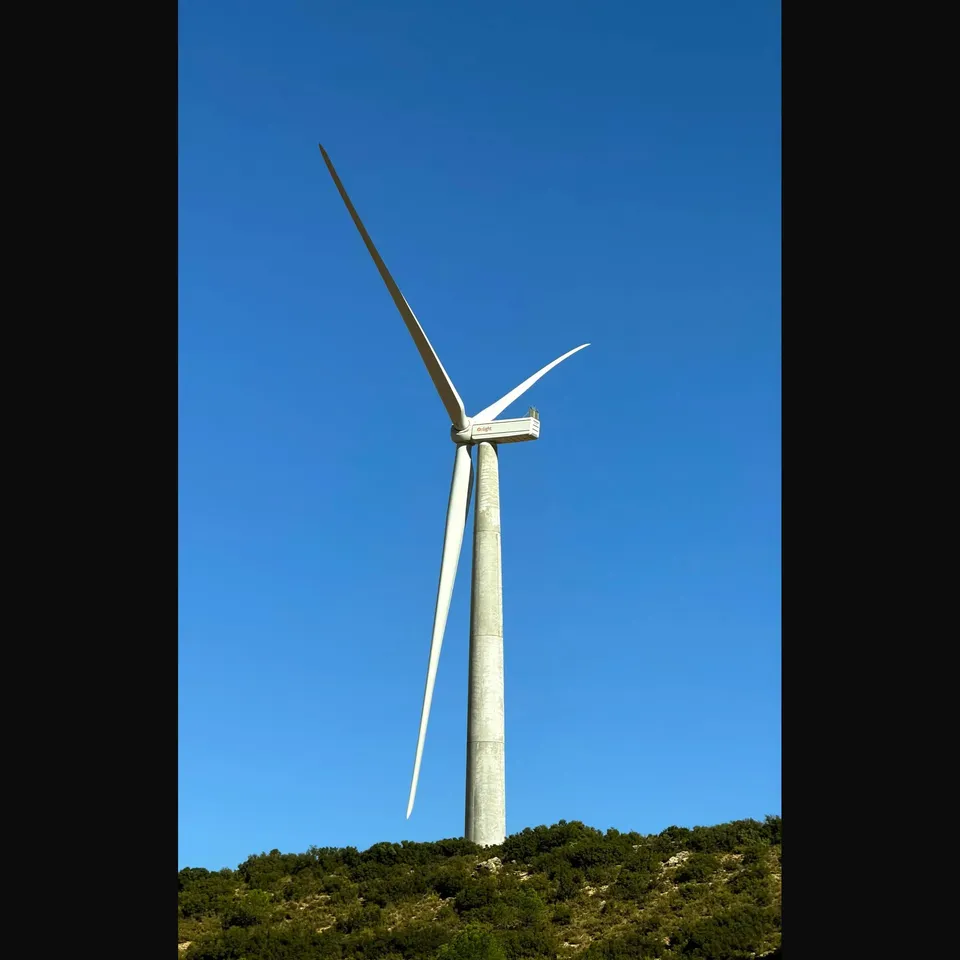
The Catalan government, known as the Generalitat, has rejected a 22.8 MW wind farm in Pla de la Tallada, Baix Empordà, due to its impact on the scenic backdrop of Montgrí. This marks the first time the administration has blocked a renewable energy project solely on landscape grounds.
The decision follows an unfavourable environmental impact declaration (EID) issued on 21st October 2026, which concluded that while the project passed assessments for environmental impacts, including on Bonelli’s eagle, other birds, and bats, the visual effect on the Montgrí landscape justified rejection. The Territorial Urban Planning Commission of Girona assessed the project’s impact on what the resolution calls "the scenic backdrop of Montgrí".
The project, consisting of four wind turbines, was located in an area classified as suitable under the Generalitat’s own Sectoral Territorial Plan for the Implementation of Renewable Energies (Plater). EolicCat, the association representing Catalonia’s wind energy sector, called the decision "arbitrary" and warned it creates legal uncertainty for future renewable projects.
It is an arbitrary decision. The project has passed the assessment of all objective environmental impacts and is being rejected because someone considers it alters a scenic backdrop.
Said Víctor Cusí, president of EolicCat, speaking yesterday. He added that the message to the sector is clear: no project is safe, regardless of how thoroughly it is processed.
Conflict With Renewable Energy Strategy
The Plater, introduced by the Generalitat to identify suitable zones for renewable installations using environmental, territorial, and landscape criteria, allocates 568.7 MW of wind capacity to Baix Empordà by 2050. EolicCat argues that rejecting a project in a pre-approved area undermines the entire planning framework.
Since the approval of Decree 16/2019, no new wind farms have been incorporated in Girona’s counties, which currently have zero wind power capacity. The rejection of Pla de la Tallada raises concerns about the feasibility of meeting Catalonia’s 2050 onshore wind target of 2,649 MW.
Ongoing Administrative Process
Government sources confirmed the project followed all planned procedures and had cleared preliminary environmental assessments. However, they clarified that the unfavourable EID does not conclude the administrative process. The developer has not yet received a response to technical justifications submitted, and landscape integration is typically assessed at the specific development project (PAE) stage, not through EID rejection.
Sources: La Vanguardia, Ara.