Video: @mediaproexhibitions, @espai_imagina_bcn / IG
Paranimf Circle Aims to Expand Gaudí Legacy
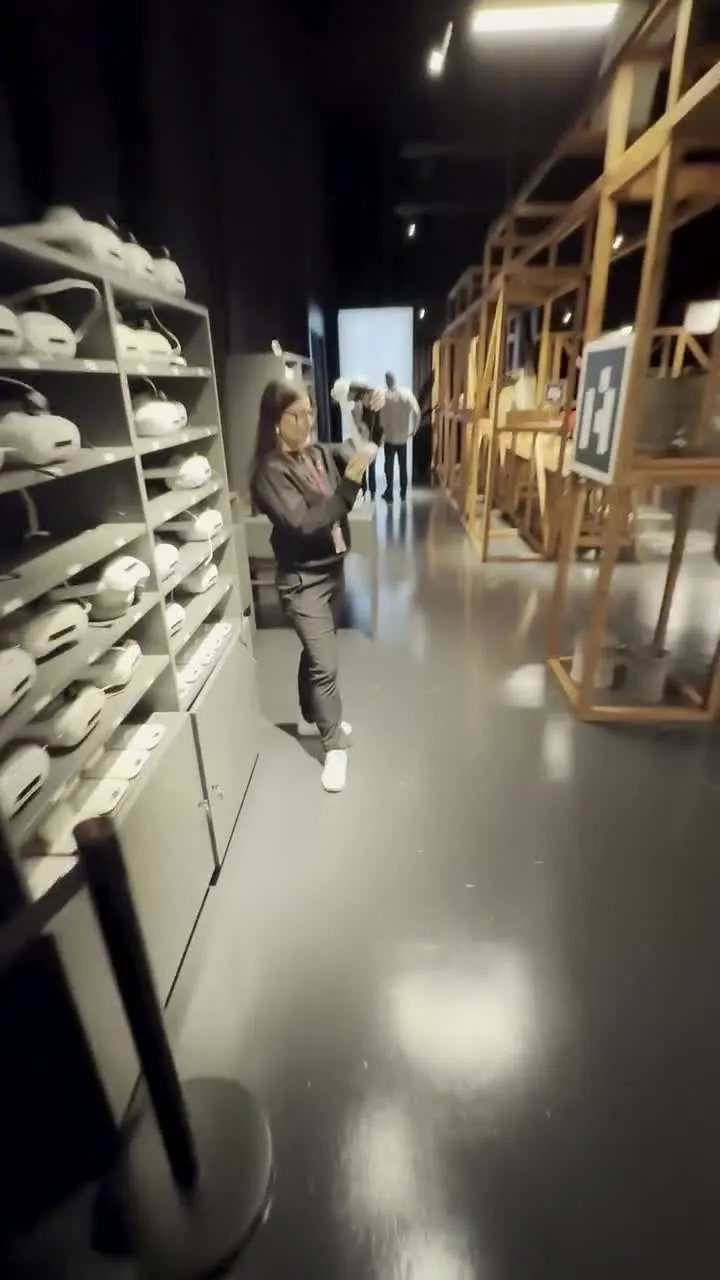
The Gaudí Chair at the Barcelona School of Architecture (ETSAB) of the Universitat Politècnica de Catalunya (UPC) has launched the Paranimf Circle (Cercle Paranimf), a new patronage network designed to strengthen scientific research, conservation and public outreach around Antoni Gaudí’s work. The initiative was officially presented on Tuesday 24th November 2026 at Espai Imagina on Avinguda Diagonal, with UPC Rector Francesc Torres presiding over the event attended by around 50 academic, institutional, cultural and business representatives. The Paranimf Circle aims to position the Gaudí Chair as the global leader in interdisciplinary study of Gaudí’s legacy under the motto 'Gaudí 1852–1926: where science becomes art'. It also opens a pathway for private-sector funding, enabled by the 2026 Gaudí Centenary being declared an Event of Exceptional Public Interest, which grants companies tax incentives under Article 27.3 of Spanish Law 49/2002 on non-profit entities and patronage.
New Headquarters and Five Key Research Areas
A central goal of the Paranimf Circle is to secure, adapt and equip a new independent headquarters for the Gaudí Chair. Since 2011, the Chair has been based within ETSAB facilities, but limitations in space and infrastructure, particularly due to the heterogeneous nature of the Gaudí archive, have made relocation necessary, according to Galdric Santana, professor at ETSAB and director of the Gaudí Chair. The future centre will serve as an international hub for postgraduate teaching, research and public engagement. It will house a permanent museum open to the public, temporary exhibitions, and state-of-the-art technology for documentary analysis. The ETSAB Archive, which holds approximately 100,000 items including drawings, photographs and furniture, also preserves academic works dating back to 1817, when the first Barcelona School of Architecture was founded at La Llotja. Companies can support the Chair through four participation tiers, Strategic Member, Benefactor, Media Partner and Collaborator, and choose to fund one or more of five action areas:
- Gaudí Collection: conservation, digitisation and expansion of original documents and works
- Gaudí Talent: predoctoral and postdoctoral fellowships, research visits and heritage education
- Gaudí’s Work: research and recovery of lesser-known projects and new visitor experiences
- Music and Audiovisual Production: exploration of acoustics, concerts, documentaries and digital art
- Immersive Technology: use of VR, AR and AI to reconstruct lost or unbuilt spaces
Flagship Projects Unveiled
Among the major projects to be developed is the full casting of the 84 bells for the Nativity Façade of the Sagrada Família (Basilica of the Holy Family), based on Gaudí’s original design. Each bell corresponds to a key on an organ console, and the hyperboloid shape allows for a wide range of musical performance. This research stems from professor Galdric Santana’s doctoral thesis and was previewed in a public concert, 84 Campanes, held in Plaça de Catalunya on 11th June 2026 as part of the Gaudí Year events. Other key initiatives include:
- Gaudí: Sound and Music. Science and Art, an exhibition at the Barcelona Music Museum exploring the architect’s use of acoustics and sound in spatial design
- Confidential Gaudí, a docudrama examining the architect’s inner life and its influence on his work
- Four new monographs, including studies on Gaudí’s use of hydraulics, conversations with collaborator Joan Bergós, and the history of the Güell Estate in Pedralbes
The immersive exhibition Codi Gaudí, l'experiència inèdita (Gaudí Code, the Unprecedented Experience), curated by Santana, was also showcased at the launch event. It remains open in Barcelona until 31st January 2027 before going on tour.
Tribute to Gaudí’s Academic Vision
The name Paranimf Circle honours a pivotal moment in Gaudí’s education. In 1878, while Elies Rogent was building the Paranymph Hall at the University of Barcelona, Gaudí submitted his final degree project: a design for a university paranymph hall. His radical concept, a hemicyclic, polyfocal space, challenged tradition. Rogent reportedly remarked, 'I do not know whether we have awarded this degree to either a genius or a madman; only time will tell.' The Circle now revives that spirit of innovation, fostering dialogue between university and society to carry Gaudí’s legacy forward.
Sources: Universitat Politècnica de Catalunya (UPC), upc.edu, La Vanguardia, El Periódico.