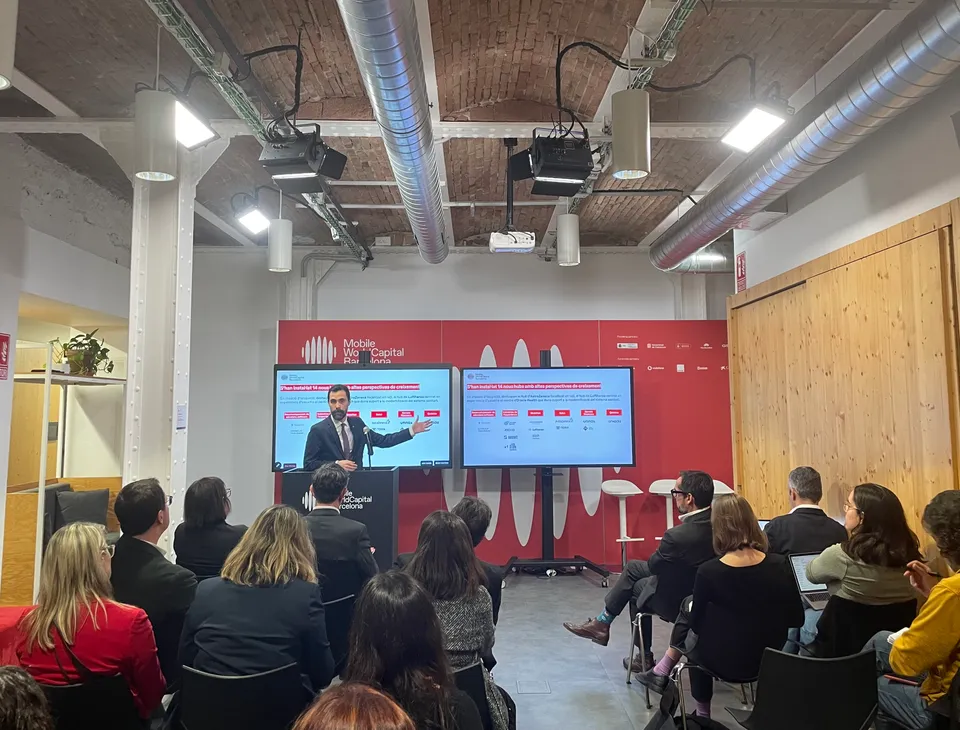
The cybersecurity sector in Catalonia generated more than €1.7 billion in annual turnover in 2026, marking a 19.8% increase compared to 2025, according to the latest annual report Cybersecurity in Catalonia, published by ACCIÓ and the Cybersecurity Agency of Catalonia.
This growth solidifies the sector as one of the most dynamic in the regional economy. The report identifies 607 companies operating in the field, with 83.5% classified as small and medium-sized enterprises (SMEs) and 10.4% as emerging firms. Nearly a quarter of these companies (24.7%) have been established in the last decade, highlighting strong innovation and entrepreneurial momentum.
The sector is increasingly international: 24.1% of companies export their services, and 15% are subsidiaries of foreign firms. Key business activities include protecting against cyberattacks (90.6% of firms), identifying threats (65.9%), detecting breaches (43.2%), responding to incidents (38.7%), and recovery (26%).
AI and Quantum Technologies Integration
The report notes that 40.2% of cybersecurity firms (244 companies) now integrate artificial intelligence into their solutions, while 7% (43 companies) are developing quantum technologies for digital security. Additionally, 108 companies provide security and defence-oriented products and services.
Skills Shortage Remains Key Challenge
Despite strong growth, the sector faces a significant shortage of skilled professionals. Cybersecurity is the most strained digital technology field in Barcelona’s job market, with only 3.53 qualified professionals available per job opening. The average annual salary in the sector is €64,100, reflecting high demand.
To address this, Catalonia offers 21 university programmes and 58 vocational training courses across 47 educational centres specialising in cybersecurity.
Strategic Position in Europe
Catalonia ranked seventh in Europe for foreign investment projects in cybersecurity between 2021 and 2025, attracting 13 projects, 62.5% more than the previous five years. These investments exceeded €250 million and created over 1,200 new jobs.
The region is also fifth in Europe for Horizon Europe funding (2022–2024), securing €11.3 million across 19 projects. Furthermore, 39% of the 203 international tech hubs based in Catalonia focus on cybersecurity, including those of AstraZeneca, Lufthansa, PepsiCo, Boehringer Ingelheim, Nestlé, Cisco, Oracle, and IBM.
Rising Threats and Global Trends
In 2025, data security incidents in Catalonia rose by 27.4%, with the Cybersecurity Agency managing 6,544 incidents, a 94% increase from the previous year. Human error remains the leading cause of over half of all incidents.
Globally, cybersecurity revenue is projected to reach $265 billion by 2030, growing at nearly 6% annually. The financial services (28.6%), public administration (26.1%), and telecommunications (14%) sectors are the largest consumers of cybersecurity services.
The report underscores the urgent need to strengthen detection and response capabilities in the face of AI-driven, faster, and more automated cyber threats.
As AI and geopolitical tensions amplify cyber risks, the sector must scale defences and accelerate response times. The transition to post-quantum cryptography is also highlighted as a critical future challenge.
Sources: Govern de Catalunya, Generalitat de Catalunya, viaempresa.cat (ACN).