The Spanish National Markets and Competition Commission (CNMC) has ordered Renfe Mantenimiento to allow French high-speed operator Ouigo access to three major railway maintenance workshops in Barcelona and Madrid.
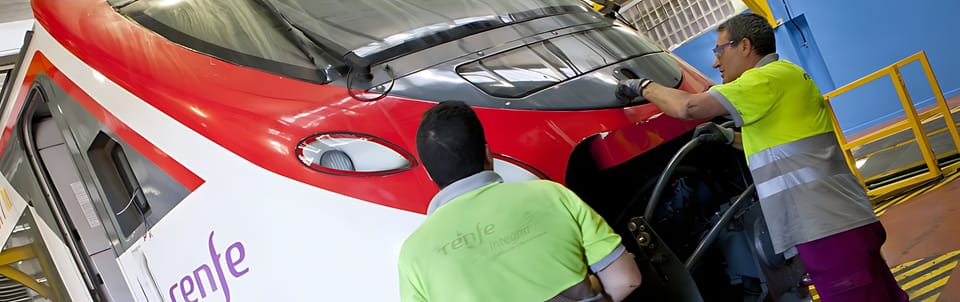
The decision, announced on Tuesday 20th October 2026, resolves a dispute that began in early 2025 when Renfe restricted Ouigo’s use of the Can Tunis facility in Barcelona and the Cerro Negro-Santa Catalina and Fuencarral workshops in Madrid. Renfe had argued the French operator’s planned component assembly and disassembly work constituted heavy maintenance, which is not permitted at these light maintenance sites.
However, the CNMC concluded these operations are classified as basic maintenance services under the Spanish Rail Sector Act. As such, all rail operators must have non-discriminatory access to existing facilities. The regulator found that Renfe had allowed its own subsidiary, Renfe Viajeros, to carry out technically equivalent work at the same sites, constituting unfair treatment.
Regulator Enforces Equal Access
Component removal and installation operations do not constitute heavy maintenance and must therefore be provided to all railway undertakings on transparent, objective and non-discriminatory terms.
This statement from the CNMC’s official press release underscores the core legal principle behind the ruling. The commission stressed that under the capacity allocation agreement signed in January 2025, Ouigo was entitled to reserved workshop space under the same conditions offered to other operators.
The CNMC’s resolution (CFT/DTSP/261/25) requires Renfe Mantenimiento to reinstate Ouigo’s access in line with that agreement. The decision reinforces regulatory efforts to ensure fair competition in Spain’s liberalised high-speed rail market, where open access to infrastructure is critical for rival operators.
Operators Must Share Maintenance Data
While upholding Ouigo’s complaint, the CNMC also placed responsibilities on the French operator. It urged Ouigo to provide detailed maintenance planning data to Renfe Mantenimiento within the framework of their agreement. This is intended to ensure efficient use of workshop capacity and allow for proper scheduling of essential services.
The ruling clarifies the distinction between light and heavy maintenance tasks and sets a precedent for how shared railway infrastructure must be managed. For passengers, the decision supports continued competition on high-speed routes, potentially helping maintain lower fares.
Primary sources: grupo.renfe.com, RENFE. Reported by vilaweb.cat, cnmc.es, EP, elconfidencial.com, eldiario.es, capitolab.es, THE OBJECTIVE @TheObjective_es, CNMC - Comisión Nacional de los Mercados y la Competencia, Víctor de Elena, CNMC, europapress.es, VilaWeb Feed.