Slowest in Europe: Buses Trail Major Cities
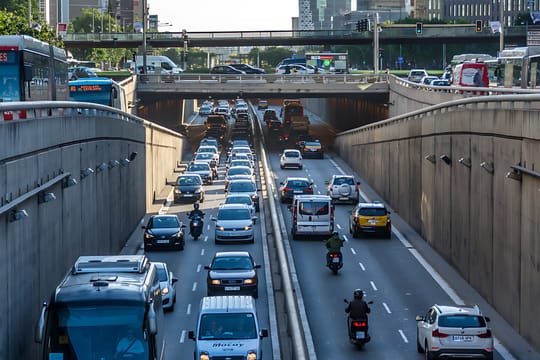
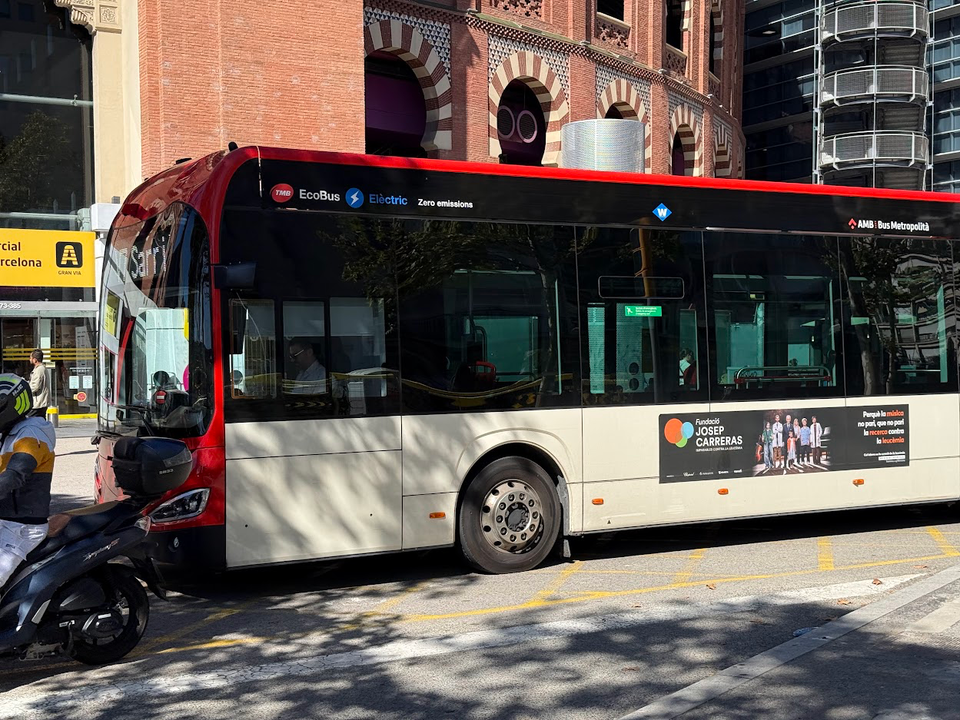
Barcelona's city buses are among the slowest in Europe, travelling at an average speed of 11.4 km/h, according to data from Transports Metropolitans de Barcelona (TMB) provided this year. This is nearly unchanged from 20 years ago, when speeds stood at 11.7 km/h. At this pace, a runner maintaining a 5.15-minute-per-kilometre time would outpace the bus. Compared with other European cities in 2024, Barcelona lags behind London (14 km/h), Paris (15 km/h), Brussels (16 km/h), and Lyon (18 km/h). Even within Spain, Madrid and Valencia buses move faster, at 12.8 km/h and 12.1 km/h respectively, while Bilbao and Zaragoza achieve 15 km/h.
City Trials 'Red Carpet' Measures
In September 2026, the Barcelona City Council launched a pilot project on Carrer de Balmes between Avinguda Diagonal and Gran Via de les Corts Catalanes. The trial involves painting red markings, known as 'red carpets', at intersections with Còrsega, Provença, Mallorca, and Diputació streets. These prevent vehicles turning right from entering the bus lane before the junction, forcing them to turn from the second lane instead. The scheme is part of the Agenda Bus 2026–2030, a joint initiative by TMB and the Ajuntament de Barcelona aimed at improving service efficiency and sustainable mobility. Physical bollards and intermittent right-turn traffic signals have also been installed to reinforce bus priority.
PP Demands Urgent Action Plan
Today, the Partido Popular (PP) is presenting a proposal to the municipal Mobility Commission, calling on Mayor Jaume Collboni’s government to deliver an urgent plan within three months to raise average bus speeds to at least 15 km/h. The PP proposes a network-wide audit focusing on the city’s 25 most problematic junctions, implementing real-time traffic light priority for buses, and reviewing sections where bike lanes may impede bus flow, such as Via Augusta. It also calls for reorganising loading zones, taxi ranks, and parking areas that obstruct bus lanes.
Barcelona has lost mobility capacity in recent years as a consequence of urban planning policies that have made bus circulation increasingly difficult.
Daniel Sirera, PP leader in Barcelona, stated that recent urban changes, including expanded bike lanes, narrowed roadways, and tactical urbanism features, have turned many streets into obstacle courses for public transport. He criticised the city’s focus on the Diagonal tram line over improving the bus network, saying: “We cannot allow buses to continue losing commercial speed, because every minute they lose is also lost by thousands of Barcelonans.”
Primary sources: Premsa TMB, Autor Premsa TMB, Ajuntament de Barcelona, gentmb.tmb.cat, noticies.tmb.cat. Reported by larazon.es, La Razón Cataluña.