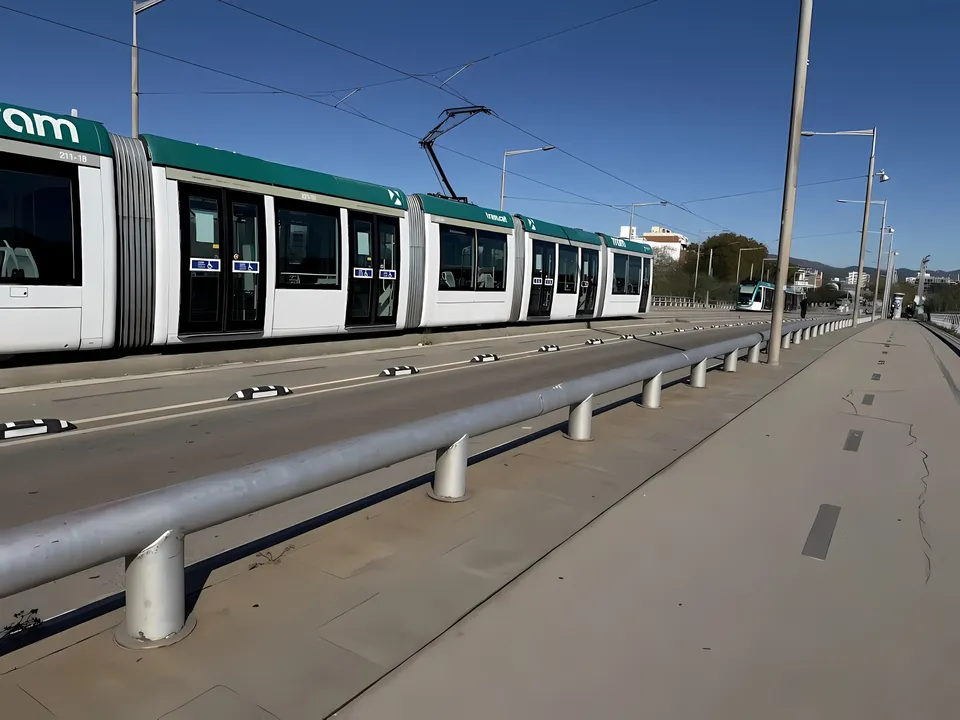
Tram Works to Begin Summer 2027
This week, Barcelona City Council is launching the tender process for the long-awaited tram connection along Avinguda Diagonal, between Verdaguer and Francesc Macià. The construction works will begin in summer 2027 and last 40 months, with the service expected to launch in the first quarter of 2031, according to the Metropolitan Transport Authority (ATM). The project will complete the missing link between the Trambaix and Trambesòs tram networks, creating a continuous route from Baix Llobregat to Besòs via central Barcelona. The 2.8-kilometre stretch will include new tram infrastructure, the redevelopment of existing space, and the creation of three new stops: Diagonal–Cinc d’Oros, Balmes, and Casanova.
€217 Million Investment and Urban Redesign
The total investment for the project is €217 million. The city council will contribute €120 million, with €65.5 million allocated to duplicating the underground drainage collector and €54.5 million to reurbanisation. The ATM will provide €97 million, funded by the Catalan government. During construction, two lanes in each direction will be maintained for buses and private vehicles. The reurbanisation will widen sidewalks to 7.5 metres, create 16,000 square metres of new pedestrian space, and add 18,900 square metres of green areas. A new 8,700-square-metre bidirectional cycle lane, 1.8 metres wider than current lanes, will be built along the central trunk.
“This is an exciting project that will connect Baix Llobregat and Besòs through the heart of Barcelona,” said Laia Bonet, First Deputy Mayor of Barcelona.
The project is also expected to reduce weekday traffic by approximately 12,500 vehicles and improve journey times, with trips from Campus Diagonal-Besòs to Zona Universitària taking under 40 minutes.
Phased Urban Improvements and Intermodality
The works are divided into five lots. The first section, from Passeig de Sant Joan to Passeig de Gràcia, will extend the previous reurbanisation, with tram and cycle lanes separated by flowerbeds. The second section, between Passeig de Gràcia and Plaça de Francesc Macià, will maintain existing widened sidewalks and add integrated tram and bus platforms. At Francesc Macià, the stop will be expanded to become a major interchange hub, connecting the tram with urban and interurban buses, metro lines, and regional rail services. Trams will run along the sea-facing side of the square, and the perimeter will be reformed with new trees and pedestrian access. Parallel to the tram project, the city is preparing a complementary mobility plan for the Diagonal between Zona Universitària and Francesc Macià. This will prioritise public transport in the central lanes and use artificial intelligence to manage traffic lights, aiming to improve flow and reduce vehicle-tram conflicts.
Sources: Línia Xarxa, atm.cat, Ara, La Vanguardia.