Port Handles 35.87 Million Tonnes
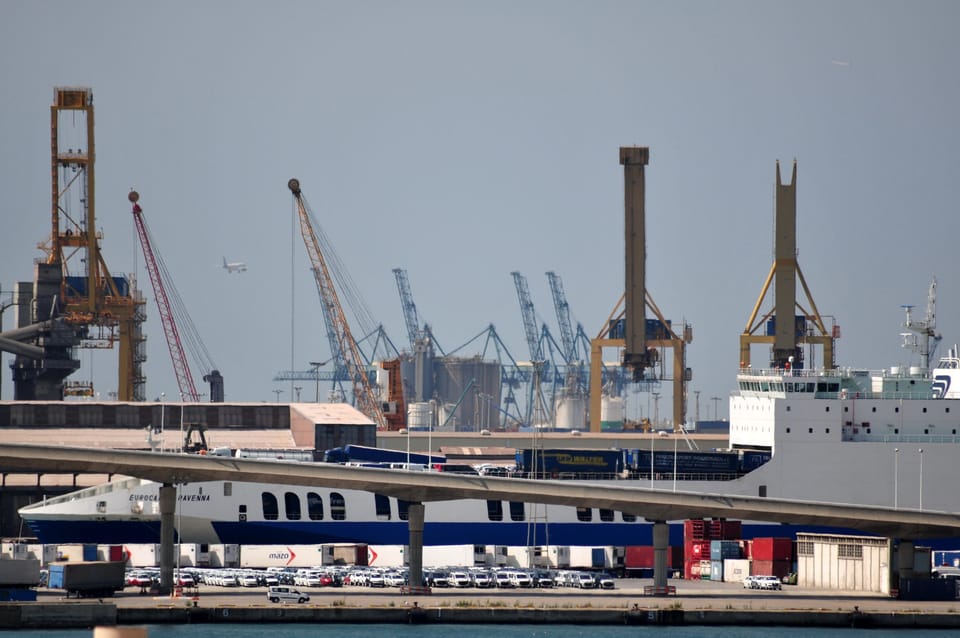
The Port of Barcelona reported a 3.5% increase in total traffic during the first half of 2026, handling 35.87 million tonnes of cargo. Container traffic rose 4.3% to 1.93 million TEU, with imports growing 6.7% to 380,000 TEU. Liquid bulk shipments increased by 4.1%, dry bulk by 5.1%, vehicle traffic by 6.5% and ro-ro traffic by 2.8%. The port registered 2.44 million passenger movements, up 4.1%, including over one million cruise passengers, a 3.4% rise.
Resilience Amid Global Tensions
Port of Barcelona General Manager Àlex Garcia attributed the growth to the port's ability to adapt amid geopolitical tensions, particularly in the Persian Gulf and around the Strait of Hormuz. He stated, “Traffic levels in the first half of the year demonstrate the Port of Barcelona's capacity to adapt and its resilience in the face of an increasingly complex global situation. Diversifying our markets, customers and logistics chains allows us to continue growing and maintain the competitiveness of our business sector.” Despite disruptions, liquid bulk shipments grew due to diversified supply sources and strong performance in chemical products and biofuels.
Vehicle Imports Surge
Vehicle traffic reached 386,000 units, a 6.5% increase, with imports growing 36%. Around 45% of imported vehicles were hybrids, plug-in hybrids or fully electric, and 50% of all vehicle imports originated from China. According to Àlex Garcia, this growth confirms Barcelona's role as a key logistics hub for electric vehicles in southern Europe.
Port and Airport Compatibility Confirmed
Radioelectric compatibility studies conducted by port technicians and ENAIRE, the state air navigation manager, confirmed that planned port development in the southern area, including the future Catalunya and Jaume I wharves, is compatible with current and future operations at Josep Tarradellas Barcelona-El Prat airport. This outcome enables the port to proceed with expansion plans, including concentrating container activity in the south. The port has already invested €4.5 million in a new radar system to support this coordination.
Infrastructure and Energy Transition Advances
The port is advancing its largest investment cycle in history, with progress in accessibility, decarbonisation and innovation. Key developments include:
- The tender for a new land access road junction
- Awarding new berthing points on the Energy wharf
- Electrification of the Adossat wharf and future Cruise Terminal G
- Progress on new railway accesses and the Nou Llobregat terminal
A contract was awarded for the port’s first hydrogen plant, and a container ship was supplied with bioethanol in one of the first such operations in the Mediterranean.
Blue Economy and Cruise Sector Transformation
The BlueTechPort project, a €60 million innovation hub for the blue economy, had its foundation stone laid in January. The port also launched a digital twin of its seabed and formed a strategic alliance with Shanghai port authorities. One year after signing a cruise transformation agreement with Barcelona City Council, Port President José Alberto Carbonell announced the closure of Terminal C on 30 October and the South Terminal on 31 December. These moves are part of a plan to improve sustainability and city integration. Carbonell stated, “This is a decisive step because it provides security and certainty about the future development of the Port. The conclusions of the studies clearly show that the growth of the airport and the development of the southern area of the Port are fully compatible.”
Reported by portdebarcelona.cat, Port de Barcelona.