Barcelona’s foreign resident population has reached a record 460,409, according to the latest municipal register from the Ajuntament de Barcelona statistics portal. That is 26.6% of the city’s total population, as of 1 January this year.
The figures show how much Barcelona has changed since records began in 1997. At that point, the city had 26,517 non-Spanish residents, or 1.8% of the population. By 2000, at the start of the first major migration wave, mainly from Latin America, the share had risen to 3.2%, and by 2010 it had reached 17.5%.
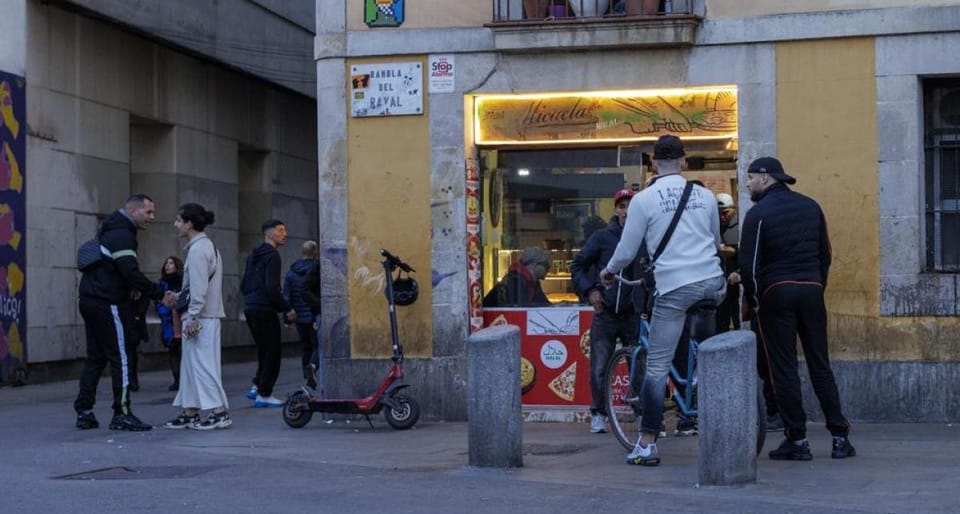
Ciutat Vella still has the highest concentration of foreign residents. All four of its neighbourhoods are now above 30%, and El Gòtic overtook El Raval in 2018 to become the neighbourhood with the highest proportion of non-Spanish residents. El Raval remains notable, with 76.3% of its population born outside Spain and only 16% of residents born in Barcelona.
The pattern is no longer limited to the historic centre. Only one of Barcelona’s 73 administrative and statistical neighbourhoods has a foreign population below 10%, Canyelles in Nou Barris, at 9.2%. At the other end of the scale, 14 neighbourhoods now have more than 30% of residents with non-Spanish nationality.
Across Barcelona, high foreign populations are also found in parts of Sant Martí, including Besòs i el Maresme and Parc i la Llacuna del Poblenou. The Eixample includes La Sagrada Família and La Dreta de l’Eixample on the list, while Sants-Montjuïc, Nou Barris and Sant Andreu also have neighbourhoods above the 30% mark.
The article says this shift is affecting housing, healthcare and education, as well as the wider labour market. It also notes that arrivals from abroad now more than offset falling birth rates and negative natural growth. For more local coverage, see our Community page and Sport page.
Originally published by La Vanguardia Barcelona. Read the original report here.