Badalona City Council has temporarily halted construction of the R1 railway viaduct, a critical component of the ambitious Gorg Canal urban redevelopment project. This pause, announced by municipal officials, allows for "complementary studies and technical adjustments" before works resume after the summer.
The temporary suspension means the viaduct will not meet its original completion target of the first quarter of 2026. This project, with an adjudication value of €14,197,127.06, aims to create a new connection for boats from the port into the city's urban fabric.
Badalona City Council confirmed the temporary halt, stating, "This is an action often necessary for the development of a project of this magnitude and a habitual procedure in works of these characteristics." Officials also plan to use this time to "value improvements to the image and aesthetics of the viaduct," aiming for better integration with the canal and its surroundings. They added, "The space is being enhanced for the benefit of all residents."
Gorg Canal Redevelopment Vision
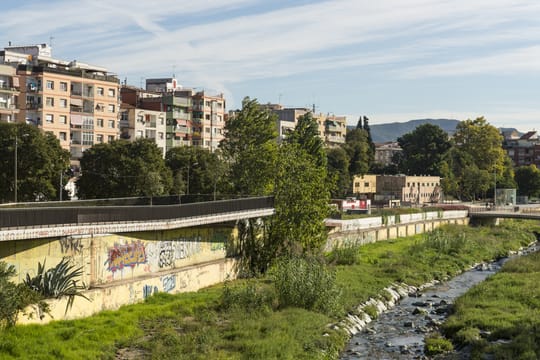
The Gorg Canal project represents a large-scale urban transformation for Badalona, a city bordering Barcelona to the north-east. Mayor Xavier García Albiol described the integral reform as creating "a singular space for all of Catalonia." He stated it would "give a leap in quality to the city, making it one of the most attractive in the area for living."
The canal itself will extend 325 metres into the urban area, forming the centrepiece of a large new rambla. It will include 200 moorings for sports boats. The project also removes the existing railway barrier, connecting neighbourhoods with the maritime zone. Mayor Albiol called this "the most important structuring work" of the last two decades.
This redevelopment aims to establish a new urban "centrality" for Badalona. It seeks to attract investments and boost tourism, with plans for 5,000 square metres of commercial and port premises. This also promotes the blue economy.
Viaduct Construction and Funding
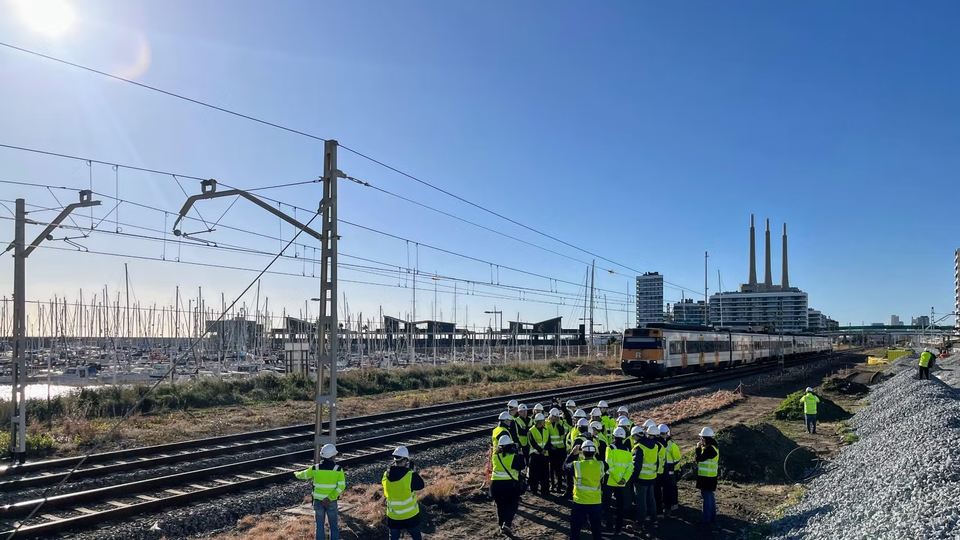
The construction of the 180-metre-long railway viaduct, with a five-metre clearance, began in 2024. Its purpose is to elevate the R1 Rodalies line, clearing the ground for the subsequent creation of the Gorg Canal below. The socialist government of Rubén Guijarro approved the project in 2022. Current Mayor Xavier García Albiol's administration has prioritised its construction.
The municipal executive and Marina Badalona manage the project. The Generalitat de Catalunya holds 50% of Marina Badalona. UTE VIADUCTO MARINA, a joint venture between COMSA and Dragados, received the adjudication for the viaduct works.
Adif, the Spanish railway infrastructure manager, supervises the works. Adif also contributes €3.3 million for complementary track improvements between Sant Adrià de Besòs and Badalona. The municipal executive reported this funding in January 2025.
Provisional Line and Resident Impact
To allow trains to continue running during construction, officials established a provisional R1 line route last year. This temporary railway, forming the first phase of the project, spans 1,123 linear metres. It ensures smooth progress for subsequent construction stages.
This initial phase also included installing anti-vibration blankets and acoustic screens. These measures aim to reduce noise and minimise disturbance for local residents living near the construction site.
While the temporary halt delays the Gorg Canal viaduct's completion, the City Council expects works to restart after the summer. This pause highlights the complexity of large-scale urban projects in the Barcelona metropolitan area. The project remains a key part of Badalona's future urban landscape.
Come and join our Barcelona English Speakers community on WhatsApp.
Originally published by Metrópoli Abierta - Urban Life. Read original article.