Update, 23rd October 2026: Barcelona Mayor Jaume Collboni announced on Friday that construction of the tram link along Avinguda Diagonal will begin in summer 2027, following the City Council's approval of €120 million in funding this week, with the tender expected to be released in the coming weeks, according to El Periódico Barcelona.
Update, 23rd October 2026: Construction of the tram link on Avinguda Diagonal is set to begin in summer 2027, following the Barcelona City Council's approval of a €120 million budget for the project, according to El Periódico. The publication also reported that the stormwater collector along Diagonal will see its capacity increased by up to 60% to improve resilience during heavy rainfall.
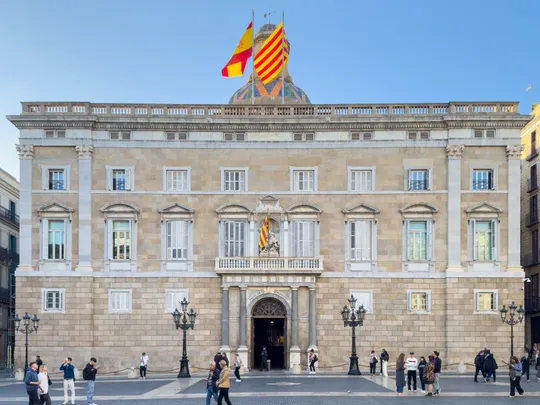
Update, 23rd October 2026: The City Council's government commission approved the €120 million funding allocation, paving the way for the tender to be launched in two or three weeks, according to Ara Cat. Mayor Jaume Collboni said the works will begin this summer, barring unforeseen circumstances.
Major Step for Unified Tram Network
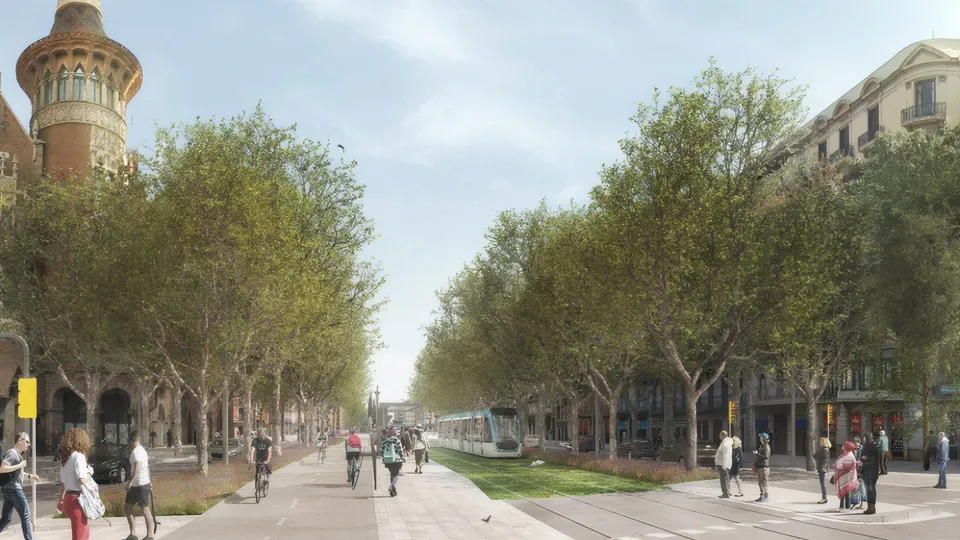
The Metropolitan Transport Authority (ATM) has authorised public procurement for the long-delayed second phase of the tram connection along Barcelona’s Avinguda Diagonal, marking a decisive administrative step towards unifying the Trambaix and Trambesòs networks. The works, valued at €196 million, will cover the 2.2-kilometre stretch between Verdaguer and Francesc Macià and are expected to take 40 months to complete, followed by testing and empty circulation before service begins. Barcelona City Council will contribute €99 million for urbanisation and sewer expansion, while the ATM will provide €97 million, funded by the Generalitat de Catalunya, for tram infrastructure. The tender will be published soon by Barcelona d'Infraestructures Municipals (BIMSA), grouping the works into five lots.
Three New Stations, Faster Journeys
The new route will include three stations, Diagonal-Cinc d’Oros, Balmes, and Casanova, and will allow passengers to cross the full length of the Diagonal in under 40 minutes, with a 15-minute journey between Glòries and Francesc Macià. According to the ATM, the unified tram system will improve connectivity across up to nine municipalities and integrate with metro lines L3 and L5, FGC services at Provença, and future L8 services. Sílvia Paneque, Barcelona’s Councillor for Territory, Housing, and Ecological Transition, said:
Connecting the two tram networks facilitates daily commutes and offers an alternative to private vehicles.
She added that the project supports more sustainable mobility and better-connected public transport.
Demand Set to Double
Once completed, the new 2.2-kilometre section is expected to generate 62 million annual journeys, double the demand recorded before the first phase of the connection, completed in 2024. The ATM estimates the project will remove around 12,500 cars from weekday circulation, supporting Barcelona’s sustainable mobility goals under Agenda 2030. The project also includes the redevelopment of Plaça de Francesc Macià as a major interchange, renewal of the Diagonal’s cycle lane, and the duplication of the stormwater collector between Passeig de Sant Joan and Francesc Macià to reduce flood risk during heavy rain. The final construction project was approved by the ATM Board on 10 April 2026, and a cooperation agreement between the ATM and Barcelona City Council was signed in summer 2025. Despite earlier delays, including a six-month setback in approvals in late 2024, the tender process is now set to begin, with full unification of both tram phases expected around 2031.
Primary sources: enrique.martin, Generalitat de Catalunya, economia.gencat.cat. Reported by atm.cat, elperiodico.com, El Periódico Barcelona.