A Living Archive of Migration in Barcelona
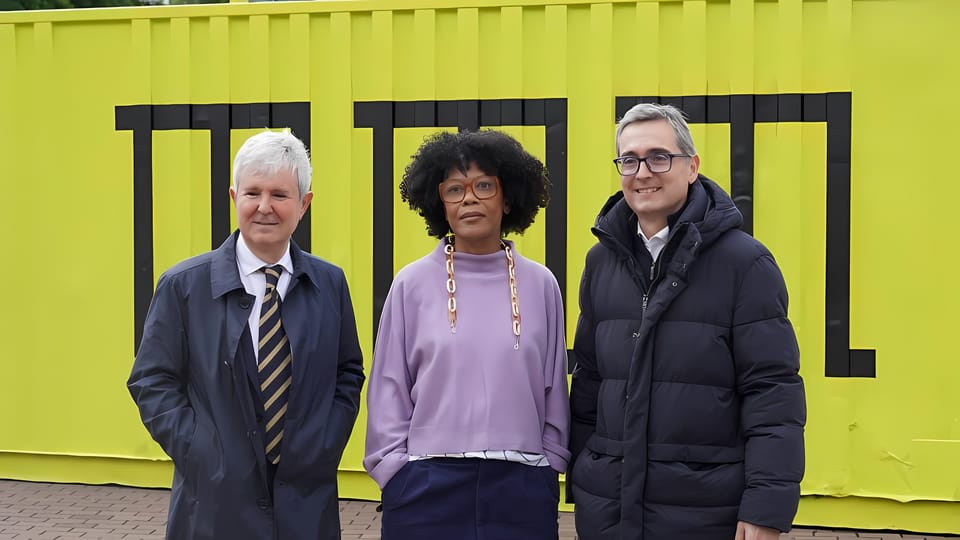
A large yellow container has been installed in Plaça del Canòdrom, in Barcelona’s Sant Andreu district, as part of the Museo Migrante Migrante (MMM), an itinerant art project that collects and shares stories of migration and identity. Despite its shipping container appearance, it carries no goods, only life stories of people who have moved from their places of origin to build new lives in Barcelona. The project, initiated by photographer Angélica Dass, is coordinated by social consultancy Cidalia and funded by the Directorate-General for Cultural Rights of the Spanish Ministry of Culture. It will remain in the square from 13 to 18 October, offering visitors photographic portraits paired with personal testimonies that reflect diverse journeys, both international and internal.
Stories Beyond Borders
Not all stories involve crossing national borders. The exhibition includes accounts from people who relocated from rural towns to Barcelona, as well as memories of displacement passed down through generations. According to municipal census data, more than one in three residents of Barcelona were born abroad, reflecting the city’s deep-rooted diversity. The installation also welcomes public participation. Visitors can share their own migration experiences and have their portraits taken, contributing to a growing archive that evolves with each stop on the project’s journey across Spain.
Public Talk on Mobility and Identity
On Thursday 15 October, from 6 PM to 8 PM, the Ateneu d’Innovació Digital i Democràtica Canòdrom will host Conversations of Memory in Motion, a public dialogue on how movement shapes identity and urban memory. The event will feature Ali González-García, an expert in digital transformation in governments; Silvina Merino, founder of the Microhistorias Migrantes project; and Angélica Dass, MMM’s artistic coordinator.
The aim is to create a living museum of moving memories that invites reflection on the displacements that have shaped our communities and cities.
Educational and Community Engagement
Throughout its stay, the project will host educational activities for local schools. Up to five educational centres in Sant Andreu will take part in guided visits and tailored workshops designed for different learning stages. These sessions aim to engage young people with the personal stories collected by the project. The Museo Migrante Migrante began its tour in Bilbao and, after Barcelona, will continue to Santander, Catarroja (Valencia), Málaga, and Santa Cruz de Tenerife. While in the city, Dass’s acclaimed Humanae project is also on display at the Centre de Cultura Contemporània de Barcelona (CCCB) as part of the exhibition The Cult of Beauty, running until 8 November.
Primary sources: ajuntament.barcelona.cat. Reported by thenewbarcelonapost.com, Redacció TheNBP, Official meeting, cccb.org, museomigrantemigrante.es, The New Barcelona Post.