Free Access to 217 Buildings This Weekend
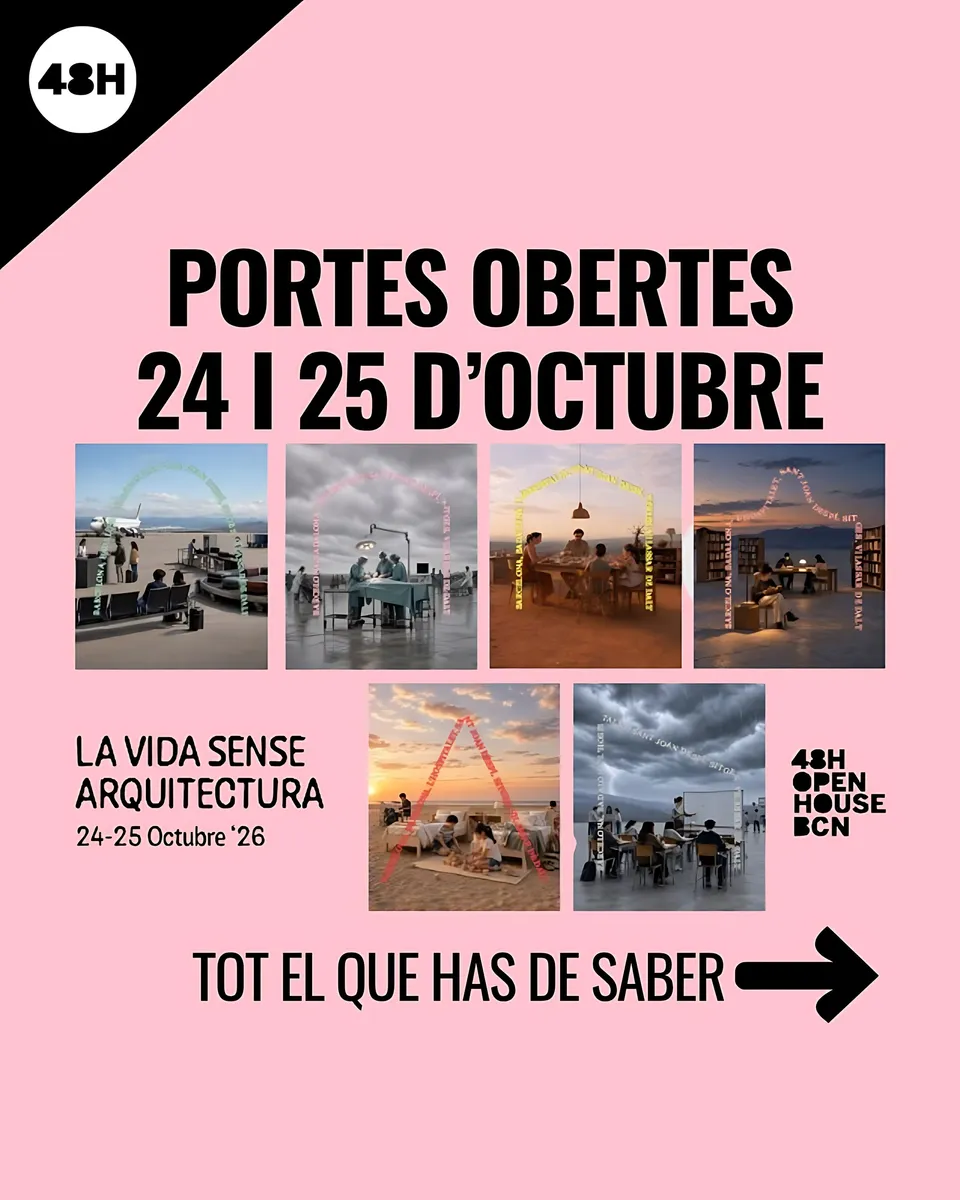
Barcelona’s cultural calendar turns to architecture this weekend with the return of the 48h Open House festival. Now in its 17th edition, the event will open 217 buildings to the public from Saturday 24th October to Sunday 25th October 2026, including 63 spaces never before included in the initiative. All visits are free, and most do not require prior registration, though organisers expect long queues at high-demand sites. Among the most anticipated debuts are the CEU Abat Oliba University campus in Sarrià–Sant Gervasi and the Llotja de Mar in Pla de Palau.
CEU Abat Oliba: A Campus with Royal Roots
The Bellesguard Campus of CEU Abat Oliba University (CEU UAO), established in 2003, occupies land historically linked to King Martin I of Aragon. Archaeological findings during recent landscaping works confirm the presence of a 14th-century structure that functioned until the mid-15th century, likely as an agricultural dependency of the monarch’s residence between 1408 and 1410. Among the site’s notable buildings is the Aula Magna, housed in the former church of the Oblates of the Most Holy Redeemer. Designed by Bernardí Martorell in 1925, the church features a single nave blending modernist, neo-Gothic and neo-Mudéjar styles, reflecting the influence of Gaudí, under whom Martorell trained.
The archaeological findings confirm our university's historical connection with King Martin the Humane, a long-held belief now supported by material evidence.
The discoveries include the base of a press, three storage deposits, an oven and olive remains, indicating agricultural use. Fragments of imported Syrian ceramics from the same period were also found.
Llotja de Mar: Gothic Commerce Meets Neoclassical Grandeur
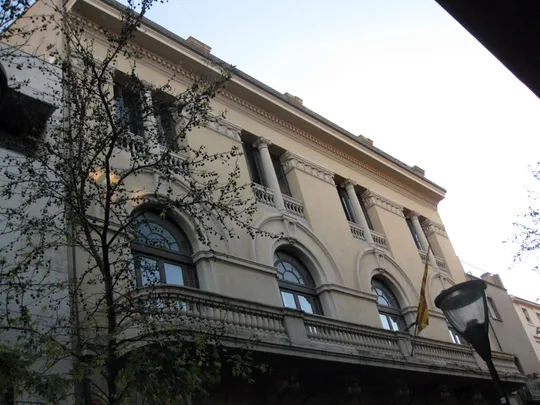
The Llotja de Mar, located at Pg. Isabel II, 1, is one of Barcelona’s most significant examples of civil Gothic architecture. Construction began in 1352 under municipal direction for commercial contracting, though it was King Peter III who formalised its role as Barcelona’s first enclosed trade exchange. The original Gothic Saló de Contractacions, completed in 1392 under architect Pere Arvei, remains intact beneath later additions. Between 1774 and 1802, a major neoclassical reconstruction was led by Joan Soler i Faneca and continued by his son Tomàs Soler i Ferrer, giving the building its current form. Today, the Llotja houses the Official Chamber of Commerce, Industry and Navigation of Barcelona. Visitors can explore the grand Contracting Hall, interior courtyard and ceremonial staircase adorned with allegorical sculptures. The main facade features a Tuscan-columned atrium and an upper portico of Ionic columns crowned by a pediment. Archaeological interventions conducted during restoration works confirmed three distinct construction phases, the earliest dating to the 14th century, with structural elements tied to the original trade hall.
How to Visit
The 48h Open House festival runs from 10:00 to 20:00 on both Saturday 24th October and Sunday 25th October. Full details on participating buildings, including access conditions and guided tour times, are available at totbarcelona.cat.
Sources: Tot Barcelona, cartaarqueologica.bcn.cat.