Partial Reopening and Traffic Reversals
Traffic will reopen on the first stretch of Carrer de Mossèn Amadeu Oller from Gran Via to Carrer del Corral on Tuesday 17th November 2026, following completion of the initial redevelopment phase in La Bordeta. From that date, vehicles will exit onto Carrer del Corral, which will reverse direction towards Carrer de Viladecans. This change allows access to Carrer de Gavà via the adjusted route. To accommodate the new flow, the section of Carrer de Viladecans between Carrer de Gavà and Carrer de Bartomeu Pi will also reverse direction. The final stretch of Carrer de Bartomeu Pi, from Carrer de Viladecans to Mossèn Amadeu Oller, will become a dead end with access restricted to residents and emergency or municipal services.
Continued Road Closures and Bus Diversions
Despite the partial reopening, Carrer de Mossèn Amadeu Oller will remain closed to through traffic between Carrer del Corral and Carrer de la Constitució until the full project concludes in March 2027. The closure excludes intersections but maintains no through access along that central segment. Public transport routes V5 and 115 will continue to be diverted. They will reroute via Avinguda del Carrilet and Rambla Badal, returning towards Sant Medir along Carrer de la Constitució for the duration of the works.
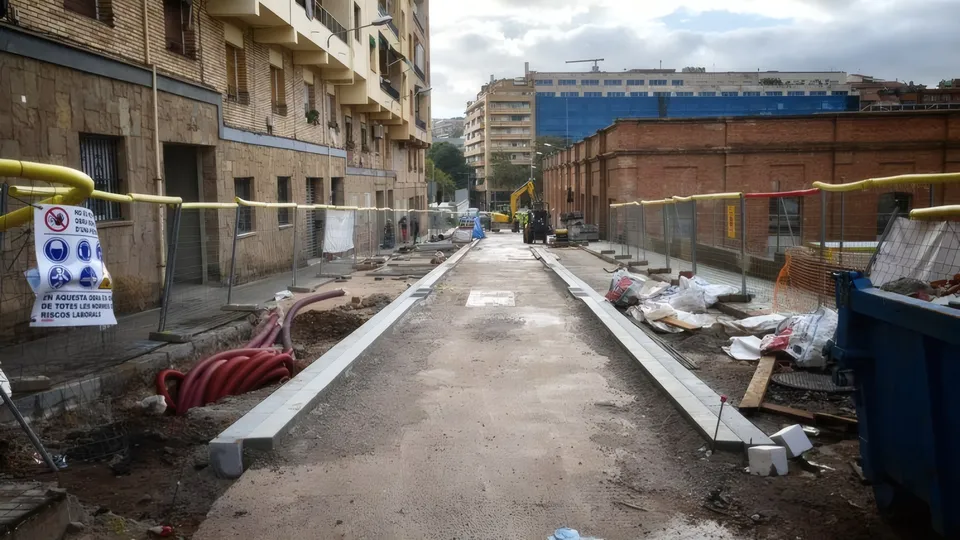
The comprehensive renovation prioritises pedestrians and cyclists, especially in the central section becoming a single-level platform.
Urban Upgrade with Green and Pedestrian Focus
The redevelopment, which began on 11th June 2026 under a municipal Pla de Reforma Integral (PRI), includes constructing a new underground sewer collector and rebuilding the street surface. The project covers more than 3,500 square metres and has a budget exceeding two million euros, according to the Ajuntament de Barcelona. The new layout widens sidewalks and green spaces, replaces street furniture and lighting, and creates a shared platform, without segregated lanes or curbs, between Carrer del Corral and Carrer de Bartomeu Pi. This design prioritises pedestrian and bicycle safety and social interaction, aiming to reduce the urban heat island effect through increased tree cover and shaded areas. The plan incorporates longstanding community demands, including the preservation and expansion of a green space originally secured by local activism in the 1960s. The upgraded street aims to strengthen connections with the Can Batlló site and serve as a social axis for the neighbourhood. Residents and commuters can find official details on the project’s progress via the Districte Sants-Montjuïc news page and the Info Barcelona urban planning portal.
Sources: Ajuntament de Barcelona.