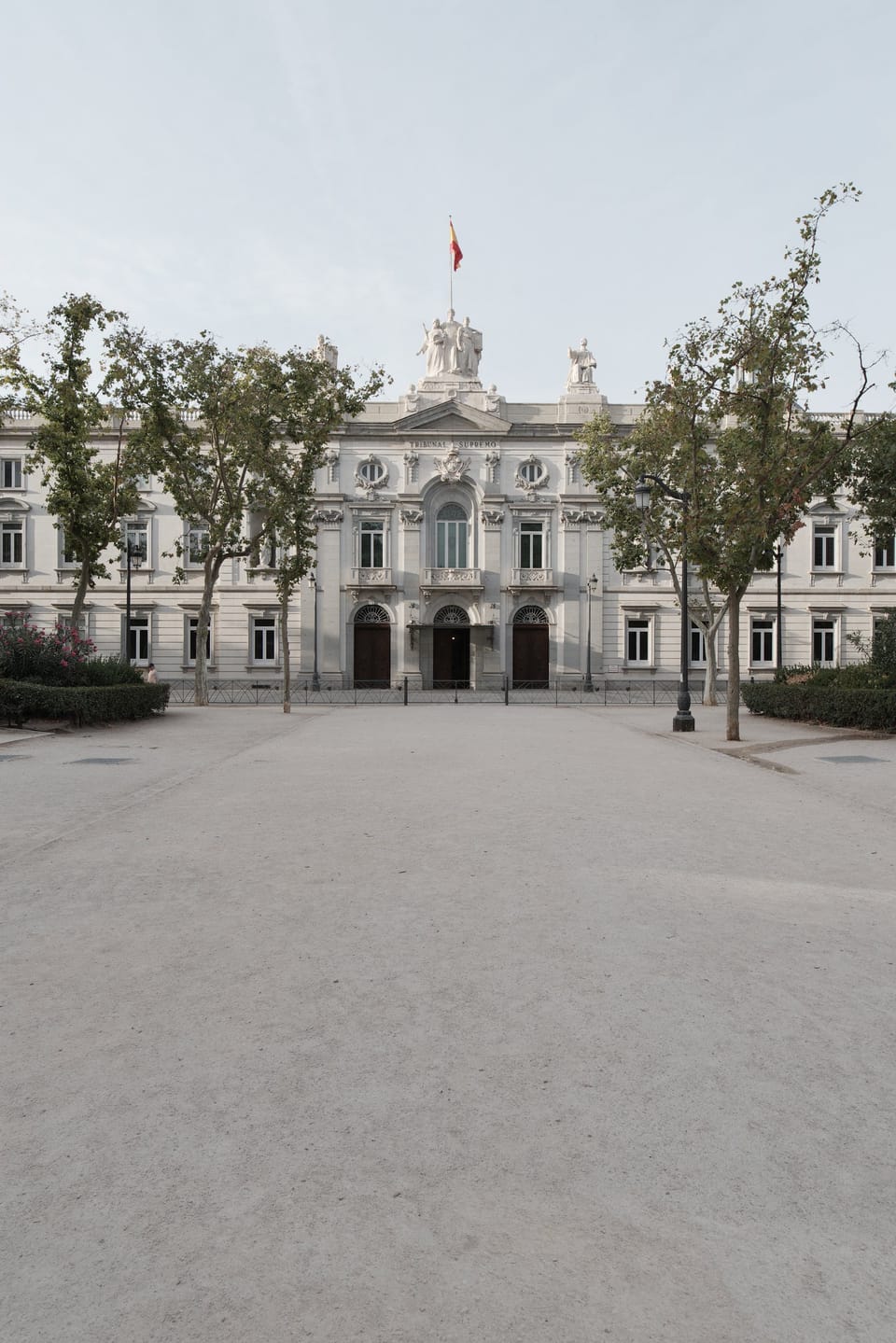
Judge cleared but criticised over arrest order
The Supreme Court has dismissed a criminal complaint against Barcelona investigating judge María del Carmen Suárez, who ordered the arrest of a court administrator for not paying a €150 fine. The ruling, issued in September 2026 and reported on 19 October, upholds the Catalan High Court of Justice's 2023 decision to dismiss the case, though it criticises Suárez for "unquestionable inattention" in authorising the detention. The case involved a judicial administrator (LAJ), a court official working in the same judicial complex as Suárez but in a different building. In February 2021, Suárez fined the LAJ €150 for a minor coercion offence stemming from a neighbourhood dispute. Attempts to notify him of the sentence failed: emails and calls to the contact details he provided went unanswered, and court staff were told by a doorman that he no longer lived at the address on file, a fact the official later admitted was an error.
Detention avoided, fine paid in full
After the LAJ's appeal was rejected, enforcement proceedings began. Despite investigations showing he had the financial means to pay, the judge declared him insolvent and substituted the fine with a custodial sentence. In August 2021, Civil Guard officers approached the official while he was on holiday in Santa Cruz de la Palma, asking him to visit a local court. He complied and paid the €150 the same day, avoiding actual detention but missing a planned excursion. Upon returning to Barcelona, the LAJ filed a prevarication complaint against Suárez with the Catalan High Court of Justice, which dismissed the case in 2023. He then appealed to the Supreme Court, which rejected his claim in September 2026, concluding that while the judge's actions breached fine enforcement rules, they did not amount to a criminal offence due to the case's "singularities".
Shared responsibility acknowledged
The Supreme Court censured both parties. It noted the LAJ "decisively contributed" to the notification failure through his "stubborn disinterest", which was "unbecoming of someone" aware of the minor financial penalty involved. At the same time, it found Suárez's decision to issue an arrest order "blatantly and more than obviously" violated enforcement protocols.
The facts do not allow for an aseptic and detached analysis of the gravity they entail
The ruling leaves open the possibility of disciplinary action by the General Council of the Judiciary (CGPJ), Spain's judicial governing body. This would not be the first such case against Suárez, who was suspended for three years in 2003 for serious delays in case processing. The Supreme Court highlighted that the official avoided detention thanks to the "professionalism" of the Civil Guard officers, who did not formally arrest him but facilitated the payment on the spot.
Reported by eldiario.es, news.livesurf.app, law.justia.com, CGPJ, elDiario.es Catalunya.