Traffic Plummeted During Weekend Storm
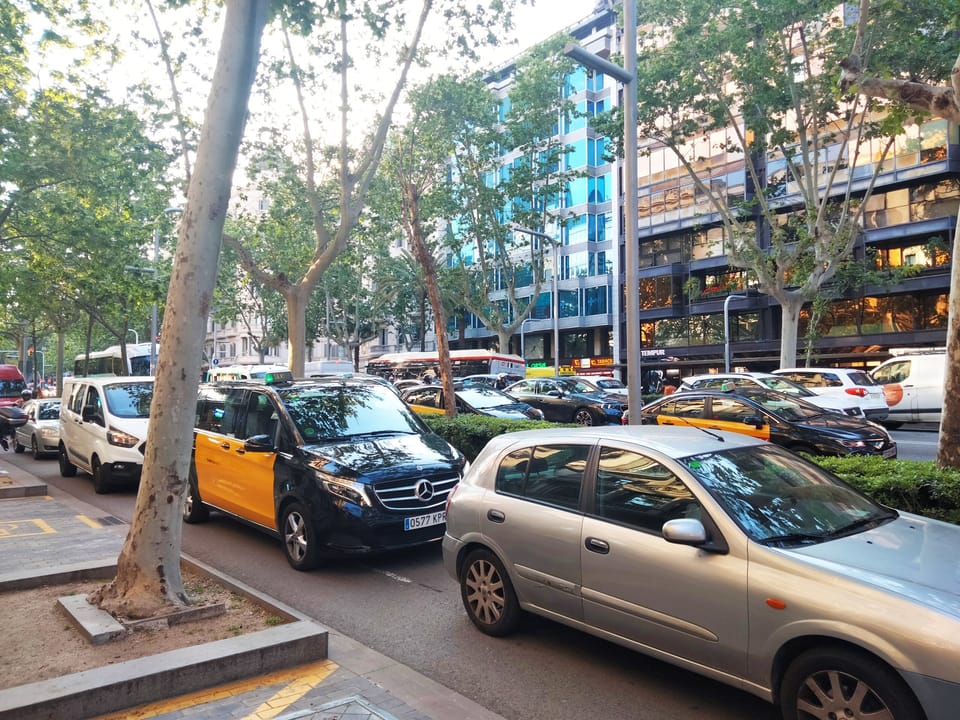
The severe storm that struck Catalonia last weekend led to one of the quietest periods on the region’s roads in years. According to data from the Servei Català de Trànsit (Catalan Traffic Service), analysed by ACN and reported by NacióDigital, road traffic dropped sharply across key routes between Saturday 26 and Monday 28 September 2026. On Sunday, traffic on the AP-7 near Girona fell by 36%, equivalent to 27,000 fewer vehicles compared to a normal Sunday. The decrease was also significant on Saturday, with 9,000 fewer vehicles recorded on the same stretch. Overall, average daily traffic volume on the AP-7 near Vilablareix dropped by 22% over the weekend. Access roads to Barcelona saw a 14% reduction in traffic, or around 10,000 fewer vehicles on Sunday compared to the previous week. On the Ronda de Dalt ring road, nearly 20,000 fewer vehicles circulated, marking a 33% decline. Other major routes including the C-17 at Montcada i Reixac (-28%), C-31 south of Viladecans (-26% on Saturday, -25% on Sunday), and the C-33 at Montcada (-26%) also recorded sharp drops.
ES-Alert Correlated With Drop in Movement
A clear correlation emerged between traffic reductions and the timeframe of highest risk indicated by an ES-Alert issued by Civil Protection. The alert, which warned of torrential rain along the coast and pre-coastal areas, was active from 8 PM on Saturday to 2 PM on Sunday. Hourly intensity data showed traffic levels remained close to normal until the alert began at 8 PM. After that point, movement declined significantly and stayed below average through Sunday afternoon.
The drop in mobility reflects both official warnings and public caution in extreme weather.
Metro Ridership Also Fell Sharply
Public transport use declined as well. Barcelona Metro validations dropped by 16.2% on Saturday, with 996,696 recorded entries, and by 20.7% on Sunday, falling to 719,643. Even on Monday, despite the return to routine, validations remained 11.4% below normal at 1.42 million, following renewed morning rainfall. Disruptions contributed to lower ridership: several metro lines, including L9S, L9N and L10N, faced cuts due to flooding, while more than half of Rodalies commuter rail lines were affected. Stations filled with water, and services were suspended or delayed across the network. The Telèfon 112 emergency line received nearly 700 calls during the storm. One of the most serious incidents occurred in Gavà, where firefighters rescued a woman and a minor trapped in a vehicle submerged by floodwater.
- Ronda de Dalt closed temporarily due to flooding
- Barcelona’s Canaletes reservoir reached 90% capacity
- 30 schools in Barcelona had to pump out water
- Multiple roads saw lane closures and localized chaos
Despite the disruption, no fatalities were reported. Authorities credited early warnings and public responsiveness for limiting harm.
Data Based on Verified Traffic Reports
The figures derive from Average Daily Intensity (ADI) measurements collected by the Servei Català de Trànsit and reflect comparisons with the weekend of 19–21 September 2026, the last before the Mercè festivities. Real-time monitoring is governed by Decree 148/2021 on Integrated Traffic Management, which mandates incident reporting within 10 minutes and inter-agency coordination between Trànsit, Mossos d’Esquadra, Bombers, and Protecció Civil. Drivers can check current conditions via the Servei Català de Trànsit website.
Elsewhere in Catalonia on Catalan.News: Rainstorm Cuts 20 Roads in Girona and Barcelona and Storm warnings remain for Girona and Barcelona.
Primary sources: transit.gencat.cat. Reported by naciodigital.cat, lavanguardia.com, manresadecideix.cat, barcelonapress.com, metropoliabierta.cat, ground.news.