
Residents and business owners around Collserola have renewed their complaints about access restrictions to the natural park near Barcelona, almost a year after they were introduced to contain African swine fever, 3CatInfo reports.
The closure has restricted leisure and economic activity in the area. For businesses in Vallvidrera that depend on walkers and cyclists, the fall in visitors has already forced changes: one shopkeeper transferred her ice-cream parlour in June after losing customers, according to El Periódico.
The Generalitat, Catalonia’s regional government, has discussed reopening some areas, but has not set an exact date in its most recent comments reported in the sources. On 6th November, agriculture department secretary general Cristina Massot cautioned against setting one; agriculture minister Òscar Ordeig had suggested that a limited reopening could begin in late November or early December.
Shops and residents press for reopening
Lola Serrat ran an ice-cream parlour in Vallvidrera for 11 years before transferring it. She told El Periódico that 60% of its customers had come from outside the neighbourhood and that, from December, she had earned barely enough to pay her staff.
Serrat still runs Uaala, a bakery workshop in the neighbourhood. Explaining her decision to give up the ice-cream business, she said:
“In June I could already imagine that this was going to last a long time and that I wouldn’t be able to sustain it.”
On Saturday 17th October, dozens of residents, traders and restaurateurs protested in Vallvidrera, according to Metrópoli. They blocked the Vallvidrera road before walking to the gates of the Tibidabo amusement park, demanding that Collserola reopen.
At the protest, representatives of restaurant owners called for veterinary precautions to be combined with more flexible restrictions and financial support, Metrópoli reported.
Government reports progress in containing the virus
In her 6th November interview with TOT Sant Cugat, Massot said the outbreak was developing favourably and that, if the existing strategy continued to produce results, the affected area was entering a final phase of containment.
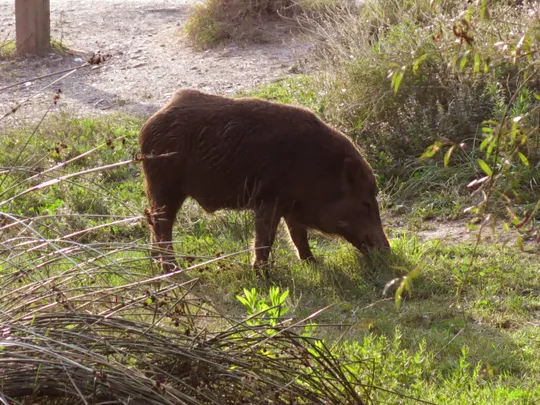
She said 419 positive findings had been recorded among animals and animal remains, all within the closed zone. The government estimated that roughly 150 wild boars remained in that zone, where its stated objective was to reduce the population to zero to limit the risk of the disease spreading.
What it means for you
- When: One year on from the introduction of access restrictions in Collserola, after two wild boar carcasses tested positive for African swine fever in Cerdanyola del Vallès.
- Where: The zone of high risk includes 19 municipalities: Badia del Vallès, Barberà del Vallès, Cerdanyola del Vallès, el Papiol, Molins de Rei, Sant Feliu de Llobregat, Montcada i Reixac, Polinyà, Ripollet, Rubí, Sabadell, Sant Cugat del Vallès, S
- Who is affected: The 15,000 residents of Collserola and more than 5 million annual visitors to the natural park.
- What to do: Respect the signage and controls, do not feed wild boars, deposit waste in closed containers, and call 112 if you detect dead wild boars or animals showing symptoms compatible with the disease.
Sources: 3Cat, El Periódico, totsantcugat.cat, Metrópoli Publicada 17 d’octubre 2026.