Project to Convert B-23 Into Urban Thoroughfare Gains Renewed Support
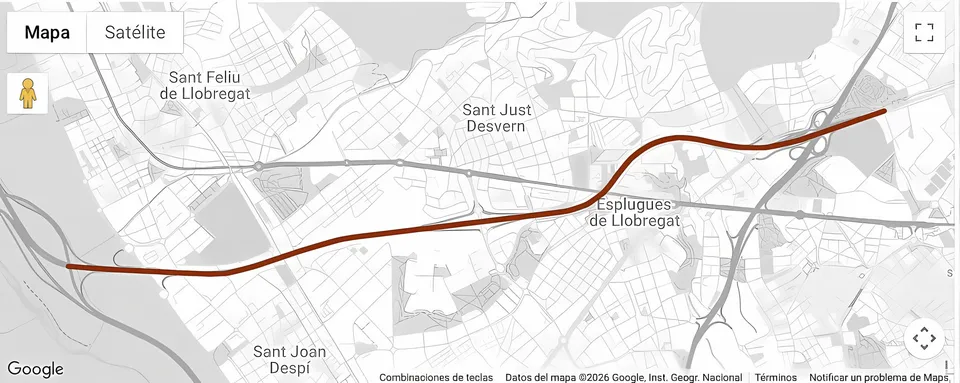
On Wednesday 25th November 2026, business leaders and mayors from Esplugues de Llobregat, Sant Just Desvern, and Sant Joan Despí gathered at the Acta Hotel in Sant Just Desvern to relaunch a 2007 urban planning initiative: transforming the B-23 highway into a 5.5-kilometre urban avenue extending Barcelona’s Avinguda Diagonal to the Llobregat river. The event, titled 'La Diagonal fins al Llobregat', was organised by business associations Sant Just Impulsa, Esplugues Innova, and Associació Empresarial Fontsanta, and attended by around 200 representatives from the business community and public institutions. The project’s original architect, Enric Batlle of Batlleiroig, presented the vision, describing it as an open framework that can be adapted based on political and financial momentum.
“It is a project open to modification depending on the force one wants to give it,”
Enric Batlle, architect and co-founder of Batlleiroig, explained that the plan includes covering parts of the current highway and converting it into a permeable urban corridor with space for pedestrians, cyclists, public transport, housing, and commercial developments.
Local Leaders Unite Behind Vision of Removing a 'Scar'
Imma Amat, president of Sant Just Impulsa, described the B-23 as a “scar that splits the three municipalities”, limiting connectivity and economic integration. She argued that redeveloping the highway could generate new opportunities for business and urban regeneration. The mayors of all three municipalities expressed support. Joan Basagañas, mayor of Sant Just Desvern, said the physical divide isolates key infrastructure, noting that the area’s reference hospital lies on the opposite side of the highway. Belén García, mayor of Sant Joan Despí, highlighted the potential for gains in housing, public facilities, environmental quality, and economic development. She recalled that her predecessor, Antoni Poveda, was one of the original proponents of the idea. The transformed avenue would extend to FC Barcelona’s training city, located in her municipality. Eduard Sanz, mayor of Esplugues de Llobregat, advocated for mixed-use urban development and stressed the importance of eliminating physical and social barriers created by the current highway layout.
Public-Private Collaboration Seen as Key to Progress
Ramon Torra, manager of the Àrea Metropolitana de Barcelona (AMB), underscored that the transformation would require sustained public-private collaboration. He acknowledged that past attempts stalled due to the economic crisis and political instability, despite having been presented to five regional ministers (consellers). When asked about costs, speakers declined to provide figures, citing uncertainty over whether earlier estimates remain valid. Attendees raised concerns about citizen involvement, expected population growth, industrial mobility, and whether the project would reduce car dependency. Batlle clarified that the plan maintains existing traffic lanes while adding lateral access, improving connectivity without increasing speeds, marking a shift from highway to urban street.
Residents and business owners interested in the project’s development can follow updates through the AMB’s urban planning portal at urbanisme.amb.cat.
Sources: La Vanguardia, Servei de Comunicació.