Shelters documented but not preserved
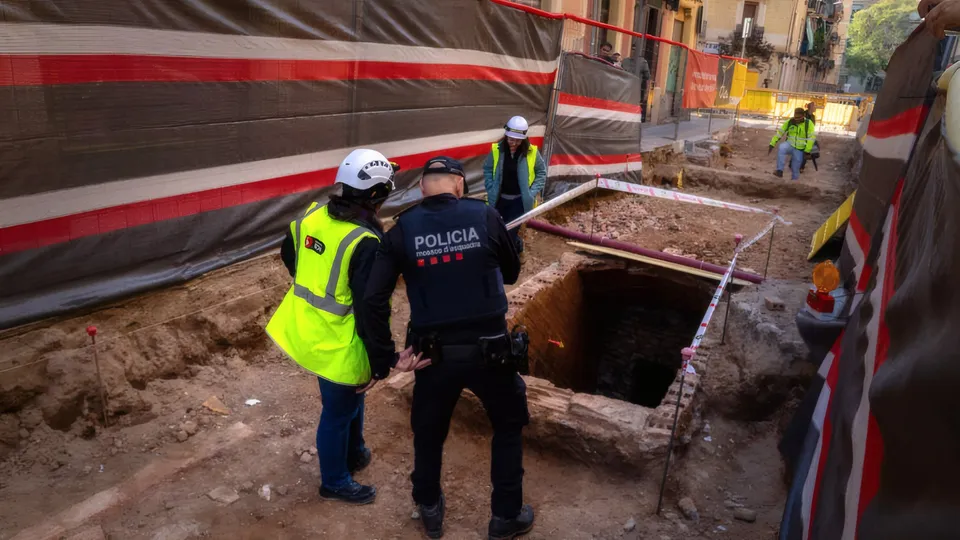
The Barcelona City Council has begun filling in Civil War-era air-raid shelters discovered during redevelopment works on Carrer del 26 de gener de 1641 in the Hostafrancs neighbourhood. The galleries, uncovered in March 2026, will be filled with low-strength self-compacting fluid mortar to stabilise the ground and allow urban works to continue. Three access points to shelters built in 1938 were found beneath the street and pavements. Technical teams, including municipal archaeologists and the Subsoil Unit of the Mossos d'Esquadra (Catalan regional police), conducted inspections and conservation assessments over several months. According to the council, the studies enabled authorities to "identify, map, and study" the shelters but revealed "significant limitations related to accessibility, safety, and structural conservation." No unique heritage elements were found inside that would justify converting the spaces for public access.
Decision based on safety and urban planning
The decision to fill the shelters follows geotechnical advice that the mortar solution will stabilise the ground without demolishing the original structures. The material adapts to the internal shape of the cavities, making it compatible with the ongoing public space redevelopment. The discovery forced a redesign of the original urban plan. Services, trees, and irrigation systems had to be relocated to the opposite side of the street to avoid the shelters. Despite these changes, the project will proceed with its core goals: widening pavements, improving accessibility, planting new trees, and upgrading road infrastructure.
Once the filling is complete and ground stability is confirmed, works on Carrer del 26 de gener de 1641 will resume. The Barcelona City Council had paused the redevelopment in March after the initial discovery and held public information sessions in April and May at the Sants-Montjuïc district headquarters to inform residents. The final phase of archaeological intervention is pending on the opposite side of the street, after which further community updates will be scheduled.
Sources: El Periódico, Ajuntament de Barcelona.