€150 Million Strategy to Expand Blue and Freshwater Economy
Barcelona City Council is investing €150 million by 2030 to expand its blue economy strategy, broadening its scope to include freshwater initiatives and boost international impact. The plan, led by economic development agency Barcelona Activa, builds on a previous phase (2021–2025) that delivered all planned projects and invested €98 million in coastal infrastructure. The new roadmap aims to consolidate Barcelona as a global hub for innovation linked to the sea and water resources. It will prioritise quality employment, economic growth, and sustainability, with a focus on research, entrepreneurship, and climate resilience.
Barcelona reaffirms its commitment to the blue economy as a strategic sector for generating quality employment, innovation, and economic activity linked to the sea.
Raquel Gil, fifth deputy mayor and president of Barcelona Activa, said the strategy is based on a triple ambition: integrating freshwater projects, expanding the international reach of initiatives, and strengthening public-private collaboration.
New Coastal Facilities to Launch by 2028
€142 million of the total investment will fund three major coastal facilities set to open between 2027 and 2028, according to Barcelona City Council’s Info Barcelona portal. These include:
- The Barcelona Sea of Science at Port Olímpic, a public space for marine science and sustainability awareness, managed by the Institute of Marine Sciences (ICM-CSIC), opening in 2027.
- The Maritime and Nautical Engineering Centre at the new entrance to Port de Barcelona, featuring advanced simulators and labs, delivered in collaboration with UPC and the Generalitat, opening in 2028.
- The BlueTechPort at Sant Bertran wharf, a hub for maritime tech start-ups promoted by Port de Barcelona and managed by the World Trade Center, also opening in 2028.
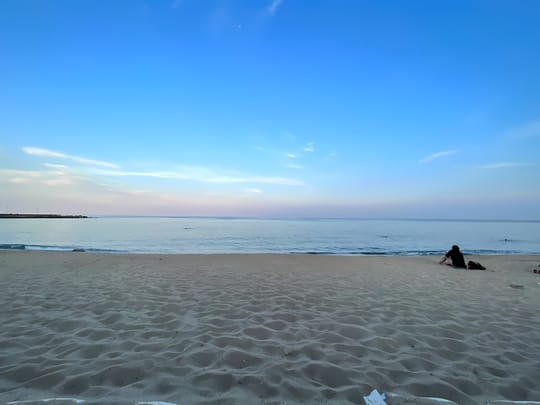
These projects are part of a broader transformation of the city’s 5-kilometre coastline into a zone for sport, innovation, and public access to the sea, including the redevelopment of Port Olímpic and Pavelló Blau.
From Sea to Freshwater: A Broader Vision
For the first time, the strategy incorporates freshwater-focused initiatives to improve water management amid droughts and floods. Measures include sustainable urban drainage systems, water reuse projects, and optimisation of the city’s water cycle. The B-Blue entrepreneurship programme, run by Barcelona Activa, will now support start-ups in both marine and freshwater innovation. Since 2021, B-Blue has accelerated 32 projects and helped mobilise €39.5 million in venture capital.
Global Ambition: UNESCO Centre and International Events
Barcelona is positioning itself on the global stage through the Ocean Decade Collaborative Centre (DCC), a UNESCO-backed initiative developed with the Port of Barcelona, Generalitat de Catalunya, ICM-CSIC, and BlueNetCat. The DCC will serve as an international hub for knowledge and project coordination in the sustainable ocean economy. The city will also strengthen its presence through Tomorrow.Blue Economy, an international event co-organised with Fira de Barcelona, the Port of Barcelona, and the World Ocean Council, promoting Barcelona as a leader in blue innovation.
Public-Private Collaboration and Job Growth
The strategy reinforces the Public-Private Blue Economy Table as a governance platform to align stakeholders, including companies, research centres, universities, and citizens. The blue economy already supports over 54,000 jobs in Barcelona and generated €11.19 billion in turnover in 2024, equivalent to 5% of the city’s total. With more
Primary sources: ajuntament.barcelona.cat, Barcelona City Council, Direcció Tècnica de Premsa. Reported by barcelonactiva.cat, written by Lorraine Williamson, piernext.portdebarcelona.cat, Mirage News, Nines Díaz, firabarcelona.com.