Barcelona's streets are once again covered in a striking yellow and orange floral display. Tipuana tipu trees have started blooming earlier than their typical June-July period. This early arrival, observed across the city and its surrounding areas, directly results from the recent advance of high temperatures, according to El Periódico Barcelona.
The Tipuana tipu, also known as the tipa or tipa blanca, is a species native to South America. Its natural home includes countries like Argentina, Bolivia, Brazil, Paraguay, and Uruguay. This tree belongs to the legume family. People widely cultivate it globally due to its attractive appearance. It also adapts well to various climates. The Tipuana tipu tolerates drought effectively, making it suitable for the region.
Its bright yellow or orange, butterfly-shaped flowers are highly decorative. They group in hanging clusters, creating an impressive visual spectacle. However, these fallen flowers can become slippery on surfaces. Pavements, bicycle wheels, and motorbike tyres are affected. This creates a potential hazard for pedestrians and cyclists in the city.
The Tipuana tipu first arrived in Barcelona during preparations for the 1929 Universal Exhibition. Nicolau Rubió i Tudurí, then director of Parcs de Barcelona, championed its introduction. He worked alongside French landscape architect Jean-Claude Forestier on this urban planting initiative. This decision aimed to enhance the city's green spaces for the major international event.
These trees are particularly common because they resist pollution effectively. They also thrive in full sun exposure. This makes them prevalent in coastal and southern areas. Tipuana tipu trees grow well in all soil types, including calcareous ones. However, they need ample space for their roots. Therefore, people must plant them 7 to 10 metres away from buildings or water sources.
Distinctive Features of Tipuana Trees
The Tipuana tree features a wide canopy. Its branches extend horizontally. Its leaves are a vibrant green and appear delicate. These leaves remain on the tree almost until spring. They resemble those of robinias and sophoras but lack the thorns of robinias. Unlike sophoras, Tipuana leaves do not have a pointed apex. The fruits of these three species also show distinct differences.
Comparing Urban Floral Displays
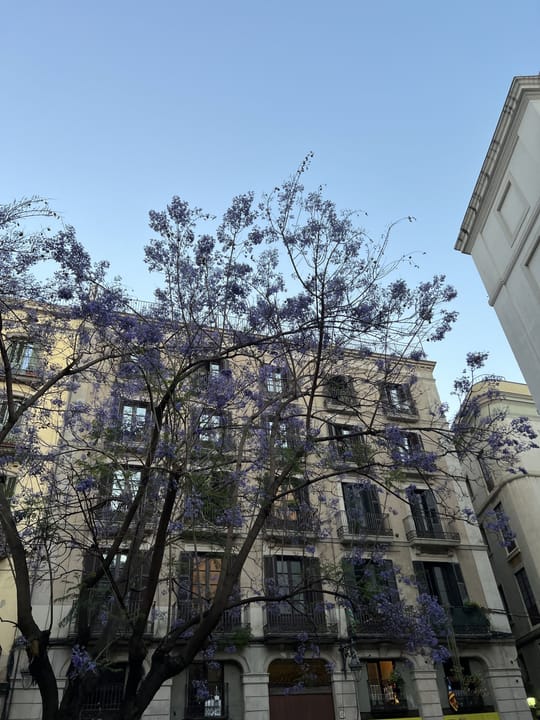
The Tipuana's beauty rivals that of the jacaranda. Jacarandas are known for their violet flowers. They also offer a stunning display, typically enjoyed in June. Both trees contribute significantly to Barcelona's urban aesthetic. Their unique flowering periods add diverse colours to the city's streets throughout late spring and early summer.
The earlier bloom of the Tipuana tipu trees shows changing climatic patterns in Barcelona. Residents and visitors can expect to see these yellow flowers adorning the city's streets for several weeks. This annual spectacle continues to define Barcelona's spring and early summer urban landscape.
Come and join our Barcelona English Speakers community on WhatsApp.
Originally published by El Periódico Barcelona. Read original article.