Unified Judicial Criteria Adopted
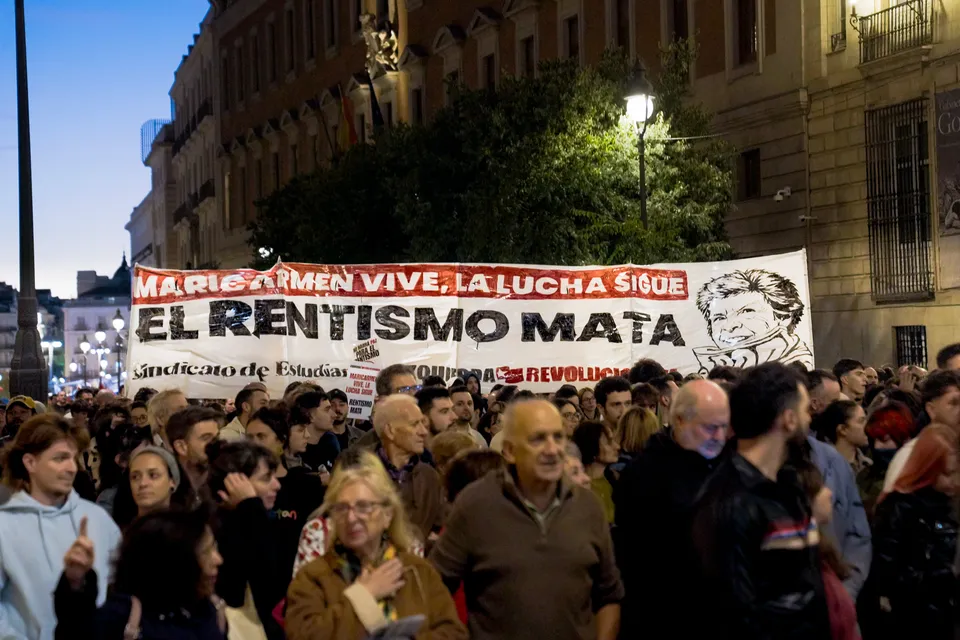
The Civil Section Judges' Board of the Barcelona Court of First Instance has agreed on seven criteria to standardise the application of Decree-Law 29/2026, known as the 'maricarmen' decree, which governs the suspension of evictions for vulnerable tenants. The agreement, reached on Thursday 29th October and submitted to the Governing Council of the High Court of Justice of Catalonia (TSJC) for acknowledgment, aims to reduce legal uncertainty in a regulation that distinguishes between claimant types and may affect cases with final rulings. The move comes as the Permanent Delegation of Congress has yet to validate the decree, with a vote expected next week. The decree, nearly identical to a prior version that triggered early elections when not ratified, introduces new protections for vulnerable tenants and assigns public administrations specific duties to prevent certain evictions.
Key Criteria for Eviction Suspension
Under the new guidance, courts must suspend pending eviction proceedings ex officio when a tenant’s economic vulnerability has already been proven in a prior ruling. This applies only to summary eviction cases for non-payment of rent where the claimant does not fall under Article 2.1 of the decree. The decision aligns with the decree’s 'extraordinary nullification' mechanism, which requires public authorities to intervene when vulnerability is demonstrated. The competent administration then has two months to offer suitable housing or pay the landlord’s outstanding amounts, including legal costs. During this period, eviction is suspended. If no solution is provided, the administration assumes the tenant’s debt and the tenancy continues. Judges have also clarified that 'social vulnerability', not just economic hardship, qualifies under Article 2, provided there is no housing alternative. However, vulnerability must be formally certified in social services reports. In their absence, courts may apply Article 441.7 of the Civil Procedure Law, which considers broader socioeconomic factors.
The decree creates a complex framework that places significant responsibility on landlords while aiming to protect the most vulnerable.
Exclusions and Limitations
The judges have ruled that the suspension mechanism under Article 2.2 does not apply to the Catalan Land Institute (Incasòl) or the Catalan Housing Agency, citing their status as public bodies managing social and affordable housing through administrative processes. This exclusion reflects a prior ruling by the Provincial Court of Barcelona, which did not classify them as large property holders. Mortgage foreclosures and third-party occupancy disputes are also excluded from the Article 2 protections, though other decree measures may still apply. The transitional provisions extending protections to pre-existing cases are limited to those specified in Article 441.5 of the Civil Procedure Law, including certain non-payment, contract expiry, and possession recovery cases. Appeals are permitted when a suspension is granted, while motions for reconsideration apply if denied. Such requests require a separate court file. The decree maintains temporary protections until 31st December 2030, but suspensions under Article 2.2 are subject to annual judicial review and a maximum duration of three years, with early termination possible under specific conditions.