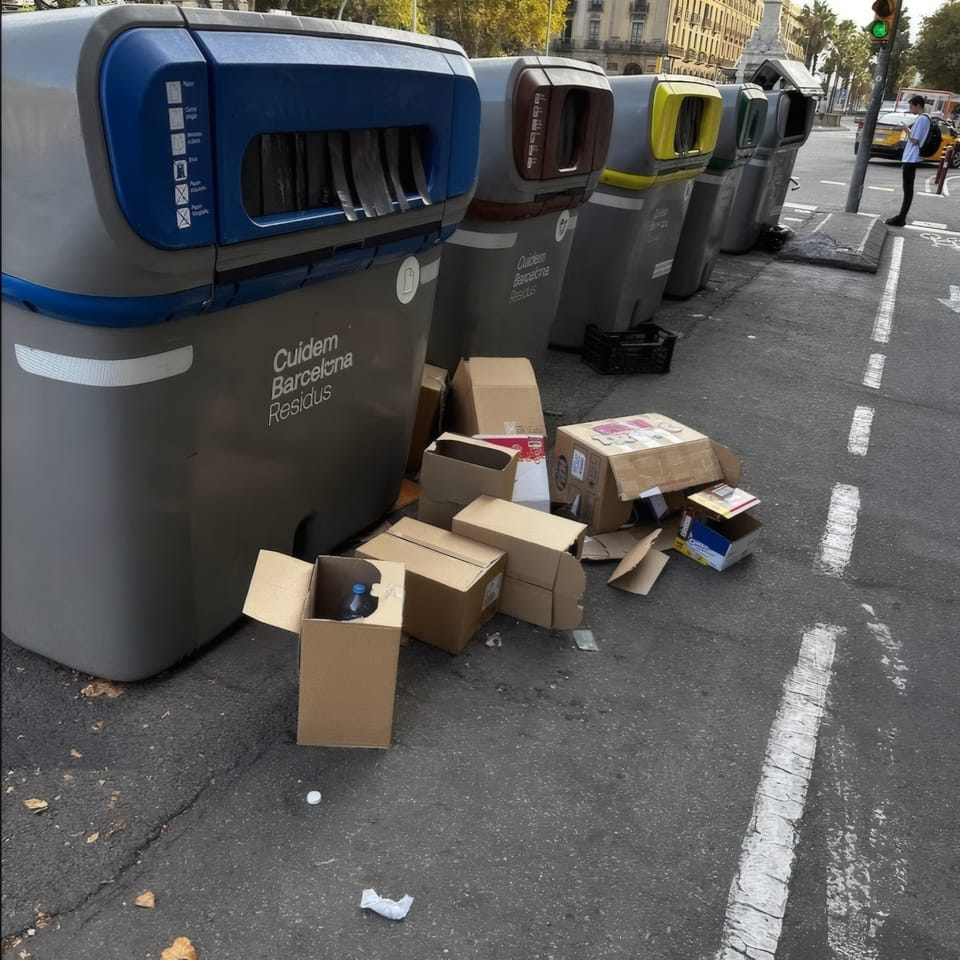
Recycling Rates Lag Behind Rising Costs
Barcelona and 27 other cities in the Barcelona Metropolitan Area (AMB) missed the European Union’s recycling target of 55% in 2025, according to the AMB’s annual report. The region selectively collected 39.9% of waste at source, up slightly from 38.8% in 2024, and sent only 35.2% for actual recycling after treatment. The shortfall comes despite a rise in household waste fees introduced that year to legally cover collection and treatment costs. In Barcelona, the average annual bill rose by 10% to €131, driven by a 16% increase in the city council’s local collection charge, from €53 in 2024 to €60 in 2025, and a rise in the AMB’s Metropolitan Waste Treatment Fee (TMTR) from €66 to €71.
Only Eight Municipalities Meet EU Standard
Of the 36 metropolitan municipalities, only eight reached the 55% threshold: Begues, Castellbisbal, Corbera de Llobregat, el Papiol, Sant Just Desvern, Santa Coloma de Cervelló, Torrelles de Llobregat, and Tiana. The Barcelona neighbourhoods of Sarrià and Sant Andreu de Palomar also met the standard. The AMB attributes the overall failure to the continued reliance on open street bins, a system it says has “reached its limit.” Municipalities using individualised systems like door-to-door collection or closed, identifiable bins, such as Barberà del Vallès, Cornellà de Llobregat, Montgat, el Prat de Llobregat, and Sant Cugat del Vallès, show stronger performance and are making progress.
The deployment of more efficient selective collection systems could reduce treatment costs by up to €20 million annually.
Organic Waste and Residuals Remain Key Challenges
Organic waste remains a major opportunity. In 2025, residents generated 106kg per person, but only 35.5% was collected separately. The AMB estimates proper collection could recover over 60kg more per inhabitant. Light packaging and other plastics also showed low recovery: 54kg generated per person, with just 36.7% collected. Glass performed best at 64.6% collection. However, the residual fraction, the non-separated waste, remained high at 254.2kg per person, accounting for 60% of total waste. Though declining, it still contains recyclable materials lost due to poor separation.
Economic Impact of Poor Recycling
Waste treatment across the AMB cost approximately €217 million in 2025, or €62.50 per inhabitant. The AMB calculates that better selective collection could cut this by €20 million annually by reducing landfill and incineration taxes. Households in high-recycling areas pay up to three times less than those in low-performing ones, where treatment costs range from €60 to €140 per household per year.
Roadmap to 65% Recycling by 2035
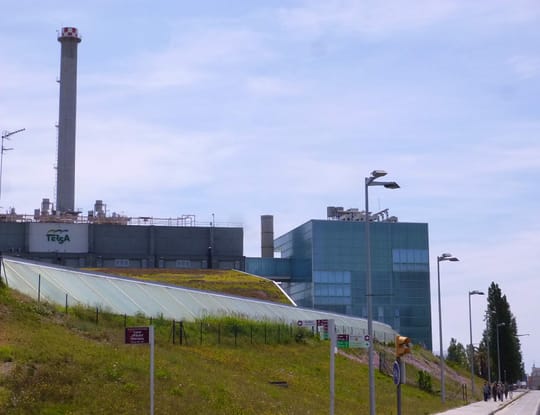
The AMB is planning a network overhaul aiming for a 65% recycling rate by 2035. This includes building new specialised plants, upgrading existing facilities, converting ecoparks into organic waste processing centres to produce compost and biomethane, and opening a post-treatment plant to further reduce landfill use. Targets include a 10% reduction in total waste compared to 2010, 10% less packaging than in 2018, less than 15% contamination in organic waste, and less than 10% of waste going to controlled landfill.
Reported by elperiodico.com, El Periódico Barcelona.