Recycling stalls at 41% in Barcelona
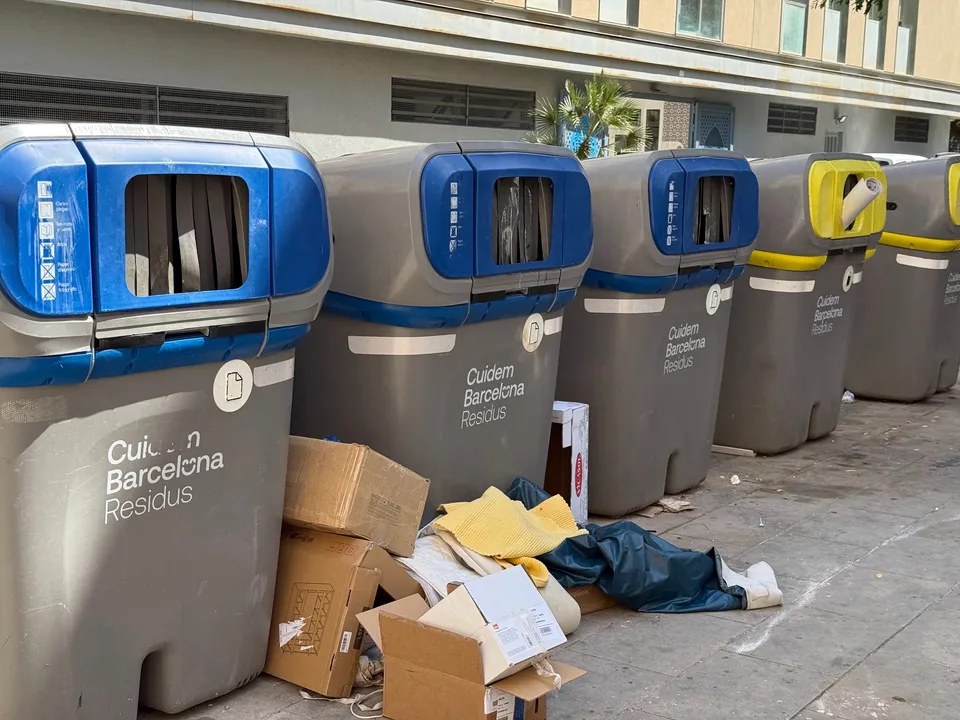
Barcelona’s municipal waste recycling rate has stagnated at 41% for the past three years, with only a 1.5 percentage point increase since 2020, when the figure stood at 39.69%. The latest data for 2025 shows a rate of 41.22%, still far below the European Union’s target of 55% for that year. Under the EU’s waste framework directive, all member states must ensure that at least 55% of municipal waste is recycled or prepared for reuse by 2025, rising to 60% by 2030 and 65% by 2035. According to figures from the European Environment Agency and Eurostat, Barcelona’s performance puts it significantly off track.
Fines loom for non-compliant regions
The Catalan Waste Agency (ARC) has warned that if the EU imposes sanctions on Spain for missing these targets, the national government plans to pass the penalties on to the Generalitat. Mireia Martí, head of the ARC’s waste observatory, stated: “The State has already communicated that, should there be sanctions from Europe, it will pass them on to the Generalitat, and we will have to see whether this impacts the municipalities.” Catalonia as a whole achieved a 48% recycling rate in 2025, above Barcelona’s but still below the EU benchmark. Municipalities in inland Catalonia, excluding some Pyrenean mountain towns, exceed 50%, with some central counties surpassing 65% through door-to-door collection and smart container systems.
Urban-rural divide in recycling performance
Coastal and urban areas, including Barcelona and regions around Lleida, lag behind, with recycling rates below 50%. In Cerdanya, the average is under 20%. Martí attributes the disparity to collection methods and community stability. Door-to-door and smart container systems are more effective in less densely populated areas where residents are more settled. High population turnover in tourist-heavy and densely populated zones makes it harder to establish consistent recycling habits.
The EU defines municipal waste as materials collected by or on behalf of local authorities, primarily from households but also from shops, offices, and public institutions. Current data shows that each EU citizen generates around 5 tonnes of waste annually.
Sources: betevé, data.europa.eu, eea.europa.eu.