Record Attendance at Fifth Deep Tech Summit
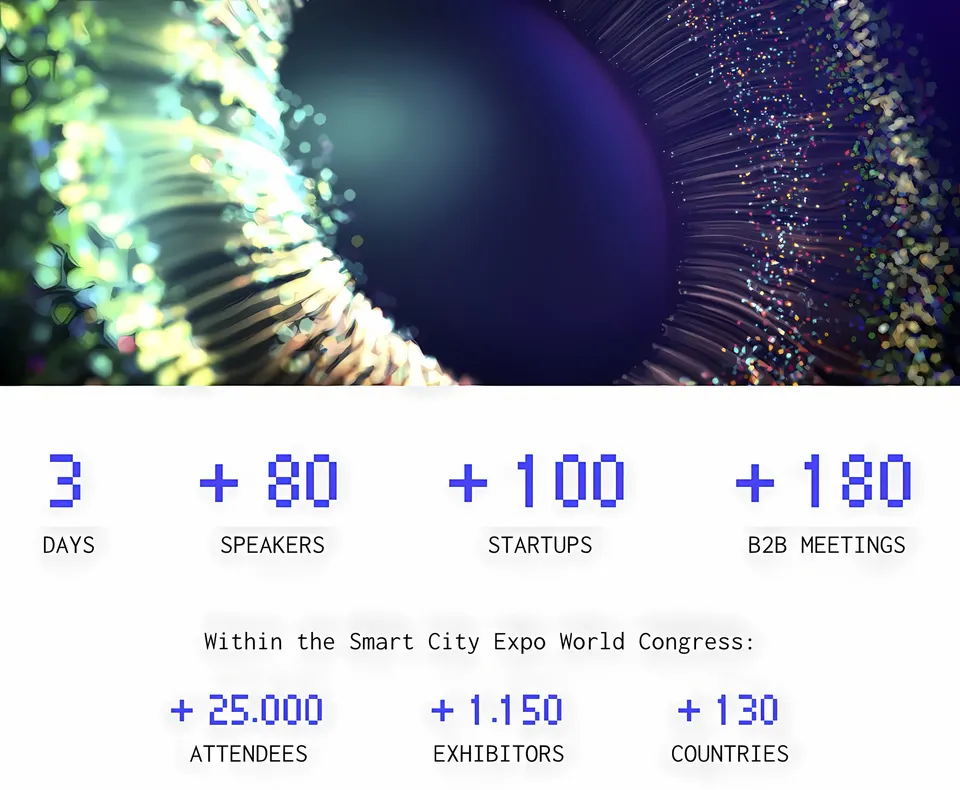
The Barcelona Deep Tech Summit (BDTS) closed its fifth edition on Thursday 5 November 2026 with more than 4,000 participants, including entrepreneurs, investors, corporate representatives, and research professionals, marking a 25% increase from the previous year and the highest attendance in the event’s history, according to a Barcelona Activa press release. Over three days at the Gran Via exhibition centre, the summit hosted solutions from over 70 deep tech startups and spin-offs, alongside an agenda featuring more than 80 international speakers. The event took place within the framework of Smart City Expo and focused on bridging scientific research with market-ready technology. Raquel Gil, Deputy Mayor of Barcelona and president of Barcelona Activa, said the turnout demonstrated Barcelona’s strength as an innovation hub capable of attracting global talent, investment, and research institutions. She described the summit as a strategic space for generating synergies that turn advanced research into real-world, impactful solutions.
The congress has consolidated as a strategic space to connect key ecosystem actors and generate the synergies needed for research and technology to become real solutions with impact.
Gil added that the BDTS supports high-quality job creation and a more competitive economy, and stressed that Barcelona should lead the deep tech sector and become a reference point in southern Europe.
Global Experts and Strategic Focus Areas
Featured speakers included Carlos García-Galán, director of NASA’s Moon Base programme; economist and EuroStack founder Cristina Caffarra; Aureli Soria-Frisch, director of the Neuroscience Unit at Starlab Barcelona; Miquel Vila-Perelló, CEO of gene therapy firm SpliceBio; and Barbara Belvisi, founder of space habitat developer Interstellar Lab. The summit’s programme centred on three strategic themes: Augmented Human (covering neurotechnology, surgical robotics, and physical intelligence), Deep Intelligence (focusing on photonics, advanced computing, foundational AI, and European technological sovereignty), and Corporate Frontier, a new track this year linking deep tech innovation with established businesses through open collaboration. Canada’s participation as the first official 'ecosystem partner' helped expand international ties, Barcelona Activa noted, reinforcing the city’s status as a leading European hub in photonics, high-performance computing, and life sciences. According to ACCIÓ’s 'Deep Tech in Catalonia' report, the region’s deep tech ecosystem now includes 402 startups, a 7.5% year-on-year increase, generating €188 million in combined revenue and supporting over 3,000 qualified jobs.
FetaLife Wins BDTS Startup Award
FetaLife was named winner of the BDTS Startup Awards 2026 for its development of a liquid fetal incubator that simulates the maternal womb, aiming to improve survival chances for babies born at around six months of gestation. Yolanda de Roo, head of technical development at FetaLife, said the multidisciplinary nature of her team enables better alignment between technological innovation and clinical reality. The summit was organised by the Barcelona City Council through Barcelona Activa, in close collaboration with the University of Barcelona (UB), Autonomous University of Barcelona (UAB), Polytechnic University of Catalonia (UPC), Pompeu Fabra University (UPF), and Open University of Catalonia (UOC). It received institutional support from the Generalitat, the Spanish Government, and partners including the European Innovation Council, IMEC, Barcelona Supercomputing Center, Mobile World Capital Barcelona, and NVIDIA.
Sources: Barcelona Activa - Press, betevé.