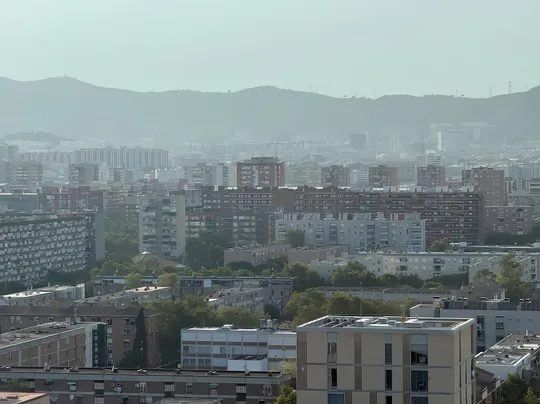
Regional Economic Powerhouse in Construction
According to the latest report from the Business Forum, published by Foment del Treball on Tuesday 10th November 2026, the construction sector in Baix Llobregat and L'Hospitalet generates more than €1.811 billion in gross domestic product. This accounts for 5% of the region’s total GDP and over 13% of Catalonia’s entire construction sector output, making it the top contributor in the region. Construction represents 10% of total labour activity in Baix Llobregat and L'Hospitalet, with 49,170 people employed in the sector in 2026. There are 4,715 construction-linked companies in the area, which together make up 17% of the region’s productive fabric.
Key Sub-Sectors and Economic Impact
Civil engineering construction is the largest sub-sector, employing 21% of the workforce and accounting for 15% of companies. Specialised construction activities, including structural work, installations, finishing, and rental of construction equipment with operators, represent 14% of firms and 16% of employees. The turnover from construction firms makes up more than 5% of the total business revenue in the Barcelona metropolitan area. The sector also drives wider economic activity, supporting supply chains in construction materials, transport, logistics, architecture, engineering, real estate, and professional services.
Construction not only generates direct employment. It drives an extensive chain of suppliers and services.
Sustainable and Digital Transition Challenges
The report highlights that the sector is undergoing a dual sustainable and digital transition, with growing demand for industrialised construction, renewable energy integration, sustainable materials, passive buildings, circular economy practices, and digital tools. These changes are creating new employment opportunities in energy efficiency, public works, and housing projects. However, a key barrier remains: a shortage of qualified professionals. The study Sustainable Construction through Vocational Training, promoted by Barcelona Activa and developed by the Observatory of the BCN Vocational Training Foundation, identifies a mismatch between training capacity and industry needs. Despite the strategic importance of construction for housing supply and economic development, limited vocational training places and an ageing building stock hinder progress. Addressing the skills gap is seen as critical to meeting future demands.
Sources: Foment del Treball, foment.com.