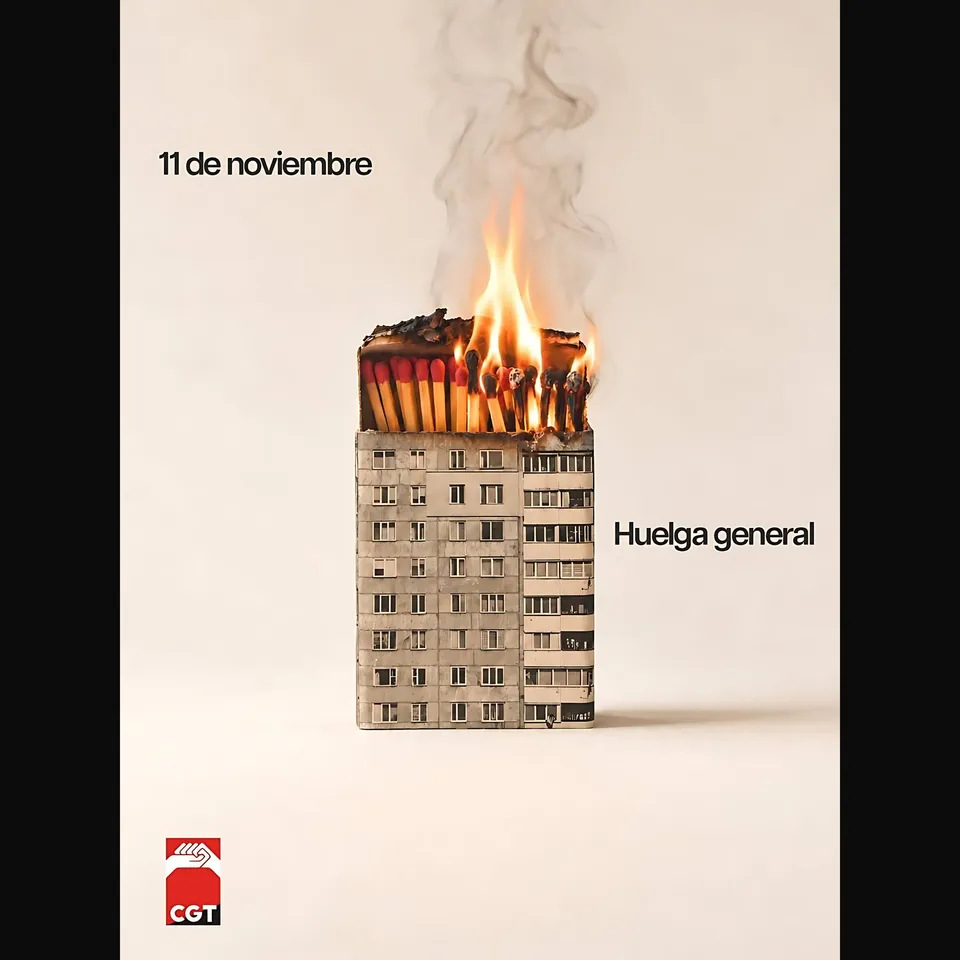
Strike Preparation Underway Across Catalonia
The Confederación General del Trabajo (CGT) and a coalition of 10 other unions have launched a coordinated campaign to prepare for the 24-hour general strike scheduled for Wednesday 11th November 2026. The strike, formally registered by CGT, aims to demand structural reforms on housing affordability and workers’ rights, with a central demonstration planned at 5:30 PM at Jardinets de Gràcia in Barcelona. Unions are using internal structures to train pickets and demonstrators, ensuring they play an active role in enforcing the strike. The CGT, known for its combative stance in key labour sectors, has organised training sessions on how to promote strike participation in workplaces and how to counter workers who do not join, the term used in Spanish labour contexts as "scabs" or "esquiroles".
Workshops and Outreach Campaigns
A training session titled "How to Make the 11-N Strike Massive" was led by Ermengol Gassiot, former general secretary of CGT in Catalonia, covering tactics such as workplace outreach and methods to dissuade non-participation. The session was available both in person at CGT headquarters and remotely. Other activities include "correcomercios", teams visiting shops to encourage business owners to close in solidarity. Volunteers are organised into pairs or trios to distribute posters and leaflets, including the slogan "This shop supports the strike". Open assemblies, banner-making workshops, and megaphone agitation campaigns are also underway in neighbourhoods like Gràcia.
Working does not guarantee living with dignity, and earning a salary does not ensure access to decent housing. It is necessary to reclaim our rights.
The campaign is coordinated by a platform of 11 unions, including Intersindical, IAC, COS, CNT, Solidaridad Obrera, the Mortgage Victims Platform (PAH), the Tenants’ Union, and the Coordinator of Housing Unions (COSHAC). Together, they claim to control at least 108 strike committees across Catalonia.
Housing and Labour Demands
The unions argue that despite rising GDP, precarious working conditions are spreading. Their manifesto states that average housing costs now exceed 50% of workers’ income. Key demands include:
- Reduction of rent prices to match salaries
- Prohibition of evictions without alternative housing
- Expropriation of vacant properties from banks and vulture funds
- Construction of public social housing
- Raising the minimum wage to €1,600 per month
- Reducing the working week to 35 hours
- Linking wages to inflation
The strike has also drawn support from broader social movements. The Anti-Repression Platform of Barcelona is hosting an open assembly on 8th November to prepare demonstrators on how to respond to police action, including legal advice and arrest procedures.
Public Sector Expected to Lead Participation
Early surveys suggest low overall participation, with 70% of workers ruling out joining the strike. However, support is stronger among public sector employees and those who voted for left-wing parties in the 2023 elections. Over 2,000 works councils across Spain have endorsed the action, marking the first joint strike by UGT and CCOO in 14 years. Meanwhile, the Civil Guard has cancelled all non-essential leave for 11th November and 29th November to ensure public order in Madrid during the strike and upcoming elections, according to an official directive.
Sources: El Confidencial, Barna.News News Desk, Catalan News.